








You Don't Own a Salon. You Own A Business.
In his latest blog, Leon Alexander Ph.D., challenges industry conventional thinking to help owners add more to their bottom lines.
 MENU
MENU SEARCH
Salon Owner, Entrepreneur and Podcaster Kati Whitledge is back with a blog that explores what a client is thinking when you are trying to sell them a new product or convince them of a style change, and how you can help shape their decision.

Have you ever wondered what people are really thinking when you propose they invest in a new shampoo and conditioner, a new membership model your salon is launching, or a new approach to their haircut and style? We have your answers for all of the above! Today, we are going to share the five reasons clients won’t buy from your salon, and how to combat those obstacles.
It's Too Risky
Do you recall watching infomercials about some revolutionary cleaning tool that will do more with less effort? Why do you think they offer a thirty-day guarantee or your money back? Because they know that by nature, we go through a buyer’s remorse stage. Knowing that we may not get the results we are hoping for, we'd rather not make a purchase in fear that we’ll regret it.
We see this play out in our salons with guests when they’re deciding on a new approach to their hair color or hairstyle. Even though what they have may not be working for them, they’d rather not change. It’s too risky to try a totally new style. What if they hate it? We can understand where they’re coming from, can’t we? We often complain about our point-of-sale system, but the risk we take in moving to an entirely new provider typically outweighs our dissatisfaction with our current one. So, we stick-it-out.
The real question with all of these scenarios is, how do we eliminate their fear before they have to decide to say yes to us? Well, we can learn from those infomercials! There’s a reason they work—people are buying! What if we offer the opportunity to try before we buy? Or offer a money-back guarantee if they aren’t head-over-heels with their decision? Okay, so you may be thinking there’s no way to do this with new styles or haircuts. But what if you could? You could offer a semi-permanent glaze to see what it’s like to have a warmer hue to their hair. Or offer a purple shampoo that will give them a taste of ashy tones. Let’s start with curtain bangs and if you love them, we can take them shorter, if you don’t, they can blend easily as face-framing layers. There’s always a route you can take that puts the buyer at ease while still moving them into a new opportunity.
There’s Too Much Friction
This means if something is too hard or takes too much effort, people won’t buy it. We all want to have amazing hair. But if the style I’m attracted to takes an hour to do, and it would require I do it consistently, I’m out. It’s too much! Or, I would love to have flawless makeup, but after I saw how many steps it takes to achieve that look I love, it’s too hard to do—I’d have to really commit at practicing and perfecting those skills and I’m just not cut out for that. Ooh, I love her hair color and would love to try that too, but I don’t think I’d want to deal with the upkeep if I had to come to the salon every few weeks to have it touched-up.
These are the things our clients are thinking about. What we should be thinking about is, how can we make it easy for them? We can show our guests how easy it is to use this new curling iron and how if they style it today, they won’t have to re-style their hair for a couple days! We can teach our guests how to have flawless makeup in less than five steps using less than five products. We can give our guests a root touch-up spray to use in-between visits, so they don’t have to worry about it not looking fresh at all times. You see how we start to market in a way that speaks into some of the reasons people wouldn’t buy to begin with?
It Won't Make a Difference
Our guests may not be willing to say this out loud, but they are wondering if buying the color protection shampoo from you for $30 is really going to be better than buy the $7 bottle from the store. They may wonder if spending a couple hundred dollars on a flat iron is really going to be better than spending fifty dollars on the ones you see at your favorite stores—we all know the ones I’m talking about.
In other words, they wonder if this purchase is really going to make a difference? How can we help them see the light? We speak into those thoughts in our sales approach. An example is, “Is your flat iron tugging your hair and losing the effect you had when you first bough it? Are you having to invest fifty dollars year-over-year on new tools because they just don’t last? We understand! That’s why we chose to carry this special brand of tools! They last the test of time. In fact, investing in the right tools the first time will save you time, money, and the health of your hair!”
It May Not be Successful
Have you ever hired a super well-known artist to teach a class at your salon? You were so excited to bring them in because they have a huge Instagram following, their photos of work are incredible. Yeah, they cost way more than anyone else you’ve had at your salon, but they’re so popular and cool, you don’t care. You have to have them in! The team will be jazzed, and you’ll be the hero for bringing them in. Not to mention the social media pictures and videos you’ll get to share of that experience.
Except—they visit, and the class was a complete bust. They really didn’t know how to present—how to teach. The team was shocked and ultimately, they felt it wasn’t valuable. Experiences like this are the reason we freeze up when presented new opportunities. What if it sounds great, but it won’t be successful? We have to prove the success! We can show our guests real results, real testimonies, and quantify the return on their investments. Imagine selling tickets to a styling class. Show your prospect past attendees who came, the way their hair looked before and after the class, and a testimonial that describes their new understanding of adding flat-iron waves to their hair. In this approach you may not be sharing a financial return, but their return is gained in having the everyday style they want without having to take more than fifteen minutes to do it!
It’s Overwhelming
Finally, people will not buy from you and your salon if it’s overwhelming. If it’s hard to explain, it will be hard to understand and accept. If we have to take 14 steps to get started, or there are five ways they can use it—they will have paralysis by analysis.
What we should think about is, how can we make it simple for our clients? What are ways we can reduce their effort, or shorten the steps needed? Let’s say you are trying to sell monthly memberships at your salon, but they have to fill out a sheet, sign it, choose dates on the calendar in advance for their monthly service experience, and they have to pay when they check out each month.
How hard will this be to sell, manage and maintain? Now, offer the monthly membership and all they have to do is click yes on their phone or computer, and they’re in. Their automatically charged each month and they can book their service experience when it’s convenient for them. How easy is that model to sell, manage and maintain? Much easier for everyone and it will be ten-times more successful when launched.
RECAP!
If you take a look at your memberships, packages, service menu and retail opportunities, you’ll discover that one of these reasons could be prevented you from getting clients to buy from you and buy more often. Let’s recap what we can do about it!
Eliminate their fears of buying upfront by confronting those fears from the get-go.
Make it as easy for them to buy as possible.
Show them proof that there will be a difference.
Prove past successes and guarantee they will have success too.
Make it as simple for them as possible to buy—use—do—etc…
About the Author: Kati Whitledge opened Be Inspired Salon in 2010 in Madison, Wisconsin. Her passion for salon marketing and business grew tremendously and encouraged her launch of Meet Your Stylist, a matchmaking marketing tool used by salon owners nationwide. She’s also the beloved host and founder of The Beyond The Technique podcast—where valuable education is provided on the vast topics of salon business. Kati’s mission is to equip salon owners and their teams with the most innovative business marketing strategies.
In his latest blog, Leon Alexander Ph.D., challenges industry conventional thinking to help owners add more to their bottom lines.
In her latest blog, Amy Pal helps you develop your own clear guidelines around complimentary free employee services.
From managing air traffic on busy days to handling frustrated guests' complaints, your front desk team often serves as the salon's emotional shock absorber. From a customer service lesson from the DMV to a list of strategies for caring for your front line, our experts offer ideas for alleviating stress, celebrating wins, and setting goals.

According to the KIM Report, top-line salon revenue appears steady or slightly up, but that growth is driven primarily by service price increases. Beneath the surface, retail performance and client visit frequency (appointment drift) are under real pressure. In his latest blog, Alain Audet offers strategies for keeping your salon's retail sales strong.

Putting your family to work in the salon offers some real tax benefits, but you have you have to play by the rules of the tax code to claim them. Azarvand Tax Law's Leticia Skrabut, Esq., shows you how.

Discover how to create a true “WOW experience” for every client by first building a culture where your team feels engaged, empowered, and inspired. Drawing on Calvin Stovall’s Iconic Framework, this blog explores how salon, spa, and clinic leaders can strengthen culture, elevate customer experience, and build a business that stands out for the long term.
Sponsored by Phorest Salon Software

The wellness industry is growing fast, and salons and barbershops already are an important part of it. In her first blog, Tracy Rado shares where the wellness dollars are heading, and how salons can grow with this movement.

While salon sales are increasing, owners often feel they're working harder for the same or less profit. Leverage Q2 data from The KIM Report, Alain Audet reveals some of the structural changes that are dampening your growth and why your region and your salon size matters.

Weaknesses in your business are amplified during the Holiday Season. Spark Pro Global's Lucy Randall shows you five things to do now to have the strongest holiday season yet.

In Kati Whitledge's latest blog, she shares how salons have moved away from dress codes and embraced appearance standards. But by removing strict dress codes, some businesses may have unintentionally lowered their appearance standards. Whitledge helps you explain to your team why an appearance standard is important and how to smoothly implement a new appearance policy.

The Small Business Health Care Tax Credit is a non-refundable tax credit for for-profit businesses that provides a financial incentive for eligible employers who offer health insurance coverage to their employees. Leticia Skrabut, Esq., walks you through how to claim that credit.

Developing strong work habits early in one's career supports long-term success in the salon industry. Jesse Linares offers new stylists his top five tips.

Most salon owners have no idea what these numbers are. You can hit record sales and still have a profit problem. The difference comes down to four numbers almost nobody was taught to track.
Sponsored by Strata Salon Systems™

A five-area audit every owner-dependent salon needs to run. You built something that looks successful. Now find out if it can survive without you.
Sponsored by Strata Salon Systems™

Every month you put off fixing the problem, it gets bigger, more expensive, and harder to solve.
Sponsored by Strata Salon Systems™
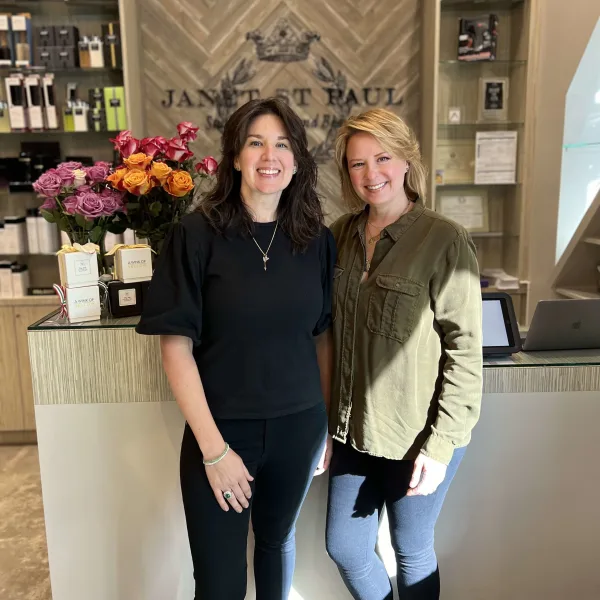
At Janet St. Paul Studio for Hair and Beauty, Director of Operations Natasha McMillen helps bring her wife Janet St. Paul's vision to life, elevating every system from education to operations.

Expand your color service menu with the Pinstripe technique. Brooks and Brooks' Marlon Hawkins walks you through the technique.