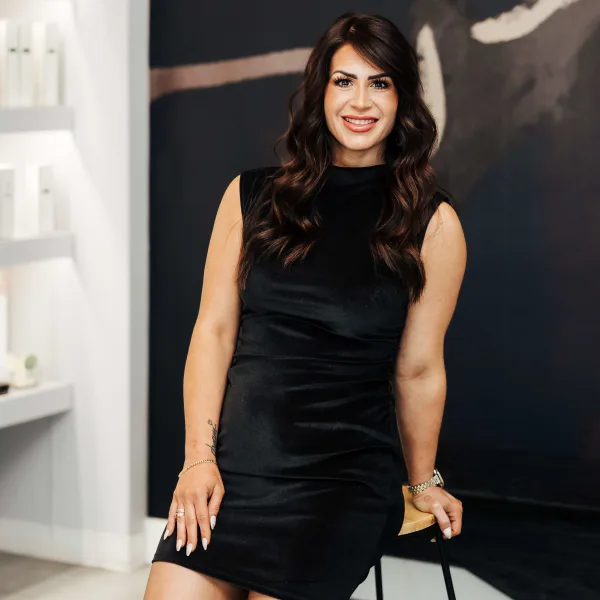
After becoming frustrated when her 17-year career as a stylist plateaued, Niki Davis sets out to open her own rent-based salon, but ended up creating a hybrid business model. Find out how ND Artistry works today, creating more opportunities for each team member.
A relatively new business owner, Niki Davis of ND Artistry, has worked behind the chair for 19 years. Today, she's the proud owner of a six-chair, hybrid commission and rental salon in Jacksonville Beach, Florida. Her love for mentoring and dedication to fostering teamwork sets her business apart, an unusual combination for the typically independent mindset on the rental side. To Davis, accountability and a healthy culture promote a happy team and work environment for all, regardless of business model.
For the salon's renters, ND Artistry offers a sense of belonging in an environment that evokes teamwork. For commission stylists, there's a tiered system where they can work their way to the top and, when ready, take the leap to become a renter. And they can do so without having to move to another salon.
So, what are the advantages of taking a commission stylist into a tenant agreement? For Davis, it's more than just stylist retention. It’s about having a salon atmosphere where stylists feel motivated and supported. She quickly pointed out that her current business model is based on her own experiences.
“Eventually, I became stuck. I plateaued, with a 50/50 split, an industry standard as a service provider. I was at this commission salon for a long time, 17 years in total, and towards the end, my only growth was when my prices went up."
"For many of those years, I couldn’t imagine ever leaving. No one really did, and we had virtually zero turnover for the longest time. I was thriving in the ‘growth phase’ and surrounded by what seemed to be endless career opportunities. The salon culture was amazing, and I was consistently learning, setting goals, and growing, much of which involved doing the very same for the new stylists,” Davis said.
In addition to working with her clients in her previous salon, Davis was the in-salon educator and, ultimately, Director of Education. She worked with the assistants right out of school, teaching them her curriculum and preparing them to go out on the floor eventually.
"Then, the business started to change, and as a result, culture suffered. For the first time in my career, I wanted to leave. Renting a booth somewhere was never really on my radar. Alternatively, the idea of opening a salon and potentially jeopardizing the financial freedom and stability that I had worked so hard for was absolutely terrifying. So, I continued to stay indefinitely in commission purgatory. I was complacent.”
Davis explained her dilemma - one common with service providers who hit a certain level. "If you hit your head on the top, you either have to leave, or you're just miserable and don't know what to do. For me, I lost the passion, and it became a job. I didn't want to be there, which affected my morale and that of everyone around me."
A New Chapter
During the latter part of 2020, Davis started doing hair at home on the side and quickly realized she could manage things independently.
“That’s when I realized that once you’ve become successful as a commission stylist, at that point, you have a solid foundation for becoming a successful independent one.”
After her “ah ha” moment, she resolved to open her own salon that following year. Based on some past challenges, she knew it had to be in the right location and have the ideal amount of parking - everything just had to make sense.
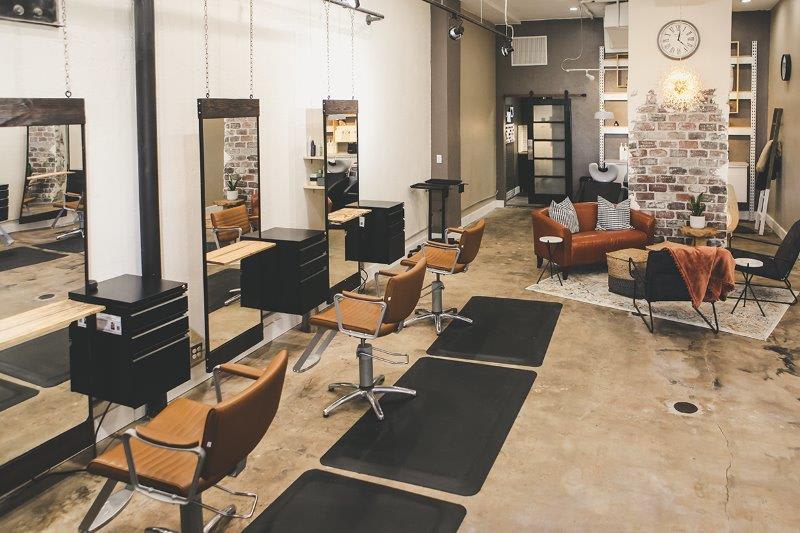
"A friend told me about this 1145-square-foot space in a strip mall close to the beach, and we decided to look at it just for fun. It had everything: great location, parking, visibility, and windows with lots of daylight. We could not find anything wrong with it," Davis says.
"I knew I'd never find everything I wanted, as this location had, so I said to myself, 'Okay, here we go!' After I signed the papers a couple of weeks later, I had ten weeks to tear it all apart and put it all back together, make all these decisions, and figure out what I would do. And I did all this while working as a commission stylist at my old salon up until a week before opening."
Challenging Traditional Business Models
Opening a booth rental salon or any business is challenging enough, let alone during a pandemic. Davis noticed the changes within the industry, with many stylists gravitating towards becoming independent by renting a booth or salon suite.
Although Davis set out to create a rental salon, she knew she still wanted collaboration, support, teamwork, culture, and education, all of the things commission salons provide but are rarely offered to independents.
“I wanted to use the same products and color, offer education opportunities, literally take all of the good things offered in commission salons, and offer these benefits to booth renters.”
“So, I started looking at brands that aligned with my values and background, including a distributor willing to support me and my ideas. One that would do so without telling me what to do and how to do it. I found that Evolve Salon Systems offered me the support and brands I wanted, and even my software, all at the same time, saving me the hassle of having to figure all of those things out on my own. The very same things that I wanted for my renters as well.”
With only one booth renter, Davis now had a plan, a brand, and a strong support system in place, and ND Artistry was officially open for business.
“It wasn't as easy to find those people as I thought it would be. But I refused to just take anyone and potentially sacrifice the culture. So, I waited - 14 months, to be exact,” she added.
One day, three commission stylists who were former apprentices and one receptionist came knocking on Davis' door after their salon location shut down. Niki had a solid booth rental model for her business but wasn't prepared for commission stylists and having employees. She had to figure out quickly how everything would work.
“Initially, having commission stylists wasn't part of my plan. That’s when I learned my biggest and probably most important lesson in business and life: change is inevitable, and flexibility is a necessity.”
Finding Balance
When balancing the two types of stylists, Davis carefully respects the line between employees and renters, who are technically tenants. For example, among other things, renters must be able to make their own hours and run their business separately from the salon. However, there are certain things Davis must supply for commission stylists, such as back bar, scheduling, a way for their clients to make payments, etc.
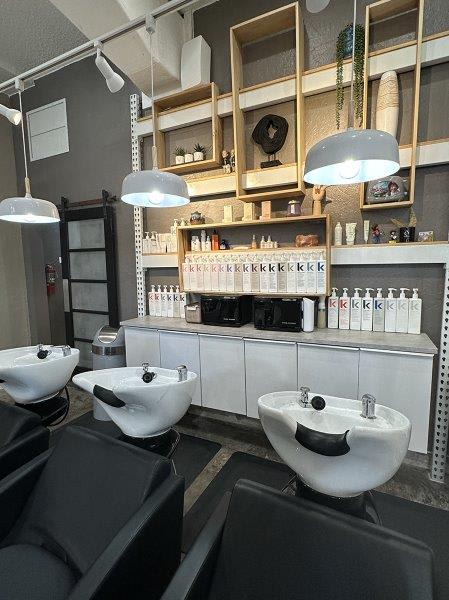
To ensure the salon works cohesively with both sides, Davis provides the salon software, phone system, and means to dispense products and store them safely.
“We encourage clients to use online booking - all of mine are on board now. However, the salon phone kept ringing because the former commission stylists’ clients were used to calling in. I thought about how a big corporation handles its call volume and figured there's got to be a small business version."
Referencing her new cloud-based phone system, Davis says, "Renters each have their own seat on the system, and it rings on their phone, but it's the salon's number, and everybody has an app to answer their own calls and take appointments. Whether commission stylist or booth rental - the phone system has helped make my stylists accountable while ensuring they are on top of their games and that the clients are getting communicated with."
Technology is an important part of any salon. That’s why the team uses Rosy Salon Software to take appointments and check clients out. The booth renter version provides data privacy for the renters’ client information and the appropriate access for scheduling their bookings and accepting payments through RosyPay with monies deposited into their accounts.
Inventory was another hurdle for the fledgling salon, so Davis devised a solution where her team used all the same brands of color and products, and renters could purchase them from her. She insists that the process keeps the whole team mentality. “If you have a bunch of renters, and everybody's using different color, and you get the same client, you're stumped. Who do you turn to for help? We use the same product so we can collaborate, but also because we get education opportunities and deals on back bar, like many commission salons do. Naturally, I can't legally require renters to use the same product or to buy it from me, but I can make it next to impossible to say no.”
“One thing I didn't think about, at least initially, was now that renters have their own inventory, they're responsible for it and what happens if something comes up missing. Before, we had a cabinet, and we all pulled out of it and shared. Now, each person has their own locking cabinet. Long overdue, I put a camera system in for safety purposes, to keep people honest, and more so in case of a discrepancy.”
Regarding her inventory, people can't just go when they need something and get it; they must ask for it. Then, there are limited keys to the dispensary.
With retail, everybody gets a commission on the products that they sell. Davis did away with setting minimums in order to earn a commission, a rule she disliked with her old salon. She also pointed out that because the team purchases only her color and sells retail from her inventory, their distributor offers free back bar products for their stations, an added incentive.
Growing the Right Team
When asked why she runs her business the way she does, Davis answers, “There are so many valuable opportunities for commission stylists equally as well as for independent stylists. I don't think one is better than the other; I think that they are dependent on each other. It’s not either/or.”
Citing how hard it is to get started in this business, Davis explains, “The commission model is a great place to begin as a stylist and learn and grow. However, making the transition to rental can be scary and alienating. I wished somebody was there for me when I reached that point. That's why I'm there for them as a business mentor. There's so much responsibility when owning a business, and I truly want to see them succeed."
"I swore that when I finally got to call all the shots and make all the decisions in my own salon, I would be choosy about who I allowed into that space. I had witnessed where everything was great, and then a couple of bad apples became cancer and infected everybody around them. I vowed never to let that happen, so I waited over a year before letting anybody into my salon. Sure, I was exhausted, but creating that healthy environment and team culture was more important than just getting people on the chairs and making money.”
“I knew what it was like when it was good or bad, how it affected me and others; it showed me how important a team culture was."
In a booth rental salon, Davis believes if you can create a team environment, you will have more successful stylists because of it. She is currently working out the kinks with her team and business model, and in the two years since opening, ND Artistry has become a thriving salon with a cohesive balance of commission stylists and renters.
"If I were to start over, I truly don't think I'd do anything differently. Sure, I've made mistakes doing things for the first time, but I don't know if anybody's done many of these things before. So, when things didn't work out, it taught me. It wasn't a failure; it was just a roadblock that redirected me into something that did work."
When asked what advice she'd offer somebody in the same situation, Davis replied, "Make sure that when you're opening your own business, you're willing to make sacrifices and be tested beyond your personal limits and that you're ready for it because it's not for the weak at heart. But it's worth it. Even though it's been the hardest thing ever, I wish I would have done it sooner!"