











You Don't Own a Salon. You Own A Business.
In his latest blog, Leon Alexander Ph.D., challenges industry conventional thinking to help owners add more to their bottom lines.
 MENU
 SEARCH
One Louisiana salon sets a schedule that leaves team members with big chunks of nonworking time.
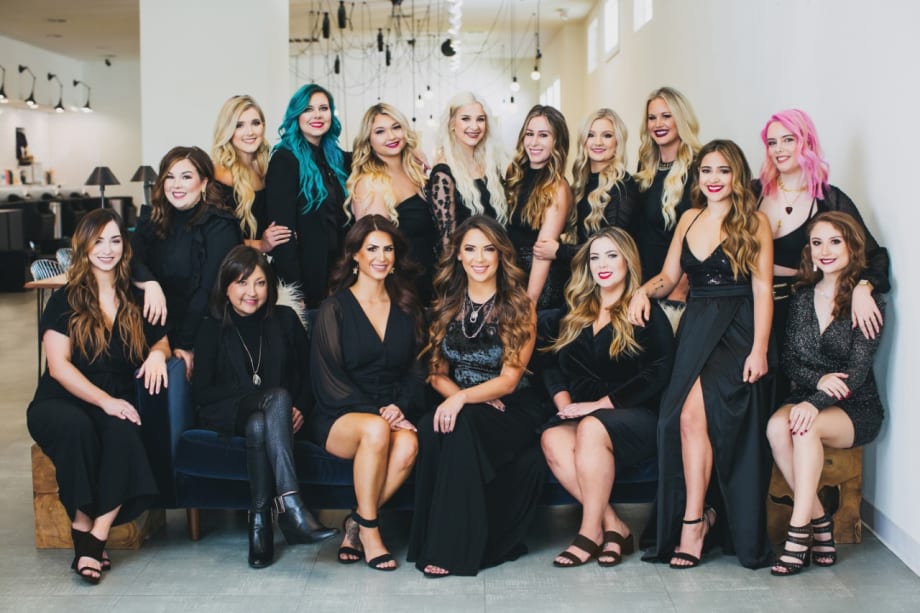
When the feedback Jennifer Baudier received from her team at Bella Style Salon near New Orleans pretty much boiled down to “I feel like I’m always here,” the owner finally said: “I hear you!” The team watched Neill’s “Serious Business” in 2019 and learned about a salon framed around a four-day workweek. They thought that they could borrow this idea.
Then Covid paused everything. For the two months the salon was closed, Baudier and her team met often through Zoom and dove deeply into what they wanted their salon business to look like when it reopened. Baudier committed to the shorter workweek, and switching to that type of shift structure made it easier to keep the salon open longer hours and six days instead of five. The schedule she devised also gave staffers a 5-day weekend every three weeks. But she didn’t want to stop there.
When she took PIP University’s four-month “Rich Life CEO” course, Baudier had to figure out how much it cost per hour to run her salon. That reality check led her to increase prices by 20%, and just like that she set her salon apart in the tiny town of Slidell, Louisiana.
“We’re surrounded by salons offering $35 haircuts,” Baudier explains. “When we raised our rates to $68 per hour for a level-one cut and $200 per hour for color, we created our own little niche. That would frighten most owners, but you just have to walk through some fear. Set your prices and don’t look back. That’s the only way we can pay our teams what they’re worth so they’ll stay. Now I have very little turnover. I get lifers!”
With the new focus on hourly earnings, Baudier changed compensation to hourly as well. Team members are paid for the time they’re at the salon whether they have guests or not. This provides them with a consistent, anticipated income.
Baudier credits an investment in a facial machine and new skincare line with a $40,000 increase in revenue in just the first nine months of 2021. Hiring a specialist in extensions, along with implementing a payment plan making it easier for guests to afford the extensions, added another $122,000 in yearly revenue and positioned Bella Style as Louisiana’s leading extensions salon.
With this influx in cash, the owner could expand benefits, so now adding to the feeling of stability are perks including life insurance, dental, vision, short- and long-term disability insurance, 401K and paid time off (PTO).
In addition, Baudier puts 1% of total revenue into a “team sharing” account that she splits among the team members when they hit quarterly goals. If the team has to wait more than one quarter to hit the mark, the money continues to grow.
“I want to distribute this money,” Baudier says. “I’m trying to breed a culture full of ‘team,’ not ‘me’ and ‘my.’ Team members who are strong at prebooking, retailing or upselling help younger stylists to earn more for everyone. There’s no ‘mean girl’ aspect. We’re loving and supportive of each other.”
Employees fill out an annual survey, and the owner takes their responses to heart.
“Our culture is ‘ask,’” Baudier says. “What would you like to see? If it’s important to the team, eventually we’ll say ‘yes.’ We will figure it out.”
Team members were right about how much they’d appreciate the four-day week with a five-day weekend every three weeks. This gives them more family and travel time. Now they can show up for important occasions even for out-of-state family.
“We’re flexible,” Baudier says. “We don’t tell them ‘no’ if it’s the wrong weekend. We just ask them to be responsible and not abuse it. Flexibility, money, and autonomy are the top reasons people stay.”
In his latest blog, Leon Alexander Ph.D., challenges industry conventional thinking to help owners add more to their bottom lines.

In her latest blog, Amy Pal helps you develop your own clear guidelines around complimentary free employee services.

From managing air traffic on busy days to handling frustrated guests' complaints, your front desk team often serves as the salon's emotional shock absorber. From a customer service lesson from the DMV to a list of strategies for caring for your front line, our experts offer ideas for alleviating stress, celebrating wins, and setting goals.

According to the KIM Report, top-line salon revenue appears steady or slightly up, but that growth is driven primarily by service price increases. Beneath the surface, retail performance and client visit frequency (appointment drift) are under real pressure. In his latest blog, Alain Audet offers strategies for keeping your salon's retail sales strong.

Putting your family to work in the salon offers some real tax benefits, but you have you have to play by the rules of the tax code to claim them. Azarvand Tax Law's Leticia Skrabut, Esq., shows you how.

Discover how to create a true “WOW experience” for every client by first building a culture where your team feels engaged, empowered, and inspired. Drawing on Calvin Stovall’s Iconic Framework, this blog explores how salon, spa, and clinic leaders can strengthen culture, elevate customer experience, and build a business that stands out for the long term.
Sponsored by Phorest Salon Software

The wellness industry is growing fast, and salons and barbershops already are an important part of it. In her first blog, Tracy Rado shares where the wellness dollars are heading, and how salons can grow with this movement.

While salon sales are increasing, owners often feel they're working harder for the same or less profit. Leverage Q2 data from The KIM Report, Alain Audet reveals some of the structural changes that are dampening your growth and why your region and your salon size matters.

Weaknesses in your business are amplified during the Holiday Season. Spark Pro Global's Lucy Randall shows you five things to do now to have the strongest holiday season yet.

In Kati Whitledge's latest blog, she shares how salons have moved away from dress codes and embraced appearance standards. But by removing strict dress codes, some businesses may have unintentionally lowered their appearance standards. Whitledge helps you explain to your team why an appearance standard is important and how to smoothly implement a new appearance policy.

The Small Business Health Care Tax Credit is a non-refundable tax credit for for-profit businesses that provides a financial incentive for eligible employers who offer health insurance coverage to their employees. Leticia Skrabut, Esq., walks you through how to claim that credit.

Developing strong work habits early in one's career supports long-term success in the salon industry. Jesse Linares offers new stylists his top five tips.

Most salon owners have no idea what these numbers are. You can hit record sales and still have a profit problem. The difference comes down to four numbers almost nobody was taught to track.
Sponsored by Strata Salon Systems™

A five-area audit every owner-dependent salon needs to run. You built something that looks successful. Now find out if it can survive without you.
Sponsored by Strata Salon Systems™

Every month you put off fixing the problem, it gets bigger, more expensive, and harder to solve.
Sponsored by Strata Salon Systems™

At Janet St. Paul Studio for Hair and Beauty, Director of Operations Natasha McMillen helps bring her wife Janet St. Paul's vision to life, elevating every system from education to operations.

Expand your color service menu with the Pinstripe technique. Brooks and Brooks' Marlon Hawkins walks you through the technique.