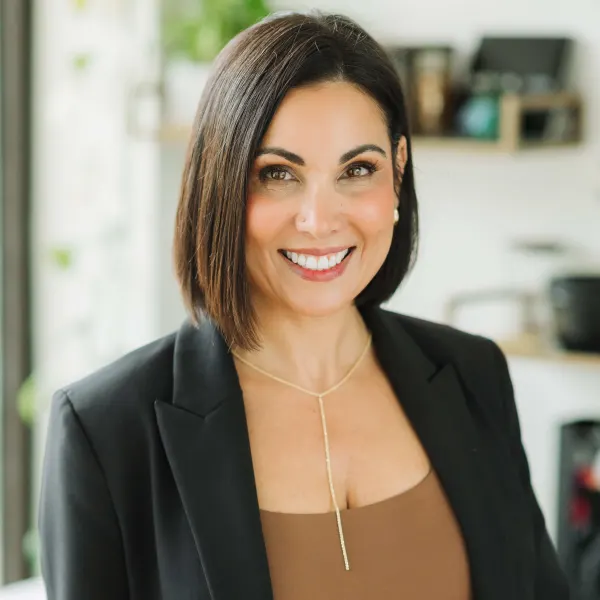
Eveline Charles began her career in the beauty industry when she chose to study hair design in 1974. Since that time, she has grown her privately held business from a one-woman operation to a corporation bearing her name. By 2005, Charles had turned one salon into an empire, becoming a household name in cities around Canada, and her ambition inspired her to expand her empire—adding the EvelineCharles Academies and her own product line.
As you grew your company/brand, what “ah-ha” moments of clarity helped you shape its future course?
I am a runner, and after running the 100th anniversary of the Boston Marathon, I came upon a poem called The Winner. It describes my vision of “thinking big and growing big.” At that moment I decided to literally “run” my company like a corporation. I was going to work on my business vs working in my business. I was also very inspired by the E-Myth book by Michael Gerber. A company-altering realization was the strength of having a vertically integrated, circular business model. Today, we train a skilled labor pool of future industry leaders, we manufacture our high-performance product lines, and we showcase both in our salons and spas, where we are in direct contact with our guests. This direct contact allows us to have a pulse on the ever-changing needs of our guests and the industry.
As you shaped your company, what have been some of the biggest stumbling blocks?
The transition from an entrepreneurship to a professionally managed company. I took my entire senior management team to UCLA for their Salon Management program, and the big take-aways were to ask ourselves, “What business are we were in?” to clarify our core competencies, and have a clear understanding of the transitional process of becoming a professionally managed company. The more a company plans for its growth, the less growing pains they will experience.
How would you describe your management style? What do you think makes you a good leader, and in what areas would you like to improve?
My style of leadership is direct and motivational. I can create excitement and challenge people to bring out their best. I have built integrity in my leadership style because I lead by example.
How do you set goals for yourself? For example, do you prefer more small, accomplishable goals or fewer large goals? How do you hold yourself accountable?
When it comes to goal setting, I always have professional and personal goals. I set my goals high, and have the discipline and persistence to achieve them. I always verbalize my goals to the public so I stay accountable.
Ad Loading...
Throughout your professional history, what’s the best lesson you’ve learned after making a mistake?
We over expanded opening new locations and did not budget for the impact of the recession. We did not anticipate government policy changes for our academy division. The first impact was to our financial health and the next to our employee morale. Like the concepts described in the book Good to Great by Jim Collins, these difficult times really refined how we operated our business—we are an example of how companies can improve by going through difficult times.
From whom or what do you draw your strength, courage, vision?
I have always had intuition on where the industry was going, and the courage to grow my business in that direction. For example, we developed the EvelineCharles product lines and we opened beauty schools.
Ultimately, I have been driven to always do my best, and I do not compare myself to competitors—you cannot be a leader if you are following others. With my team, I often refer to the feeling of satisfaction when you are climbing a mountain. When you are climbing a mountain, you are growing—if you don’t feel like you are climbing, you are coasting or falling behind.
As you grew your company, what, if anything, has held you back?
I think of myself as a visionnaire—I am rich with vision. I was held back by not having enough money to keep up with my vision.
What is the number-one quality you look for when hiring employees, and how do you evaluate if they possess that trait?
In regards to management positions, the ability to confront is something that many people have trouble doing. It seems to be the quality that sets our successful managers apart. Confronting ensures issues are addressed, allowing the opportunity to the reporting team to be successful. We attempt to assess this at the interview phase by asking them about the most difficult conversations they’ve had at work. From these answers we can evaluate their ease or discomfort with difficult conversations. I have good judgment and instinct to evaluate people quickly.
What’s the best thing an employee/colleague ever said about you?
The best compliment I have received by my business colleagues was being honored as the first female inducted in the Alberta Business Hall of Fame.
If you were training another woman to take over your job, what’s the most important advice you would offer her?
Think big and ask questions. My success has come from always thinking of where the company could go next, and I would want this to continue though my successor. Asking questions helps keep a pulse on where the team is at and keeps the team connected.
If you were to look at scrapbook of your professional career, what would be your favorite page? Which page would you like to remove?
The most recent page would be my favorite—I am very enthusiastic about where the company is at today, it really is still just the beginning of our company’s story. I would not remove a page—I have learned the lessons I needed to learn along the way.
If someone were to write a book about your life, what would be an appropriate title?
Think Big, Grow Big
If you weren’t in the beauty industry, what would you be doing?
I have always had a passion for fashion, clothing and fitness.
What are you working on now? What’s your next professional step?
I am building a board of directors for my company and I will be the chairman for the board. Quarterly we will meet and review the financial performance and brand objectives. This is how I feel I can best support the leadership team I have chosen to run the company. I have taken on Lina as an ownership partner. I have taken the company to this level, and I’m more excited about viewing from the sidelines to see where the company can go.
I’m also currently working with a writer to write my book—Think Big, Grow Big. I am often asked how I reached my level of success, which motivated me to write my book. My hope is that this book helps other entrepreneurs—from any industry—to realize their full potential by thinking big to grow big.
I will talk about how I was a small-town girl who grew her company to be the beauty empire it is today, featuring nine salons and spas, two academies, and a full portfolio of professional and retail products.
How would you like to spend your retirement?
I want to do all the things I always wanted to do, like entertain my passion for fitness and cooking. I would like to spend more time in my homes in Mexico and Kelowna (a wine region in British Columbia). My day would consist of working out for three or four hours—going either to the gym, running, cycling, paddle boarding or kayaking. I also hope to be a grandmother down the road and spending time with my grandchildren. Family and business have always been my two greatest priorities in life.
Discover how to create a true “WOW experience” for every client by first building a culture where your team feels engaged, empowered, and inspired. Drawing on Calvin Stovall’s Iconic Framework, this blog explores how salon, spa, and clinic leaders can strengthen culture, elevate customer experience, and build a business that stands out for the long term.
The wellness industry is growing fast, and salons and barbershops already are an important part of it. In her first blog, Tracy Rado shares where the wellness dollars are heading, and how salon's can grow with this movement.
While salon sales are increasing, owners often feel they're working harder for the same or less profit. Leverage Q2 data from The KIM Report, Alain Audet reveals some of the structural changes that are dampening your growth and why your region and your salon size matters.
Weaknesses in your business are amplified during the Holiday Season. Spark Pro Global's Lucy Randall shows you five things to do now to have the strongest holiday season yet.
In Kati Whitledge's latest blog, she shares how salons have moved away from dress codes and embraced appearance standards. But by removing strict dress codes, some businesses may have unintentionally lowered their appearance standards. Whitledge helps you explain to your team why an appearance standard is important and how to smoothly implement a new appearance policy.
The Small Business Health Care Tax Credit is a non-refundable tax credit for for-profit businesses that provides a financial incentive for eligible employers who offer health insurance coverage to their employees. Leticia Skrabut, Esq., walks you through how to claim that credit.
Developing strong work habits early in one's career supports long-term success in the salon industry. Jesse Linares offers new stylists his top five tips.
Most salon owners have no idea what these numbers are.
You can hit record sales and still have a profit problem. The difference comes down to four numbers almost nobody was taught to track.
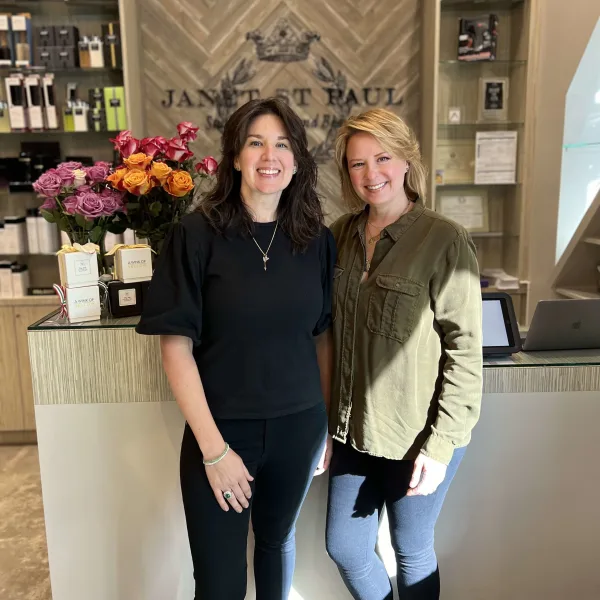
At Janet St. Paul Studio for Hair and Beauty, Director of Operations Natasha McMillen helps bring her wife Janet St. Paul's vision to life, elevating every system from education to operations.
The strongest salons, spas, and med spas know which numbers tell the real story of their business. In this practical guide, Phorest breaks down the five essential KPIs every business should track to improve retention, boost revenue, and make smarter decisions with confidence.
At Bella Style Salon in Slidell, Louisiana, Director of Operations Angela Meyer tackles inventory, team management, and guest relations. Read all about her in our latest Meet the Manager.
Starting at Impressions front desk in 2006 when he was 19 years old, General Manager Paul Petrowsky is a seasoned professional who owner Sarah Taylor says is responsible for much of her own success.
Planning is in full swing for the most anticipated events and promotions for the 2026 holidays. As owners share their favorite ways to celebrate, they prove that a carefully planned event can also build culture, increase client loyalty, boost sales, and set a business up for a successful 2027.
When things run amok at Mane Attraction Salon, Owners Chris and Jenny Knudsen say General Manager Sami Hernandez is their go-to resource and ultimate sounding board. Meet Sami in this installment of Meet the Manager.