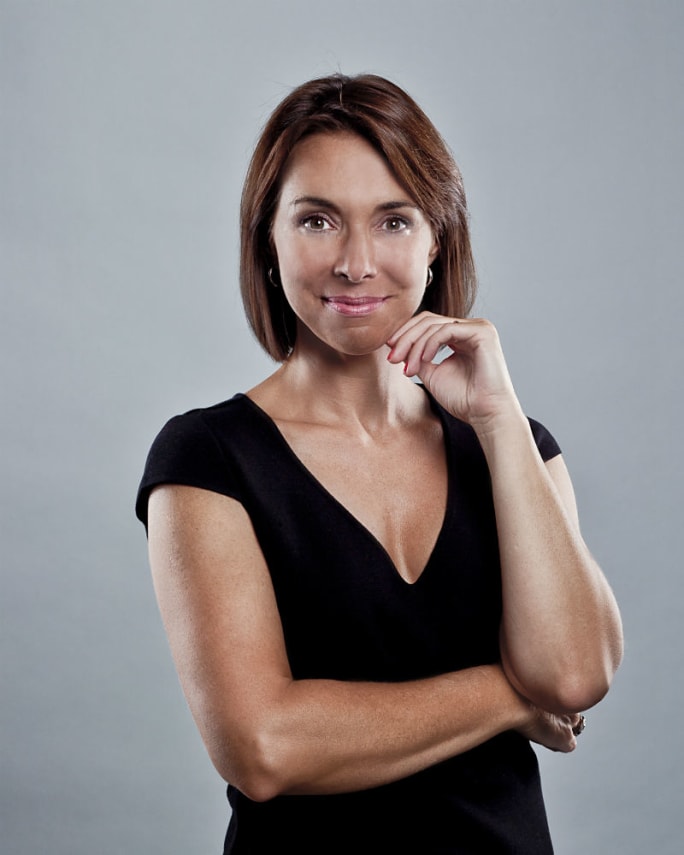
As the co-founder of Kallista Beauty, Linda Gillette Parodi is nurturing the nurturers, by developing a line of products that focus on the needs of the salon professional.
Salon professionals spend their days nurturing others, but who nurtures them? Linda Gillete Parodi hopes to with Kallista, the company she recently co-founded, which is the first to focus on the needs of the salon professional. But Parodi’s own beauty journey is a long one, beginning at age 15, when she first accepted a modeling assignment for a local distributor’s show in North Dakota. Later, she gained salon experience by entering the sales and education arena with Aveda where she worked closely with distributors. Next, Parodi spent several years at Wella in various roles from district sales manager to vice president of salon services. Wanting a broader understanding of the industry, Parodi moved to Geneva, Switzerland, accepting a global education role with P&G on such well-known professional brands, such as Wella, System Professional, Sebastian and Nioxin. Throughout her career, she remained a strong advocate for the stylist and she realized no one manufacturer was looking at the hairdresser as an individual with the daily challenges she or he faces in order to help others look beautiful. Kallista was born from her desire to bring the focus back to nurturing the professional.
Ad Loading...
How are you a risk-taker? Parodi: I am definitely a risk taker—to me it is the norm. As an example, about a year ago, I left a prestigious global position that paid well, to start a company when economic times are difficult, and the salon economic culture is changing rapidly. But when you believe in something so strongly, I think the risk factor becomes less of a hurdle. I know many hairdressers who suffer throughout their day to help make others look more beautiful. I was one of them early in my career. Since then, I have wanted to give something to help them have a better, more comfortable day. Our company, Kaliista, was born from this thought, and I believe so strongly in it that the risk factor became irrelevant ... or at least smaller!
Since you started your own business, how have your motivations changed? Parodi: The difference is that now I own the company, and the responsibility that goes with it. I believe individuals with an entrepreneurial mindset always have it—whether they are working for someone else, or their own company. My motivation has always been to help hairdressers to be as successful as they can. If they are successful, then I too, will be successful. I have had that same motivation for the last 25 years in a variety of jobs.
What do you do on a daily basis to help you grow as an entrepreneur? Parodi: Talk to people—through social media, at the local market, at the gym, wherever I am. I ask how they feel about many things, what motivates them, how has their thought process changed in the last year, etc. This interaction helps me stay in touch with the real world. I also read quite a bit—all sorts of books—not just business and marketing, but also about socio-economic trends, beauty, health, generations, etc. All of the information I come across helps to foster ideas. Oh, and of course, I use the power of thought with affirmations and visualizations. If you really want to get personal—right now I am doing a novena to St. Jude—the Saint of Lost Causes—to help us with a sticky business issue. As you read this, you may laugh! But it is true!
Who or what inspires you? Parodi: Humans. All humans! Give me the visionaries, the innovators, the strong characters, the people on their life journeys, the passionate people, and I’m happy. But, it’s especially the passionate people. It doesn’t matter what they are passionate about, but whatever it is, if they cannot pursue it, they will die. These people inspire me. Last week I saw the opera Rigoletto at the Grand Theatre in Geneva, Switzerland. I was so inspired by the production I was brought to tears. It always inspires me when people can be so talented, as these opera stars were, that it causes human emotion. Of course, that’s what hairdressers also do—cause people to feel good about themselves, feel happy, elated, content, self-confident—feel emotions. It’s an amazing skill.
What is the most important lesson you’ve learned from running your own business that you would share with other women? Parodi: You will never know everything; there will always be surprises. Roll with them, be agile and adaptable or you will be out of business really quick! True confession: Some days I doubt that I know what I’m doing in this new business of ours. When this happens, I just tell myself to move forward, and that I do know what I am doing. Sometimes I tell myself that twice just so it sinks in!
Ad Loading...
As far as being a woman in business—it’s OK! Sometimes we may be more emotional than our male colleagues. I say be grateful for these emotions. They make work, and life, meaningful. This is especially important in our age of technology where we do not always communicate or interact with other humans as closely as in times past. I am aware that I am emotional—aware, but not apologetic.
As you grew your company/brand, what “Ah-Ha” moments of clarity helped you shape its future course? Parodi: My biggest ah-ha was when I realized that all people don’t think exactly like I do! And, that my opinion and what I believe to be correct is only one of many. This helped, and continues to help, shape the future of Kallista. While my vision remains intact, now I ask more questions, and get more opinions on operational and administrative areas than I used to be concerned with, all to form the future, and growth of Kallista.
In developing your company, what is the biggest roadblock you’ve faced, and how did you conquer it? Parodi: Finances, and the time it takes to establish a new company in the professional beauty industry. As finance is not my area of expertise, I started asking everyone I knew if they had any experience in company financing and credit. It’s amazing what your friends and contacts know if you just ask!
I am still working on the “time it takes to establish a new company” but am dedicated to taking the time to make Kallista successful, and be right for salons and salon professionals. I think of Paula Kent Meehan, and how she believed in both hairdressers and Redken. She tried many things, and kept trying them throughout her life. By keeping this focus, with tenacity and hard work, eventually she and her company became successful. But it didn’t happen overnight for her, or any salon industry entrepreneur.
How would you describe your management style? What do you think makes you a good leader, and in what areas would you want to improve? Parodi: I can be intense, but also laid back. I’m not a micro-manager. I like to give people their space to accomplish their tasks and come up with their own ideas. Then, we discuss and decide on what avenue will help the hairdresser be the most successful, and follow that path. I am a fanatic about taking ownership and responsibility on projects, and expect it from my team.
Ad Loading...
Throughout your professional history, what’s the best lesson you’ve learned after making a mistake? Parodi: Admit it, own it, take responsibility for it, and clean it up! I have found that if you follow this mantra the mistake becomes a learned lesson—rather than a nasty black splotch that follows you around.
What is the number-one quality you look for when hiring employees, and how do you evaluate if they possess that trait? Parodi: They have to be passionate for the industry, smarter than me in their area of expertise, and want to leave a legacy. Purpose-driven people are very important to a startup company like Kallista. I can tell in 10 minutes if someone is really passionate about the professional beauty industry by the way they speak about it, the twinkle in their eyes, and the tone of their voice. To make sure they are smarter than me in the area I’m looking for, I ask them what has been their greatest life accomplishment to date. Then I can begin to understand if, and possibly what, legacy they would like to leave behind.
Share something personal that very few people at your work would know about you. Parodi: At heart I really am shy in meeting new people. I just learned how to overcome it through years of drama coaching. When I meet new people, say at a dinner or event, I usually get sweaty palms.
What’s the best thing an employee/colleague ever said about you? Parodi: “Thank you, you taught me so much!” And, “She had lovely hands!”
If you were training another woman to take over your job, what’s the most important advice you would offer her? Parodi: Love it or don’t do it. Be honest with yourself about the “love it” part. If you don’t love it, hire or find someone who does.
Ad Loading...
If you were to look at scrapbook of your professional career, what would be your favorite page? Which page would you like to remove? Parodi: My favorite pages would be when I was calling on salons selling color, shampoo, etc. The work was extraordinarily stressful as I was on commission only, but I learned so much every day, and I got to work with many salons every day. The page I might remove is when I was in a transitional period in my career and life. I took a job with some people who were a bit too dishonest for my liking. I learned many things during this time, but it was all very human and painful. I did learn how not to treat others!
If someone were to write a book about your life, what would be an appropriate title? Parodi: What You Want, You Can Get
What is your vision for the future of your company? What is your vision for the future of the industry? Parodi: The vision for Kallista is to be in every salon in the world, and have a very long and healthy history serving salon professionals. I would love nothing better than to hear people say: “My hairdresser mom used Kallista, and I use it now. It’s the only thing that works for stylists.”
All beauty professionals should know how to identify when a client may need some health guidance. Tracy Rado discusses some common questions that clients ask in the chair, how to advise them, and when to refer them to a specialist.
From managing air traffic on busy days to handling frustrated guests' complaints, your front desk team often serves as the salon's emotional shock absorber. From a customer service lesson from the DMV to a list of strategies for caring for your front line, our experts offer ideas for alleviating stress, celebrating wins, and setting goals.
According to the KIM Report, top-line salon revenue appears steady or slightly up, but that growth is driven primarily by service price increases. Beneath the surface, retail performance and client visit frequency (appointment drift) are under real pressure. In his latest blog, Alain Audet offers strategies for keeping your salon's retail sales strong.
Putting your family to work in the salon offers some real tax benefits, but you have you have to play by the rules of the tax code to claim them. Azarvand Tax Law's Leticia Skrabut, Esq., shows you how.
Discover how to create a true “WOW experience” for every client by first building a culture where your team feels engaged, empowered, and inspired. Drawing on Calvin Stovall’s Iconic Framework, this blog explores how salon, spa, and clinic leaders can strengthen culture, elevate customer experience, and build a business that stands out for the long term.
The wellness industry is growing fast, and salons and barbershops already are an important part of it. In her first blog, Tracy Rado shares where the wellness dollars are heading, and how salons can grow with this movement.
While salon sales are increasing, owners often feel they're working harder for the same or less profit. Leverage Q2 data from The KIM Report, Alain Audet reveals some of the structural changes that are dampening your growth and why your region and your salon size matters.
Weaknesses in your business are amplified during the Holiday Season. Spark Pro Global's Lucy Randall shows you five things to do now to have the strongest holiday season yet.
In Kati Whitledge's latest blog, she shares how salons have moved away from dress codes and embraced appearance standards. But by removing strict dress codes, some businesses may have unintentionally lowered their appearance standards. Whitledge helps you explain to your team why an appearance standard is important and how to smoothly implement a new appearance policy.
The Small Business Health Care Tax Credit is a non-refundable tax credit for for-profit businesses that provides a financial incentive for eligible employers who offer health insurance coverage to their employees. Leticia Skrabut, Esq., walks you through how to claim that credit.
Developing strong work habits early in one's career supports long-term success in the salon industry. Jesse Linares offers new stylists his top five tips.
Most salon owners have no idea what these numbers are.
You can hit record sales and still have a profit problem. The difference comes down to four numbers almost nobody was taught to track.
At Janet St. Paul Studio for Hair and Beauty, Director of Operations Natasha McMillen helps bring her wife Janet St. Paul's vision to life, elevating every system from education to operations.