Scott maximized her micro-salon by transitioning from stylist to strategic owner, focusing on recruiting and station-sharing. By prioritizing her ownership role over behind-the-chair work, she grew her team to six stylists within the two-chair, 150-square-foot space before eventually moving to a larger facility.
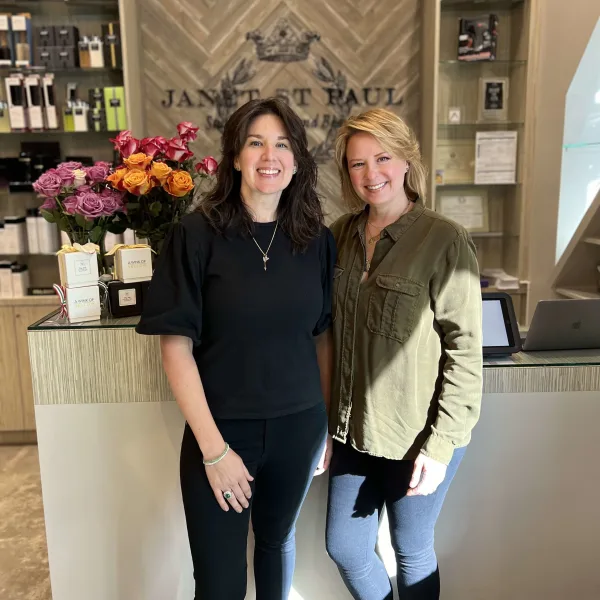
Kat Scott of Rosewood Salon in Great Falls, Virginia, is a salon owner, business coach, and educator who has pioneered a non-traditional growth strategy in the salon industry. Instead of following the outdated "build it, and they will come" model for her salon, Scott chose to maximize her space and build her team first. This is the story of how she turned a 150-square-foot salon suite into a lucrative micro-salon through systems, strategy, and a powerful mindset shift.
How it Started
Scott became independent as part of the 2020 exodus of commission stylists to salon suites. While the independence was welcome, the reality of a solo business quickly presented its own set of challenges. The first was a lack of camaraderie.
“We were all excited to do our own thing, but with suites, you are literally by yourself, and that is not really a reliable source of social, education, or anything like that. It's just you and your client in a room about the size of a closet. I worked like that for two years, and I was like, ‘I can't do this. I need somebody else here with me. I'm starving for socialization,’” Scott mentioned.
Scott moved to a two-station suite and hired an assistant, thinking she’d save her money and then buy her next salon space. That was the traditional goal, where suites were used as a stepping stone to build a clientele, get an understanding of things, save money, and then make the next jump. “We're hairstylists, right? We like instant gratification and want change instantly. I saw that many things weren't working the traditional way, so the only other option was to try something unheard of.”
She committed to testing new approaches. “I hired a coach through Destroy the Hairdresser; they're the ones who told me, ‘Think beyond what's in front of you. You can really maximize where you're at right now, build your team in your suite.’ Leaving a salon environment as I did, opening up your own thing, a little piece that you have curated to be your own, you set up all your systems, and then you want to share that with a team coming in, that's scary. I don't think it matters how big you are. When you're growing a team, it is frightening to let somebody in on that.”
Scott soon realized the potential to maximize her existing suite. She noted that since she was only in the suite four days a week, there were three days and another chair available, along with many other unused hours. She decided to begin hiring experienced stylists within the suite to utilize this capacity by sharing stations.
“When you're growing your business, you can't hire a full team of newbies, because they require so much handholding, and it’s just not scalable. That's okay when you have the capacity, when you're already making income to give back and to train. But when you're starting something new, it is extremely taxing on your time and your pockets to train every single stylist up,” she added.
Scott maximized her micro-salon by transitioning from stylist to strategic owner, focusing on recruiting and station-sharing. By prioritizing her ownership role over behind-the-chair work, she grew her team to six stylists within the two-chair, 150-square-foot space before eventually moving to a larger facility.
The high-capacity operation often drew questions from Scott’s suite mates, who were curious about how many people were working inside the small space, likening it to a clown car. She actively leveraged this curiosity to demonstrate that it was possible to maximize a tiny suite. Scott observed that starting a salon suite was remarkably easy, but the marketing emphasis on 24/7 access assumes the lessee is a single, solo operator. Suite owners generally do not anticipate that the lessee will be a nuanced thinker who maximizes the space by operating a micro-salon.
Scott encourages suite renters who wish to expand their team to examine their lease, noting that paying a small additional fee for an extra person may be worth the income they generate. If the lease explicitly prohibits operating a micro-salon, she advises finding another location.
“The best part about having a micro salon and having your systems and your team already in a space is that when you move, you only have to focus on the build-out. That's the fun part. The fact that I could just focus on the physical space, not the systems or the team, was amazing. So, when we moved, we literally just set up shop: the build-out was done, our systems were already in place. Nothing was changing except that we had more space.”
“Now, I’m getting more space for what I'm paying and just recruiting and earning that income, maximizing that space. I've quadrupled the amount of money that I've made since I started to recruit in my micro salon, quadrupled outside of myself.”
The Reality of Being Solo
Scott's non-traditional mindset stemmed from the harsh realities she faced early as an independent suite renter. Previously, as a stylist, she never had to worry about the business side, but transitioning to ownership made her feel out of control due to the many gray areas in traditional practices.
During her initial six-month period, Scott learned two crucial lessons: boundaries and money. First, she struggled to enforce client boundaries and policies without the buffer of a front desk, which made her feel "icky." “When you're a stylist, you don't really care about what goes on behind the business part of it. So, when you make that switch from stylist to business owner, you still keep all the stylist feels with you.”
“Coaching really helped me find the business version of my voice, not that emotional side of it. Do I enjoy having to put a cancellation policy in place? No one ever does. You just get more comfortable with it. The other side of that is that you get respect from it. No one wants to be a part of a business where their word isn't law or even is a solid. As a stylist and salon owner, going from independent to having a bigger business, your word is everything. Consistency is everything. When you're behind the chair, consistent results will keep people coming in. That'll make people want to work for you as well. Being consistent in your word.”
The second critical lesson was that Scott realized her financial breakdown was flawed. “The money part of it didn't make sense to me at all. I was seeing a lot more cash flow, but then I thought, ‘Wait a minute, where did it all go?’ Something was not right because I used the same service menu and pricing from my previous salon; I wanted my clients to have something that was familiar.”
Scott had no critical rationale for the numbers, leaving her unable to defend her prices or manage cash flow effectively. She concluded that her continued issues with boundaries and money were due to not having truly made the business and its systems her own.
“It's so funny to me that salon suites are promoted as a solo opportunity because any successful business has support in a team outside of themselves. Traditional salon environments rely on squeezing as much as they can out of their team and really putting what the owner wants onto them," Scott says. "This new way of doing things with the new commission salon and how we run things is really giving them their own responsibility. If they have dreams and goals, I want to know about them so that I can support them. But I also have my own dreams and goals as a business owner. I'm going to hire someone to fulfill that.”
“At the end of the day, I'm going to hire people who want to be at work. I'm giving you the freedom to work within this system that asks, ‘What is your schedule?’ I'm holding you accountable for those days.”
Making Station Sharing Work
When Scott first introduced station sharing, that’s when Aura Salonware came into play. “When you're doing something nuanced like this, you need systems in place to support it. At the time, my booking system couldn't support what I was trying to do. So, Aura came in and was like, ‘Hey, we see what you're trying to do. We have this system that's going to make it a lot easier for clients to book online with you, with just your two chairs.’ Aura was a big part of making this station sharing a lot easier.”
Scott's greatest appreciation for the software is that it empowers her team by giving them autonomy and freedom. The key features she values include the ability to support customized hourly pricing, allowing her to tailor pricing and timing blocks for each stylist based on their individual processes.
Aura also provides team flexibility, enabling stylists to change their schedules, giving them full control over their availability and encouraging personal responsibility.
Finally, the platform offers data-driven peace of mind; Scott is addicted to the KPI dashboard and reporting, particularly the future booked and comparison reports, because they eliminate the intimidation of knowing business numbers and provide peace of mind about the salon's financial progress quarter to quarter and year over year.
Advice to Others
If Scott were to do anything different, she would have hired a coach on day one. “It would have been amazing if I had gone into my salon suite with a bigger picture of what I wanted. Initially, I just wanted a space for myself and was not thinking about how unsustainable that would be in the long term. At some point, I would have to choose between staying solo forever and capping my income, joining a team, or growing my own team. I wish I had done that sooner.”
Considering the common tendency for salon owners to prioritize aesthetic investments over business systems, Scott advises reframing your relationship with money so that you see technology and operational tools as critical, high-return investments.
“I think a lot of it depends on your views on money and your relationship with money. If you're someone who has a negative, positive, or neutral experience with money, you're always going to be afraid of not having enough, hoarding, and saving. What is the bigger picture here? Money has energy. And I'm investing this money in technology that makes my life, my clients' lives, and my team's lives easier. That's already a return on my investment. That streamlining is giving me peace of mind.”
Scott’s advice for others looking to build as she did? “Think about stepping outside the box and not being afraid to do it. You're already a hairstylist; you've already gone off the beaten path. So, dive deeper into it. I feel like the hair industry has really been in the same position for a very, very long time. And technology is only forcing us to evolve and change. Don't be afraid of it, evolve with it. Really be creative about how you want to run your business. And there isn't a right or wrong way. It's just about what works for you and what speaks to you as an individual.”
Scott points out that the real question is what kind of business do you want to have? What kind of freedom do you want to have? What kind of money do you want to make? “It is not a bad thing for you to want to make money. If you want to make an impact, give back, or be charitable, you have to earn an income. And that doesn’t have to be icky. And get guidance too, y'all. Please, please, please get guidance.”