A salon brand is much more than a logo. In this thought-provoking blog, Leon Alexander, Ph.D., walks you through the difference. SALON TODAY suggests sharing this article with your team and leading a discussion at your next huddle, asking the team to define your business's brand.
Your brand is your story, your values, your culture, your vision, and your point of differentiation.
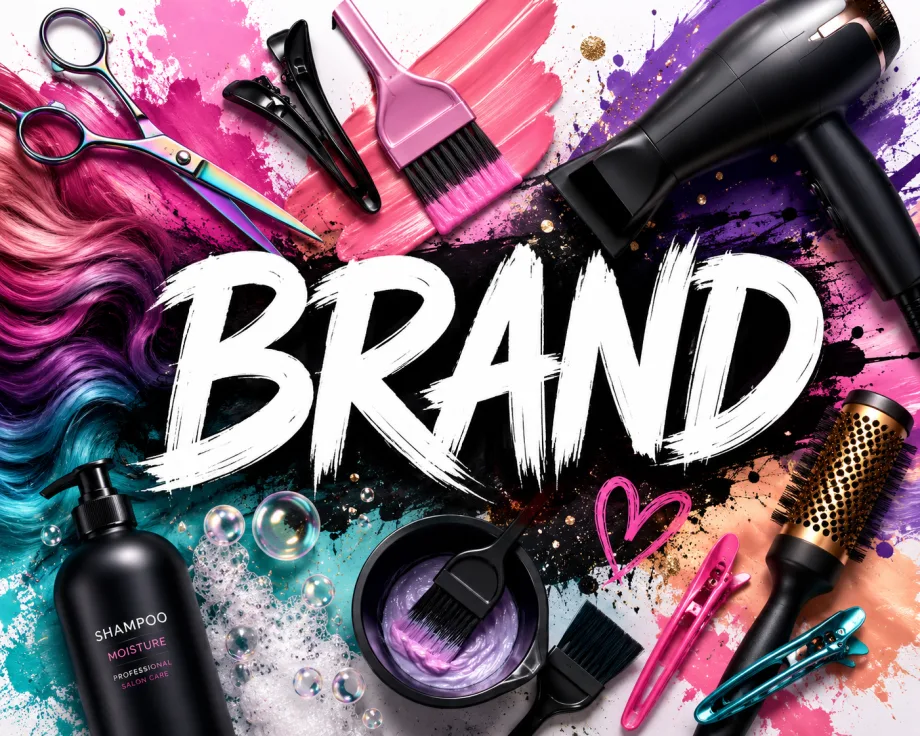
Credit: This is an AI-generated image. Refer to our Terms of Use.
6 min to read
Walk into almost any salon, and the first thing you notice is the logo—carefully designed, prominently displayed, and often treated as the defining symbol of the business. Owners often spend weeks choosing the right typography, the right colors, and the right aesthetic for the name above the door. In many cases, this visual mark becomes the centerpiece of the salon’s identity.
Yet this is where one of the most common misunderstandings in the salon industry begins.
Ad Loading...
If you were to Google “salon brand,” the results would almost certainly display a gallery of salon logos—stylized names, elegant typography, and decorative symbols meant to convey sophistication and style. These images suggest that branding is largely a matter of visual design.
But this assumption misses the point. A logo is not a brand.
A salon logo may hang above the door, but the brand walks out with every client who leaves the chair.
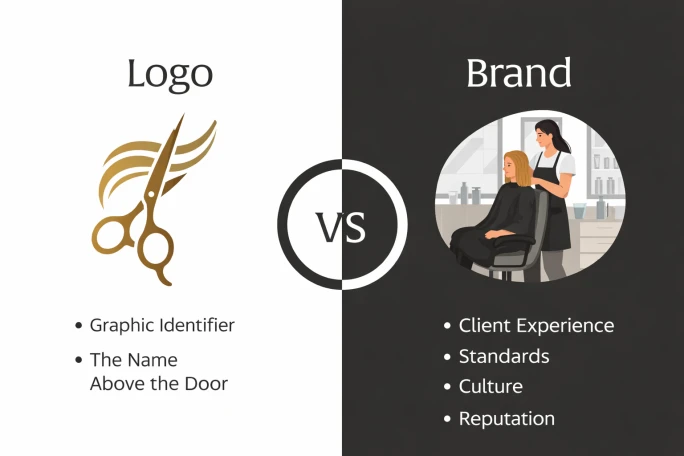
Those images are not brands, they are logos—graphic identifiers, a visual shorthand for a name.
They function much like a name tag at a conference. They tell people who you are, but they reveal nothing about your standards, your philosophy, or the experience clients will receive in your chair.
Ad Loading...
A beautifully designed salon may attract attention, but that is image—and image is only one part of a brand. The brand is defined by the experience that follows.
Today, AI can generate a logo in seconds. But a salon brand cannot be generated. It is built slowly—through thousands of consultations, services, conversations, and moments of trust between stylist and client.
The logo is what clients see, the brand is what clients remember.
A Salon Brand Is a Promise
Every salon brand begins with a promise. Not a promise written on a website or printed in an advertisement, but the unspoken promise clients experience when they walk through the door.
It is the promise that the consultation will be thoughtful. It is the promise that the work will be professional. It is the promise that the client will leave looking and feeling better than when they arrived.
Ad Loading...
Every appointment quietly tests that promise.
When the experience meets expectations, trust grows. When it exceeds expectations, loyalty forms. When it falls short, the brand weakens.
A salon brand is built one client at a time—and lost one client at a time.
Over time, clients learn whether that promise can be relied upon. That is when a salon brand truly begins to exist.
The logo identifies the salon; the brand determines whether clients return.
Ad Loading...
A Salon Brand is a Story
Promises accumulate into something larger—a narrative.
A salon becomes known not simply for the services it provides, but for the story it tells.
Some salons become known for precision cutting and technical mastery. Others build their reputation around creativity and fashion leadership. Some create a calm atmosphere of luxury and personal care. Others cultivate energy, trend awareness, and artistic expression.
Clients rarely choose a salon based only on price or location. They choose the experience and identity that resonates with them.
Over time, the salon’s reputation becomes a shared narrative told by clients, stylists, and the wider community.
Ad Loading...
A Salon Brand is Values
At the center of every respected salon brand lies a clear set of values.
Values guide decisions when standards are tested. They determine whether education is prioritized, whether quality is protected, and whether clients are treated with consistency and respect.
Values shape the everyday behavior of the salon:
the quality of the consultation
the commitment to ongoing education
the discipline of the team
the honesty in recommending services
the pride taken in the finished work
Without values, a salon becomes merely a place where services are performed. With values, it becomes a place where standards are upheld.
Ad Loading...
Credit: Dr. Leon Alexander
A Salon Brand Is Communication
Brand communication in a salon extends far beyond advertising.
It appears in the tone of a phone call when a client books an appointment. It appears in the greeting when the client walks through the door. It appears in the consultation before the service begins. It appears in the way the team handles a mistake.
Clients rarely judge a salon by its marketing language; they judge it by their experience. Every interaction either reinforces the brand or diminishes it.
A Brand is Culture
Inside every successful salon there is a culture.
Culture determines how the team works together, how stylists treat clients, and how seriously the salon takes its craft. It shapes the energy of the space, the professionalism of the staff, and the pride taken in every service delivered.
Ad Loading...
Clients may not see the internal culture directly, but they feel its presence immediately when they enter the salon.
A disciplined culture produces excellence. A careless culture produces inconsistency. Over time, the internal culture of the salon becomes its public reputation.
A Salon Brand is Differentiation
Every salon must answer a fundamental question:
Why should a client choose this salon instead of another one down the street?
True differentiation is not decoration. It is not simply a different paint color, a stylish logo, or a modern website.
Ad Loading...
It is the clear and meaningful distinction that sets the salon apart.
That distinction may come from exceptional cutting, advanced color work, remarkable customer care, a distinctive environment, or a philosophy of beauty that clients cannot find elsewhere. Without differentiation, salons become interchangeable. And interchangeable salons rarely thrive.
A Salon Brand Is Vision
Strong salons also possess a vision. Vision defines what the salon ultimately wants to become. It guides decisions about education, team development, services, and the environment clients experience. Without vision, a salon simply operates day by day, reacting to immediate demands.
With vision, the salon evolves intentionally, growing stronger, more refined, and more recognizable over time. Vision transforms a business into a long-term identity.
The Essence of a Salon Brand
Strip away the logo, the signage, the website, and the marketing materials, and the truth becomes remarkably clear. A logo identifies a salon; a brand defines it.
Ad Loading...
A salon brand is built through the consistent delivery of quality, professionalism, and experience. It is formed through thousands of appointments, conversations, and moments of trust between stylist and client.
Over time, those moments accumulate into reputation. That reputation becomes the salon’s true brand.
A salon brand therefore does not live in design files or marketing campaigns. It lives in the collective memory of clients—in the way they feel when they walk through the door and in the confidence with which they recommend the salon to others.
At its highest level, a salon brand becomes something deeper than marketing. It reflects a philosophy of beauty, a commitment to standards, and a culture that shapes every client experience.
Seen in this way, a salon brand is not simply a business concept—it is an identity made visible through action.
Ad Loading...
It is the narrative that explains who you are. It is the values that determine how you behave. It is the culture that shapes how your team works together. It is the distinction that separates you from the ordinary. It is the vision that draws the future toward you.
In its purest form, the idea resolves into something elegantly simple.
Your brand is your essence — the standards and character that define you. Your brand is your experience — the feeling clients carry with them when they leave your chair.
Discover how to create a true “WOW experience” for every client by first building a culture where your team feels engaged, empowered, and inspired. Drawing on Calvin Stovall’s Iconic Framework, this blog explores how salon, spa, and clinic leaders can strengthen culture, elevate customer experience, and build a business that stands out for the long term.
The wellness industry is growing fast, and salons and barbershops already are an important part of it. In her first blog, Tracy Rado shares where the wellness dollars are heading, and how salon's can grow with this movement.
While salon sales are increasing, owners often feel they're working harder for the same or less profit. Leverage Q2 data from The KIM Report, Alain Audet reveals some of the structural changes that are dampening your growth and why your region and your salon size matters.
Weaknesses in your business are amplified during the Holiday Season. Spark Pro Global's Lucy Randall shows you five things to do now to have the strongest holiday season yet.
In Kati Whitledge's latest blog, she shares how salons have moved away from dress codes and embraced appearance standards. But by removing strict dress codes, some businesses may have unintentionally lowered their appearance standards. Whitledge helps you explain to your team why an appearance standard is important and how to smoothly implement a new appearance policy.
The Small Business Health Care Tax Credit is a non-refundable tax credit for for-profit businesses that provides a financial incentive for eligible employers who offer health insurance coverage to their employees. Leticia Skrabut, Esq., walks you through how to claim that credit.
Developing strong work habits early in one's career supports long-term success in the salon industry. Jesse Linares offers new stylists his top five tips.
Most salon owners have no idea what these numbers are.
You can hit record sales and still have a profit problem. The difference comes down to four numbers almost nobody was taught to track.
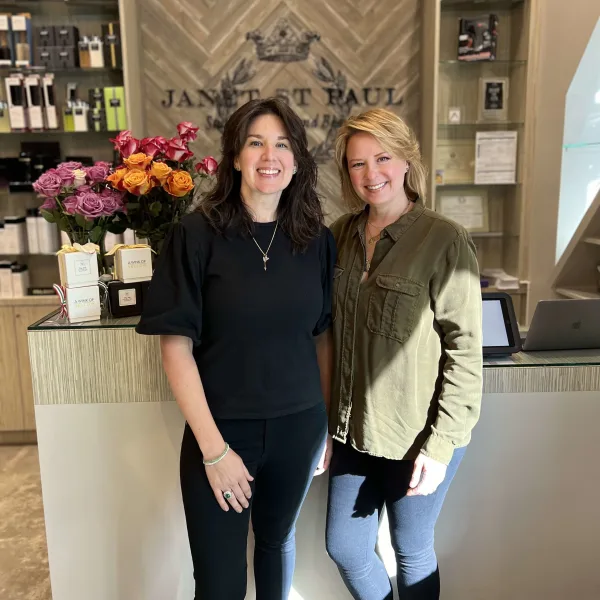
At Janet St. Paul Studio for Hair and Beauty, Director of Operations Natasha McMillen helps bring her wife Janet St. Paul's vision to life, elevating every system from education to operations.
The strongest salons, spas, and med spas know which numbers tell the real story of their business. In this practical guide, Phorest breaks down the five essential KPIs every business should track to improve retention, boost revenue, and make smarter decisions with confidence.
At Bella Style Salon in Slidell, Louisiana, Director of Operations Angela Meyer tackles inventory, team management, and guest relations. Read all about her in our latest Meet the Manager.
Starting at Impressions front desk in 2006 when he was 19 years old, General Manager Paul Petrowsky is a seasoned professional who owner Sarah Taylor says is responsible for much of her own success.
Planning is in full swing for the most anticipated events and promotions for the 2026 holidays. As owners share their favorite ways to celebrate, they prove that a carefully planned event can also build culture, increase client loyalty, boost sales, and set a business up for a successful 2027.
When things run amok at Mane Attraction Salon, Owners Chris and Jenny Knudsen say General Manager Sami Hernandez is their go-to resource and ultimate sounding board. Meet Sami in this installment of Meet the Manager.