Shedding Light on Solar Tax Credits for Your Beauty Business
Buried inside the One Big Beautiful Bill Act are federal solar tax credit changes that deserve your attention now. Two of the credits that matter most to commercial property owners, the Investment Tax Credit and the Production Tax Credit, are still available, but only if you move fast. A third, the Commercial Building Energy Efficiency Deduction, has a hard termination date that is closer than most people realize.
by Tina Arzavand, ESQ., LL.M.
June 11, 2026
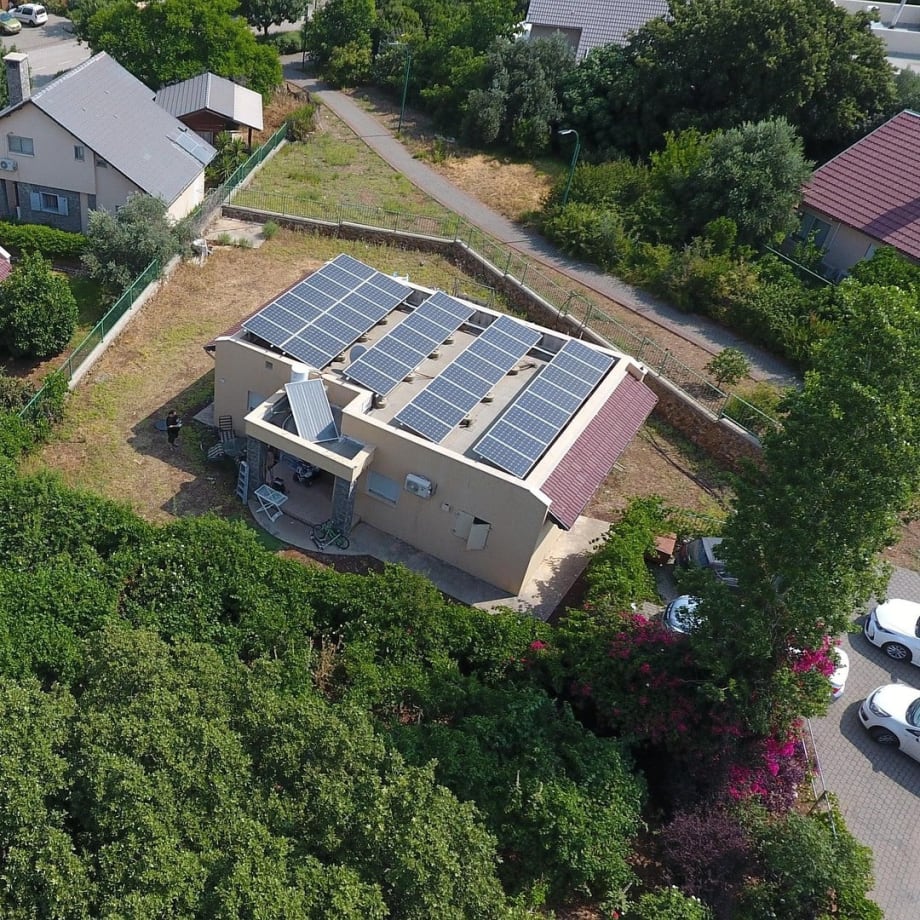
Tina Arzavand outlines the federal solar tax credits available to salon owners.
Credit: Pixabay
7 min to read
Thinking about solar for your beauty business? There are federal solar tax credit credits available to commercial property owners, but only if you move fast.
Energy costs are one of the most stubborn line items in any salon or spa budget. The color processing stations, steamers, dryers, and HVAC systems run nonstop from open to close. For many owners, electricity is one of the largest operating expenses, and it keeps climbing. Imagine if you could eliminate the expense and claim tax credits for doing so. Well, you can, thanks to the federal solar tax credit changes buried in the One Big Beautiful Bill Act.
Buried inside the One Big Beautiful Bill Act (“OBBBA”), signed into law on July 4, 2025, are federal solar tax credit changes that deserve your attention now. Two of the credits that matter most to commercial property owners, the Investment Tax Credit and the Production Tax Credit, are still available, but only if you move fast. A third, the Commercial Building Energy Efficiency Deduction, has a hard termination date that is closer than most people realize.
Ad Loading...
I. Investment Tax Credit
The Investment Tax Credit (ITC) provides businesses with a 30% credit against the cost of a qualifying solar installation. For a salon or spa owner who owns the building, or who is a tenant with a long-term lease and landlord cooperation, this is the most direct path to federal relief on the cost of going solar. The 30% base rate can increase depending on where the system is installed and whether domestic materials are used, meaning the effective credit for some projects can exceed 30%. The credit applies to the full cost of installing the system, including both equipment and labor.
The critical deadline is July 4, 2026. Wind and solar projects that do not begin construction by that date lose access to the ITC unless the system is placed in service by December 31, 2027. Projects that begin construction on time have a four-year window to be placed in service. One important wrinkle: IRS Notice 2025-42, issued in August 2025, significantly tightened the rules for what qualifies as “beginning construction.” The five-percent cost safe harbor has been eliminated for most solar projects, surviving only for smaller installations with a net output of 1.5 megawatts or less. For any larger system, the contractor must actually begin meaningful physical work on your specific installation. A signed contract and a deposit are not enough.
For salon and spa owners who lease rather than own their space, a power purchase agreement (PPA) or solar lease may still make sense. In those arrangements, the leasing company owns the panels and claims the ITC, but the savings are typically passed through to the customer as lower monthly payments. That path remains viable as long as the leasing company’s project meets the construction-start deadline, something worth confirming in writing before signing any agreement.
Battery storage paired with solar is worth noting separately. Standalone battery storage systems retain full ITC access through 2033, with phase-downs beginning in 2034 and running through 2036. For salons and spas that want energy resilience against outages as much as they want lower bills, a solar-plus-storage system may offer the best of both worlds under current law.
II. The Production Tax Credit
The Production Tax Credit (PTC) is less commonly used for smaller commercial installations but is the preferred structure for larger utility-scale projects. Rather than a one-time credit against the cost of a system, the PTC provides a per-kilowatt-hour credit for the electricity the facility actually generates over 10 years. The base rate for 2025 is approximately 0.3 cents per kilowatt-hour, rising to 1.5 cents per kilowatt-hour, as inflation-adjusted, for projects that meet prevailing wage and apprenticeship requirements, with bonus tax credits available on top of that. The ITC and PTC are generally used as alternatives rather than in combination, and for most salon and spa owners, the ITC will be the more practical choice. That said, salon owners who are part of a larger commercial real estate development or who are exploring shared solar arrangements should know the PTC remains on the table, subject to the same July 4, 2026, construction-start deadline and the same Notice 2025-42 beginning-of-construction rules.
Ad Loading...
III. The Commerical Building Energy Efficiency Deduction
The Commercial Building Energy Efficiency Deduction (CBEEDD) is often overlooked in solar conversations. Still, it is directly relevant to any salon or spa owner who owns commercial property or is undertaking a significant build-out. The CBEEDD allows commercial building owners, and notably the architects, engineers, and contractors who design qualifying government and nonprofit buildings, to deduct the cost of energy-efficient upgrades to interior lighting, HVAC, hot water systems, and the building envelope. For projects placed in service during the 2025 tax year that meet prevailing wage and apprenticeship requirements, the deduction is up to $5.81 per square foot. For qualifying projects placed in service in 2026, the rate rises to $5.94 per square foot under IRS Revenue Procedure 2025-32. In a 3,000-square-foot salon, that is a potential deduction of more than $17,000 in a single year.
The OBBBA added a hard termination, where the CBEEDD will not apply to any property for which construction begins after June 30, 2026. That deadline is slightly earlier than the ITC and PTC construction-start window and deserves immediate attention from any owner planning a renovation or build-out. Critically, projects that begin construction by June 30 can still be placed in service later and remain eligible; the clock runs from when you break ground, not when you finish.
IV. State Solar Incentives
The federal pullback makes state programs more important than ever, and what is available may surprise you. Roughly ten states currently offer their own solar tax credits, separate from and stackable on top of federal incentives, and in a handful of cases, those state credits are generous enough that, when combined with sales tax exemptions, property tax exclusions, and performance-based payment programs, the total incentive package can rival or even exceed what the now-terminated federal residential credit once offered on its own. Beyond tax credits specifically, around fifteen states exempt solar equipment from sales tax entirely, and active Solar Renewable Energy Certificate markets in nearly a dozen states allow system owners to earn ongoing revenue based on the electricity their panels generate, turning a one-time capital expenditure into a longer-term income stream.
The range is wide. Some states have built robust, well-funded programs that will be around for years. Others offer little beyond what the federal government provides. Where your salon or spa sits on that map matters enormously to the financial case for going solar right now. Before signing any contract or accepting any installer's quote, it is worth a conversation with a tax professional who understands both the federal picture and your state's specific incentive stack, because in the right state, the numbers may still work out better than you expect.
V. What This Means for your Business
The federal government is not done with solar, but it has closed the era of open-ended incentives and replaced it with hard deadlines. For salon and spa owners, the practical message is straightforward. If you have been thinking about solar or an energy-efficient renovation, the window to lock in a construction start is measured in months, not years. The ITC and PTC deadline is July 4, 2026. The CBEEDD deadline is June 30, 2026. Neither offers a grace period.
Ad Loading...
Navigating these credits requires understanding not just the deadlines but how they interact with your ownership structure, your lease terms, state incentives, and the specific equipment your contractor is proposing. Azarvand Tax Law can help you assess which credits apply to your situation, what documentation you need to establish a qualifying construction start, and how to structure the transaction to maximize your benefit. Call or text us today at 410-698-4005, or email us at info@azarvandtaxlaw.com for a complimentary 30-minute consultation.
About the Author: Tina Azarvand is a Tax Attorney and is the founder of Azarvand Tax Law. She assists businesses with preventing, defending, and resolving tax controversies with the IRS and local taxing authorities. In 2023 and 2024, she was selected to the SuperLawyers: Rising Stars list, a distinction that less than 2% of attorneys receive.
Discover how to create a true “WOW experience” for every client by first building a culture where your team feels engaged, empowered, and inspired. Drawing on Calvin Stovall’s Iconic Framework, this blog explores how salon, spa, and clinic leaders can strengthen culture, elevate customer experience, and build a business that stands out for the long term.
The wellness industry is growing fast, and salons and barbershops already are an important part of it. In her first blog, Tracy Rado shares where the wellness dollars are heading, and how salon's can grow with this movement.
While salon sales are increasing, owners often feel they're working harder for the same or less profit. Leverage Q2 data from The KIM Report, Alain Audet reveals some of the structural changes that are dampening your growth and why your region and your salon size matters.
Weaknesses in your business are amplified during the Holiday Season. Spark Pro Global's Lucy Randall shows you five things to do now to have the strongest holiday season yet.
In Kati Whitledge's latest blog, she shares how salons have moved away from dress codes and embraced appearance standards. But by removing strict dress codes, some businesses may have unintentionally lowered their appearance standards. Whitledge helps you explain to your team why an appearance standard is important and how to smoothly implement a new appearance policy.
The Small Business Health Care Tax Credit is a non-refundable tax credit for for-profit businesses that provides a financial incentive for eligible employers who offer health insurance coverage to their employees. Leticia Skrabut, Esq., walks you through how to claim that credit.
Developing strong work habits early in one's career supports long-term success in the salon industry. Jesse Linares offers new stylists his top five tips.
Most salon owners have no idea what these numbers are.
You can hit record sales and still have a profit problem. The difference comes down to four numbers almost nobody was taught to track.
At Janet St. Paul Studio for Hair and Beauty, Director of Operations Natasha McMillen helps bring her wife Janet St. Paul's vision to life, elevating every system from education to operations.
The strongest salons, spas, and med spas know which numbers tell the real story of their business. In this practical guide, Phorest breaks down the five essential KPIs every business should track to improve retention, boost revenue, and make smarter decisions with confidence.
At Bella Style Salon in Slidell, Louisiana, Director of Operations Angela Meyer tackles inventory, team management, and guest relations. Read all about her in our latest Meet the Manager.
Starting at Impressions front desk in 2006 when he was 19 years old, General Manager Paul Petrowsky is a seasoned professional who owner Sarah Taylor says is responsible for much of her own success.
Planning is in full swing for the most anticipated events and promotions for the 2026 holidays. As owners share their favorite ways to celebrate, they prove that a carefully planned event can also build culture, increase client loyalty, boost sales, and set a business up for a successful 2027.
When things run amok at Mane Attraction Salon, Owners Chris and Jenny Knudsen say General Manager Sami Hernandez is their go-to resource and ultimate sounding board. Meet Sami in this installment of Meet the Manager.