Grow's Antony Whitaker offers some wise tips for training a great salon team.
by Antony Whitaker
September 22, 2014
4 min to read
Building a culture of excellence in your business demands that you have the best people doing the best job they can. Natural talent is always a blessing, but it’s not enough on its own. You need consistency, with the whole team working to the same impeccable and predictable standards – your standards – across the board and that means setting up a formal documented system of training that covers every area of your business.
Training your team to deliver the standards you expect, consistently and without exception, takes investment in time and money. I have heard people balk at the idea of spending money training up team members who may then leave. But ask yourself what’s worse, spending time and money and then they leave, or not spending it and have them stay?
Ad Loading...
You must decide where your training priorities lie, but never forget that for your business to grow, your team must grow, so constant, ongoing training is a fact of life and a part of the job for every team member – including you.
Major areas to consider include:
Induction: Training starts the moment you take someone on – even before they’ve set foot on the premises. Every person working for you must understand the principles underlying your vision of business success and what you expect of them. You will decide how long induction lasts and what it covers, but you cannot overlook it.
The client experience: So you do good cuts or provide excellent massage services? Well, here’s some news for you – so does the salon down the road, and the one in the next street. To make sure clients keep on choosing you above all the other salons competing for their business, you need to focus on the overall experience – what you offer that they don’t. This is part of your business vision, and it is no good expecting team members to instinctively understand what it is that makes your service unique; they need to be told; they need to understand the ‘why’ as much as the ‘how’ of what you do.
Product knowledge: Everyone on the team must know and understand the qualities of the products you use and why you use them. You can set up training systems with suppliers, with regular refreshers to make sure everyone is kept up to date with changes and new developments.
Ad Loading...
Health and safety: Whatever you think about the rules and regulations surrounding health and safety – they are the law and need to be understood and followed by everyone without exception. The consequences of ignoring health and safety training are potentially catastrophic, and could put you out of business.
Technical and creative: The development of creative and technical abilities is a must. It’s all well and good if you have a salon ‘star’ or two, but what you really need is for all team members to be able to deliver the same standards so you are not reliant on any single individual to deliver your signature service. This means training in specific techniques that takes the emphasis away from the individual in favor of the salon. It also means practice, practice and more practice.
Leadership: It’s easy to overlook your own needs when focusing on training your team. But if you stop growing, your business will, too. So make sure you book time for your own creative and business development, and consider other courses that will expand your skills in areas such as conflict resolution, interview techniques, IT skills, time management, coaching or finances.
Training should never be dreaded or seen as a chore. Mix up methods to make it fun and inspiring. Make sure also that your training system enables you to track learners’ goals and progress, and that you always acknowledge achievements, even if it’s just an announcement and a ‘well done’ in team meetings.
Finally, encourage every team member to keep a bound copy of all the training they do, keeping everything together so they have it all there in black and white and can refer back to it. Relying on memory is simply no substitute.
Ad Loading...
Whitaker will be in the United States in October for a round of seminars, all held at The Bond Academy in Bloomfield, New Jersey. Early bird ticket prices are $395. On October 26 he’ll do a seminar on Management, on October 27 The Super Stylist and on October 28, Team Building for Owners and Managers. For more info visit: Growmysalonbusiness.com.
About Antony Whitaker: Antony Whitaker is the ultimate educator and motivator, with a worldwide reputation based on more than 30 years’ experience in the hairdressing industry. An award-winning stylist-turned-educator, business coach and best-selling author, he has taken his message on management, money, marketing, team-building and retailing to more than 250,000 hairdressers in 40-plus countries. His latest book, GROW 3: TEAM, the next instalment in his GROW series, has just been published and is available online at growmysalonbusiness.com You can also sign up for his regular free newsletter packed full of tips, hints and lessons on how to run a successful, profitable business.
All beauty professionals should know how to identify when a client may need some health guidance. Tracy Rado discusses some common questions that clients ask in the chair, how to advise them, and when to refer them to a specialist.
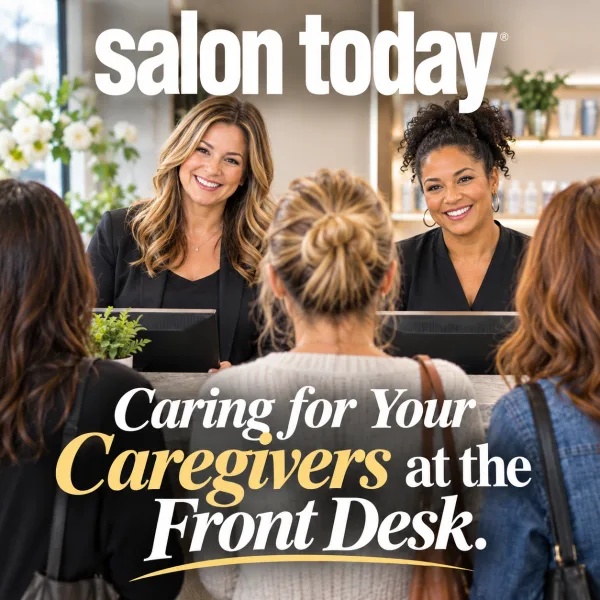
From managing air traffic on busy days to handling frustrated guests' complaints, your front desk team often serves as the salon's emotional shock absorber. From a customer service lesson from the DMV to a list of strategies for caring for your front line, our experts offer ideas for alleviating stress, celebrating wins, and setting goals.
According to the KIM Report, top-line salon revenue appears steady or slightly up, but that growth is driven primarily by service price increases. Beneath the surface, retail performance and client visit frequency (appointment drift) are under real pressure. In his latest blog, Alain Audet offers strategies for keeping your salon's retail sales strong.
Putting your family to work in the salon offers some real tax benefits, but you have you have to play by the rules of the tax code to claim them. Azarvand Tax Law's Leticia Skrabut, Esq., shows you how.
Discover how to create a true “WOW experience” for every client by first building a culture where your team feels engaged, empowered, and inspired. Drawing on Calvin Stovall’s Iconic Framework, this blog explores how salon, spa, and clinic leaders can strengthen culture, elevate customer experience, and build a business that stands out for the long term.
The wellness industry is growing fast, and salons and barbershops already are an important part of it. In her first blog, Tracy Rado shares where the wellness dollars are heading, and how salons can grow with this movement.
While salon sales are increasing, owners often feel they're working harder for the same or less profit. Leverage Q2 data from The KIM Report, Alain Audet reveals some of the structural changes that are dampening your growth and why your region and your salon size matters.
Weaknesses in your business are amplified during the Holiday Season. Spark Pro Global's Lucy Randall shows you five things to do now to have the strongest holiday season yet.
In Kati Whitledge's latest blog, she shares how salons have moved away from dress codes and embraced appearance standards. But by removing strict dress codes, some businesses may have unintentionally lowered their appearance standards. Whitledge helps you explain to your team why an appearance standard is important and how to smoothly implement a new appearance policy.
The Small Business Health Care Tax Credit is a non-refundable tax credit for for-profit businesses that provides a financial incentive for eligible employers who offer health insurance coverage to their employees. Leticia Skrabut, Esq., walks you through how to claim that credit.
Developing strong work habits early in one's career supports long-term success in the salon industry. Jesse Linares offers new stylists his top five tips.
Most salon owners have no idea what these numbers are.
You can hit record sales and still have a profit problem. The difference comes down to four numbers almost nobody was taught to track.
At Janet St. Paul Studio for Hair and Beauty, Director of Operations Natasha McMillen helps bring her wife Janet St. Paul's vision to life, elevating every system from education to operations.