An electrical fire, an errant spark, arson—fire may devastate a salon’s structure in minutes, but it doesn’t have to devastate the business. With an action plan and a strong management team, a business will carry on, despite the challenges.
Three owners share their incendiary tales, offering their hard-learned Dos and Don'ts.
An
electrical fire, an errant spark, arson-fire may devastate a salon's
structure in minutes, but it doesn't have to devastate the business.
With an action plan and a strong management team, a business will carry
on, despite the challenges.
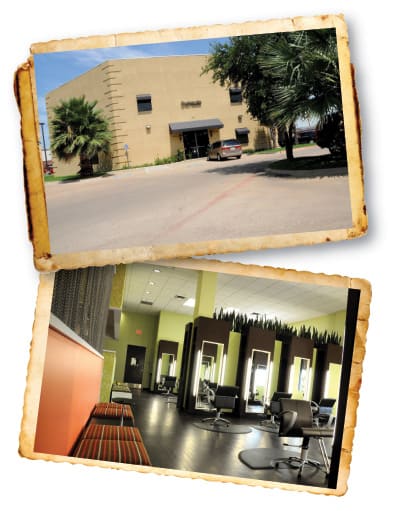
Top: Daired's Salon and Spa before the fire. Above: Daired's new location.
Fire in the Sky Daired Ogle got an early morning wake-up call from his alarm company on Sunday, February 22, 2009. Smoke had been detected in his 17,500-square-foot salon in Arlington, Texas.
Ogle was no stranger to fires in his salon. The land where his Daired's Salon and Spa Pangea (daireds.com) was built used to be home to another business that had burned down in the 1980s. In fact, Ogle's salon had two fires before; both were caused from a clothes dryer, during working hours.
Once Ogle got to the salon, he knew this one wasn't caused from a dryer-the firemen were having a difficult time locating the source. "They wouldn't let me near the building, but they had a command center set up where I was allowed to be a VIP spectator," Ogle says.
Take it from Me:
Do: Have an emergency action plan to fall back on. Ogle rented out five locations to run the business, and would have had a difficult time finding locations if it weren't for a friend in the real estate business. Scout out locations now, get together a plan and be prepared. Don't: Leave aprons, smocks or towels in the dryer. As soon as the items dry, take them out. And don't be tempted to start the dryer and leave the salon. According to the National Fire Protection Association, clothes dryers account for the largest share of appliance and tool fires in the United States. In fact, in 1998 alone, there were 14,300 clothes dryer fires, resulting in 19 deaths, 312 injuries and $67.7 million in direct property damage. Do: Get business continuation coverage. "For a relatively small cost, we were able to ensure our staff was taken care of," Ogle says. "Our staff never missed one payroll."
Finally, the firemen determined the fire's cause was electrical and had started between the top and bottom floors of the two-story building. The heart of the structural damage was focused in the back of the building, and a portion of the second floor had collapsed.
Taking Action Right away Ogle called his insurance company, and representatives arrived at the salon shortly after.
"One thing to expect: There's a lineup of fire restoration people who will immediately try to help get the water out of the building and try to get the smoke out," Ogle says. "The quicker you get the smoke out, the higher likelihood you can save your possessions."
From the moment the fire broke out, it seemed to Ogle as though there were three or four people from different restoration companies, introducing themselves, handing him their cards, trying to secure that job. "It's really something you don't want to deal with at that moment," Ogle says.
Ogle didn't have to notify his staff of more than 100 of the fire, it was all over the news. "While you're dealing with the emotional upset over the fire, there were other concerns: What to do with the staff? How long will the business be down? How quick would it reopen?" On Monday, Ogle met with his insurance adjusters to sort out where the salon stood. By Tuesday, he had a plan in place.
Within three weeks, the staff was relocated into five different locations, rented on a temporary basis to get the salon going again. "This fire would have devastated us had we not had good insurance. We have good business continuation coverage, which isn't that expensive."
Although the temporary locations didn't offer the same amenities guests were accustomed to, they were able to offer the same great service and expert staff.
All beauty professionals should know how to identify when a client may need some health guidance. Tracy Rado discusses some common questions that clients ask in the chair, how to advise them, and when to refer them to a specialist.
From managing air traffic on busy days to handling frustrated guests' complaints, your front desk team often serves as the salon's emotional shock absorber. From a customer service lesson from the DMV to a list of strategies for caring for your front line, our experts offer ideas for alleviating stress, celebrating wins, and setting goals.
According to the KIM Report, top-line salon revenue appears steady or slightly up, but that growth is driven primarily by service price increases. Beneath the surface, retail performance and client visit frequency (appointment drift) are under real pressure. In his latest blog, Alain Audet offers strategies for keeping your salon's retail sales strong.
Putting your family to work in the salon offers some real tax benefits, but you have you have to play by the rules of the tax code to claim them. Azarvand Tax Law's Leticia Skrabut, Esq., shows you how.
Discover how to create a true “WOW experience” for every client by first building a culture where your team feels engaged, empowered, and inspired. Drawing on Calvin Stovall’s Iconic Framework, this blog explores how salon, spa, and clinic leaders can strengthen culture, elevate customer experience, and build a business that stands out for the long term.
The wellness industry is growing fast, and salons and barbershops already are an important part of it. In her first blog, Tracy Rado shares where the wellness dollars are heading, and how salons can grow with this movement.
While salon sales are increasing, owners often feel they're working harder for the same or less profit. Leverage Q2 data from The KIM Report, Alain Audet reveals some of the structural changes that are dampening your growth and why your region and your salon size matters.
Weaknesses in your business are amplified during the Holiday Season. Spark Pro Global's Lucy Randall shows you five things to do now to have the strongest holiday season yet.
In Kati Whitledge's latest blog, she shares how salons have moved away from dress codes and embraced appearance standards. But by removing strict dress codes, some businesses may have unintentionally lowered their appearance standards. Whitledge helps you explain to your team why an appearance standard is important and how to smoothly implement a new appearance policy.
The Small Business Health Care Tax Credit is a non-refundable tax credit for for-profit businesses that provides a financial incentive for eligible employers who offer health insurance coverage to their employees. Leticia Skrabut, Esq., walks you through how to claim that credit.
Developing strong work habits early in one's career supports long-term success in the salon industry. Jesse Linares offers new stylists his top five tips.
Most salon owners have no idea what these numbers are.
You can hit record sales and still have a profit problem. The difference comes down to four numbers almost nobody was taught to track.
At Janet St. Paul Studio for Hair and Beauty, Director of Operations Natasha McMillen helps bring her wife Janet St. Paul's vision to life, elevating every system from education to operations.