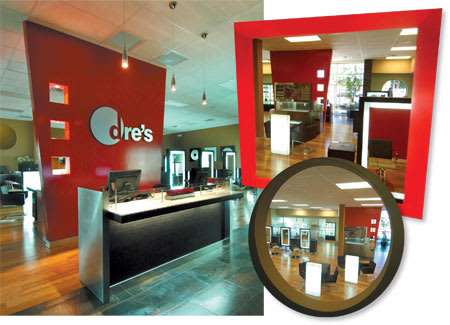
Dre’s in Scottsdale incorporates psychology into its design to sway consumer behavior.
Ad Loading...
The typical client at Dre’s Hair Salon is the wife of a professional baseball player—therefore owner Andre Aronica knew he needed to create a space for people accustomed to nice things, luxurious surroundings and excellent service. “I wanted an open space where you could see and experience the buzz in the salon,†he explains. “I wanted a contemporary space that embraced environmentally friendly materials, with comfortable furniture that encouraged conversation.â€
Alexander: “The check-in area should be clear and combine form and function. Here, illumination creates clarity, while an accent color on the wall complements the effect of the area.†“The salon area should create an energetic and experiential environment. Lighting in the mirror and the surrounding area, and the color psychology should be conducive to a personal service experience.â€
Dre’s Hair Salon Owner: Andre Aronica Location: Scottsdale, Arizona Opened: January 2008 Total square foot: 4,800 Salon setup: 24 styling stations, 2 nail stations, 2 treatment rooms, 6 shampoo bowls, color bar Equipment: Eurisko
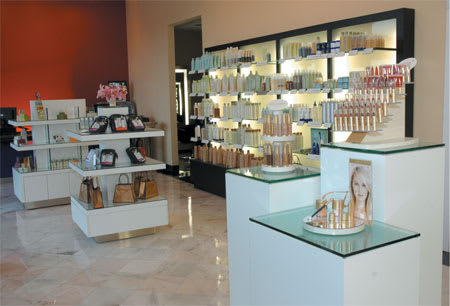
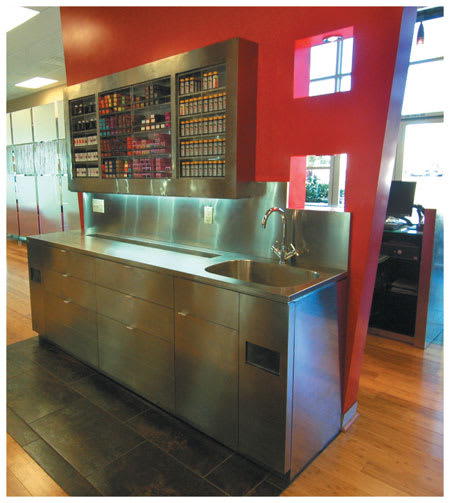
Aronica turned to Eurisko and its president Leon Alexander for advice on designing the salon. “Leon made two recommendations that changed my design plans,†says Aronica. “He opened me up to how things should flow through the retail area. He suggested illuminated shelves that attract clients to the products and incorporating the color bar into the center of the salon which prompts the client to initiate the color conversation.â€
Although the salon has only been open since January, Aronica says retail sales are up as clients are lured to the shelves. With plasma TVs displaying fashion videos infused with product messages, the 30-foot illuminated wall creates its own virtual runway. That’s just what Aronica and Alexander intended.
With a Ph.D. in behavioral psychology, Alexander helps salon and spa owners maximize their business opportunities by incorporating environmental psychology to create a new consumer experience. In these images, he points out important aspects of the design.
"Color psychology creates a subliminal buying effect on the shopper’s mood. And the layout exposes the consumer to the greatest amount of inventory for the longest period of time."
Ad Loading...
“The retail area should create a buying environment for consumers. Back-lighting lures the consumer to approach the merchandise and shop.â€
“Color is a major area too often tucked away in the backroom. It should be a focal point to entice new consumers to experience the service. Here, stainless steel and illumination complement the furniture.â€
All beauty professionals should know how to identify when a client may need some health guidance. Tracy Rado discusses some common questions that clients ask in the chair, how to advise them, and when to refer them to a specialist.
From managing air traffic on busy days to handling frustrated guests' complaints, your front desk team often serves as the salon's emotional shock absorber. From a customer service lesson from the DMV to a list of strategies for caring for your front line, our experts offer ideas for alleviating stress, celebrating wins, and setting goals.
According to the KIM Report, top-line salon revenue appears steady or slightly up, but that growth is driven primarily by service price increases. Beneath the surface, retail performance and client visit frequency (appointment drift) are under real pressure. In his latest blog, Alain Audet offers strategies for keeping your salon's retail sales strong.
Putting your family to work in the salon offers some real tax benefits, but you have you have to play by the rules of the tax code to claim them. Azarvand Tax Law's Leticia Skrabut, Esq., shows you how.
Discover how to create a true “WOW experience” for every client by first building a culture where your team feels engaged, empowered, and inspired. Drawing on Calvin Stovall’s Iconic Framework, this blog explores how salon, spa, and clinic leaders can strengthen culture, elevate customer experience, and build a business that stands out for the long term.
The wellness industry is growing fast, and salons and barbershops already are an important part of it. In her first blog, Tracy Rado shares where the wellness dollars are heading, and how salons can grow with this movement.
While salon sales are increasing, owners often feel they're working harder for the same or less profit. Leverage Q2 data from The KIM Report, Alain Audet reveals some of the structural changes that are dampening your growth and why your region and your salon size matters.
Weaknesses in your business are amplified during the Holiday Season. Spark Pro Global's Lucy Randall shows you five things to do now to have the strongest holiday season yet.
In Kati Whitledge's latest blog, she shares how salons have moved away from dress codes and embraced appearance standards. But by removing strict dress codes, some businesses may have unintentionally lowered their appearance standards. Whitledge helps you explain to your team why an appearance standard is important and how to smoothly implement a new appearance policy.
The Small Business Health Care Tax Credit is a non-refundable tax credit for for-profit businesses that provides a financial incentive for eligible employers who offer health insurance coverage to their employees. Leticia Skrabut, Esq., walks you through how to claim that credit.
Developing strong work habits early in one's career supports long-term success in the salon industry. Jesse Linares offers new stylists his top five tips.
Most salon owners have no idea what these numbers are.
You can hit record sales and still have a profit problem. The difference comes down to four numbers almost nobody was taught to track.
At Janet St. Paul Studio for Hair and Beauty, Director of Operations Natasha McMillen helps bring her wife Janet St. Paul's vision to life, elevating every system from education to operations.