







You Don't Own a Salon. You Own A Business.
In his latest blog, Leon Alexander Ph.D., challenges industry conventional thinking to help owners add more to their bottom lines.
 MENU
 SEARCH
With his roots in a salon family and a business degree from Boston University, Israel Cronk brings an interesting blend of spiritual creativity and analytical thinking to his role as general manager at Bangz Salon and Wellness Spa in Montclair, New Jersey.
With his roots in a salon family and a business degree from Boston University, Israel Cronk brings an interesting blend of spiritual creativity and analytical thinking to his role as general manager at Bangz Salon and Wellness Spa in Montclair, New Jersey. The best example of his blended approach is a strategic gratitude program he pioneered, and naturally tested, at the salon.

The staff at Bangz Salon and Wellness Spa
“It all started one evening at my favorite restaurant. Sitting at a table familiar with my healthy appetite, I was offered a free dessert and coffee by my server as thanks for my loyal business,” he explains. “Later that evening, I met some friend at the pub and proceeded to tell them about my delicious and free chocolate-covered raspberry cheesecake.
“That’s when I was smacked by my gratitude. I was so grateful to be recognized as a good customer that I did something I normally didn’t do by eating dessert, then I gave my server a bigger tip and told ten people about the experience.”
As the manager of more than 60 service providers, Cronk began thinking of how to apply strategic gratitude to the salon and decided to test out his theory—Gratitude + Empowerment = Lucrative—with a test study of five randomly chosen stylists. He coined the program B.Y.O.B. or Build Your Own Business.

Israel Cronk
For a month, these five stylists were empowered with the ability to hand-select two to three clients a day whom they wanted to thank for something, either their long-term loyalty, high retail purchases or their number of referrals to Bangz. It was at the stylist’s discretion what they wanted to gift, up to 20 percent off a service or product purchase. The service discounts were given for a future appointment pre-booked on one of the stylist’s slower days. The stylists could opt to participate or not, and discounts were split between the salon and stylist at the same rate as the stylist’s commission.
For a month, Cronk met with the pilot group weekly to discuss pros and cons of the program and he tracked their progress in four categories: retail sales, pre-booking percentage, productivity and participation rate. Over the trial, Cronk happily observed as numbers crept up in every category. After the month, the pilot program was terminated and Cronk watched numbers go back down. He then expanded the program to 20 stylists, who were coached and tracked for a quarter.
Cronk witnessed other positive behavior. “To participate each day, the stylists had to arrive before their shifts started and submit the names of the clients they’d gift that day,” he says. “If they were late, they couldn’t participate for the day, so everyone started showing up early for work.”
Since the trial period, Cronk has opened up the program to everyone in the salon with amazing results. Retail sales have doubled, from an average of $3,000 a week to $6,500 to $7,000 a week, prebooking rates jumped from 30 to 65 percent, and productivity on slow salon days jumped from 20 to 60 percent. Since no other changes were made in the salon at the time, the results are fully attributed to the strategic gratitude program.
“I’ve taken just about every management course out there and they are all based on the numbers and the hard sell, and that’s just two things most stylists and many owners are very against,” says Cronk. “Since not every client gets the discount, and a single client doesn’t get it everytime she visits the salon, this is not seen as a promotion, but for what it really is—a sincere gift of appreciation.”
But more importantly, says Cronk, is how the program’s transformed the thinking around the salon. “It’s really changed the mindset of the staff to not be employees, but to take ownership for growing their own business—to be accountable and be empowered,” Cronk. “Now, they’re coming up to me with even more ideas of how to apply this program.”
Follow the progress of Cronk’s strategic gratitude experiment by following his blog at israelcronk.com.
In his latest blog, Leon Alexander Ph.D., challenges industry conventional thinking to help owners add more to their bottom lines.
In her latest blog, Amy Pal helps you develop your own clear guidelines around complimentary free employee services.
From managing air traffic on busy days to handling frustrated guests' complaints, your front desk team often serves as the salon's emotional shock absorber. From a customer service lesson from the DMV to a list of strategies for caring for your front line, our experts offer ideas for alleviating stress, celebrating wins, and setting goals.

According to the KIM Report, top-line salon revenue appears steady or slightly up, but that growth is driven primarily by service price increases. Beneath the surface, retail performance and client visit frequency (appointment drift) are under real pressure. In his latest blog, Alain Audet offers strategies for keeping your salon's retail sales strong.

Putting your family to work in the salon offers some real tax benefits, but you have you have to play by the rules of the tax code to claim them. Azarvand Tax Law's Leticia Skrabut, Esq., shows you how.

Discover how to create a true “WOW experience” for every client by first building a culture where your team feels engaged, empowered, and inspired. Drawing on Calvin Stovall’s Iconic Framework, this blog explores how salon, spa, and clinic leaders can strengthen culture, elevate customer experience, and build a business that stands out for the long term.
Sponsored by Phorest Salon Software

The wellness industry is growing fast, and salons and barbershops already are an important part of it. In her first blog, Tracy Rado shares where the wellness dollars are heading, and how salons can grow with this movement.

While salon sales are increasing, owners often feel they're working harder for the same or less profit. Leverage Q2 data from The KIM Report, Alain Audet reveals some of the structural changes that are dampening your growth and why your region and your salon size matters.

Weaknesses in your business are amplified during the Holiday Season. Spark Pro Global's Lucy Randall shows you five things to do now to have the strongest holiday season yet.

In Kati Whitledge's latest blog, she shares how salons have moved away from dress codes and embraced appearance standards. But by removing strict dress codes, some businesses may have unintentionally lowered their appearance standards. Whitledge helps you explain to your team why an appearance standard is important and how to smoothly implement a new appearance policy.

The Small Business Health Care Tax Credit is a non-refundable tax credit for for-profit businesses that provides a financial incentive for eligible employers who offer health insurance coverage to their employees. Leticia Skrabut, Esq., walks you through how to claim that credit.

Developing strong work habits early in one's career supports long-term success in the salon industry. Jesse Linares offers new stylists his top five tips.

Most salon owners have no idea what these numbers are. You can hit record sales and still have a profit problem. The difference comes down to four numbers almost nobody was taught to track.
Sponsored by Strata Salon Systems™

A five-area audit every owner-dependent salon needs to run. You built something that looks successful. Now find out if it can survive without you.
Sponsored by Strata Salon Systems™

Every month you put off fixing the problem, it gets bigger, more expensive, and harder to solve.
Sponsored by Strata Salon Systems™
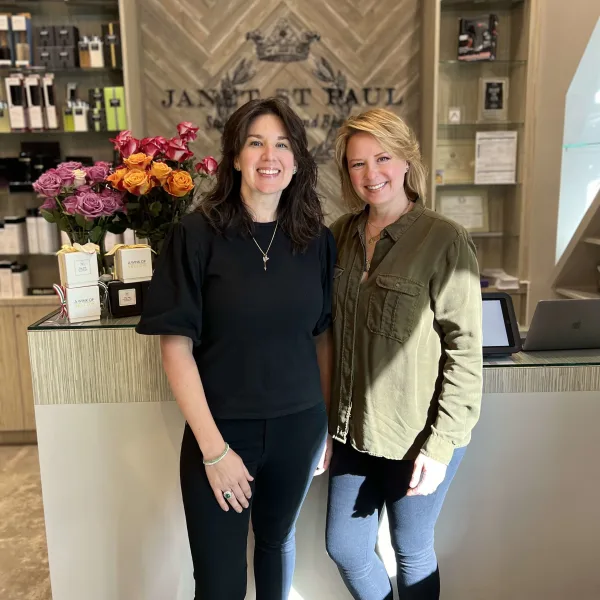
At Janet St. Paul Studio for Hair and Beauty, Director of Operations Natasha McMillen helps bring her wife Janet St. Paul's vision to life, elevating every system from education to operations.

Expand your color service menu with the Pinstripe technique. Brooks and Brooks' Marlon Hawkins walks you through the technique.