Each time one of your clients stocks up on beauty products at the local drug or grocery story, that’s money out of your cash register. You may feel powerless to fight it, but you’re not. We invited three industry leaders to weigh in on:
by Web Editor
July 10, 2011
3 min to read
Each time one of your clients stocks up on beauty products at the local drug or grocery story, that's money out of your cash register. You may feel powerless to fight it, but you're not. We invited three industry leaders to weigh in on:
How is diversion impacting our industry and what can we do?
Bob Peel, Jr.
President, Peel's Salon Services
Hutchinson, Kansas
Ad Loading...
Frank Gironda
President of Cosmetologists Chicago
Zohar Paz
General Manager, Moroccanoil
Bob Peel, Jr.: The biggest advantage
salons have over drugstores is the professional recommendation. Peel's has a 100-percent guarantee of any product, no matter how much has been used. If a client brought back a bottle to a drugstore that was 3/4-empty and said it didn't work, would they take it back? No. Play that card at the salon. We take an aggressive stance to get salon owners to purchase software that allows them to track retail purchases, and then develop loyalty programs, frequent purchase cards and rewards programs for clients-that way there's more value added for clients to buy from the salon as opposed to a drugstore. As a distributor, if someone places a phone order and we have not physically met these people, we won't ship the order until a sales rep meets with them. We have security coding that allows us to track the barcodes and see where products end up. We have annual visits with our top 500 customers, and check to make sure they can handle the kind of sales inventory they're purchasing. Because of everything we do, Peel's seldom shows up on anyone's list as a diversion problem.
Frank Gironda: Diversion is harmful to our industry but also to clients who purchase diverted products. They often pay more for diverted product than in a salon and they might not select the right products for their hair. If consumers buy the wrong product at the drugstore, they believe the product performs badly. That reflects on the entire brand or company, so, diversion is not good for the manufacturer either. Manufacturers must keep professional products professional. I encourage all manufacturers to learn and react to the impact diversion has at the street level, especially with hairdressers who are making the initial recommendation that builds their sales. As a salon owner, I know diversion is demoralizing to my staff. When clients say, "I don't need your shampoo, I just got some at the drugstore," it takes away hairdressers' desire to sell retail products. They stop recommending. That hurts the salon's overall profitability. The only ones to make money are diverters, and they should not be rewarded.
Zohar Paz: To fight diversion, salons must do their homework on the products they carry, educate their clients and support those manufacturers who are truly taking action. Only by working together can we help prevent diversion and protect the salon business. As a dedicated industry independent, the Moroccanoil brand has a special relationship with salons and this issue is of prime importance. We take great satisfaction in creating genuinely new kinds of high-performance products, our own trade secret, and making sure they stay in salons. Moroccanoil invests major resources to prevent and fight diversion, brand counterfeiting, as well as package design and logo infringement. We've also built protection into each product with a revolutionary technology that places more than a hundred invisible tracking codes on each bottle to prevent and track diversion on every level.
All beauty professionals should know how to identify when a client may need some health guidance. Tracy Rado discusses some common questions that clients ask in the chair, how to advise them, and when to refer them to a specialist.
From managing air traffic on busy days to handling frustrated guests' complaints, your front desk team often serves as the salon's emotional shock absorber. From a customer service lesson from the DMV to a list of strategies for caring for your front line, our experts offer ideas for alleviating stress, celebrating wins, and setting goals.
According to the KIM Report, top-line salon revenue appears steady or slightly up, but that growth is driven primarily by service price increases. Beneath the surface, retail performance and client visit frequency (appointment drift) are under real pressure. In his latest blog, Alain Audet offers strategies for keeping your salon's retail sales strong.
Putting your family to work in the salon offers some real tax benefits, but you have you have to play by the rules of the tax code to claim them. Azarvand Tax Law's Leticia Skrabut, Esq., shows you how.
Discover how to create a true “WOW experience” for every client by first building a culture where your team feels engaged, empowered, and inspired. Drawing on Calvin Stovall’s Iconic Framework, this blog explores how salon, spa, and clinic leaders can strengthen culture, elevate customer experience, and build a business that stands out for the long term.
The wellness industry is growing fast, and salons and barbershops already are an important part of it. In her first blog, Tracy Rado shares where the wellness dollars are heading, and how salons can grow with this movement.
While salon sales are increasing, owners often feel they're working harder for the same or less profit. Leverage Q2 data from The KIM Report, Alain Audet reveals some of the structural changes that are dampening your growth and why your region and your salon size matters.
Weaknesses in your business are amplified during the Holiday Season. Spark Pro Global's Lucy Randall shows you five things to do now to have the strongest holiday season yet.
In Kati Whitledge's latest blog, she shares how salons have moved away from dress codes and embraced appearance standards. But by removing strict dress codes, some businesses may have unintentionally lowered their appearance standards. Whitledge helps you explain to your team why an appearance standard is important and how to smoothly implement a new appearance policy.
The Small Business Health Care Tax Credit is a non-refundable tax credit for for-profit businesses that provides a financial incentive for eligible employers who offer health insurance coverage to their employees. Leticia Skrabut, Esq., walks you through how to claim that credit.
Developing strong work habits early in one's career supports long-term success in the salon industry. Jesse Linares offers new stylists his top five tips.
Most salon owners have no idea what these numbers are.
You can hit record sales and still have a profit problem. The difference comes down to four numbers almost nobody was taught to track.
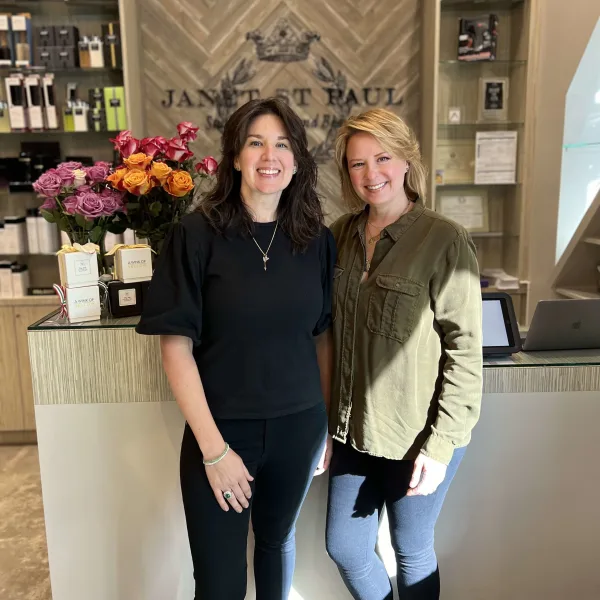
At Janet St. Paul Studio for Hair and Beauty, Director of Operations Natasha McMillen helps bring her wife Janet St. Paul's vision to life, elevating every system from education to operations.