In an ever-tightening economy, retail sales are increasingly important to your bottom line. Salon coaches and top-selling owners help ring in the sales by addressing your retail questions.
While the nation's economists battle out whether or not we're in a recession, we're all feeling the pinch from soaring gas costs and food prices. That includes your clients, whom you may find are stretching, or even skipping, appointments and cutting back on pampering spa services. While most salon and spa owners realize their retail area can represent an important source of salon profit, this area is too often overlooked. With roots on the creative side, too many owners and service providers worry that "selling" makes them seem too pushy or overbearing, offending valued clients.
Remember though, these clients are seeking your advice, and your professional opinions can actually help them manage their budgets by preventing them from wasting money elsewhere on products that don't address their specific needs. Armed with the right products, clients can recreate and protect their salon styles beyond appointments, resulting in a higher overall client satisfaction. And, of course, a boost your bottom line never hurts-especially now.
Ad Loading...
Q. How should I introduce my new employees to retailing?
A. "It should start even earlier," says Patricia Owen, owner of the skin-focused Faces DaySpa, BeautyBoutique and SpaShoppe in Hilton Head, South Carolina. "We include questions about retailing in our interviewing process."
Kristi Valenzuela, success coach, speaker and owner of the consulting firm Crystal Focus, Inc., suggests that it can be as easy as handing the applicant a red pencil and asking her to attempt to sell you the product. "They may feel silly, but what you're looking for is their willingness to try. If they push it aside and say they can't do that, chances are they won't attempt to retail your products either."
Once you've made the hire, retail training needs to be an integral part of your orientation and training program. Valenzuela recommends developing a retailing system, writing it down, scripting the pitch, and role-playing the system during orientation. "Finally, draft an agreement that says they've been introduced to the system and agree to play by the rules, and ask new employees to sign it the first day. It makes them take retail seriously."
But make sure all your employees play by the retail rules, or your new employees will quickly backslide into bad habits. Valenzuela saw the power of an entire organization in retail action when she recently coached a salon in Round Beach, Illinois. "Their retail to service ratio was a startling 23 percent, where the national average is about 8 percent," she says. "We kept questioning the math, but found the ratio was right-so we took a hard look at the system. We found that when appointments were booked, the front desk advised clients of upcoming product specials. When clients checked in, they were again reminded of specials and told to ask their service providers what products would work best for them. Service providers talked about products during the service and at the shampoo bowl. At the end of the service, the stylists pulled recommended products and handed them to the client as they checked out. It's solid and it's brave, but because everyone in the salon did it, it didn't feel uncomfortable, and it worked."
Q. How can I get my staff to take retail seriously?
A. The most effective retail systems directly tie retail goals to an employee's ability to advance in the salon. Daired Ogle, owner of Daired's Salon and Spa Pangea in Arlington, Texas, maintains a system where staff providers advance through a series of levels with goals set in retail, retention, pre-booking and conditioning treatments sold. "When a staff member accomplishes these goals and maintains them for a period of three months, they are promoted where they can charge more money for their work and they receive a new title. Each time they receive a promotion, they are given new goals."
Ad Loading...
Employees are evaluated weekly, and management discusses strategies for improving if necessary. "Our main goal is to elevate our customer service level, and all these areas we measure tie together, doing them all well we really are creating a great experience for our guests."
All beauty professionals should know how to identify when a client may need some health guidance. Tracy Rado discusses some common questions that clients ask in the chair, how to advise them, and when to refer them to a specialist.
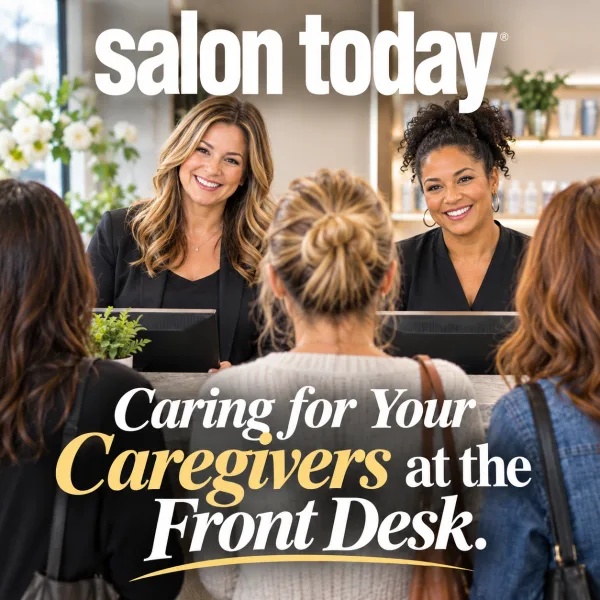
From managing air traffic on busy days to handling frustrated guests' complaints, your front desk team often serves as the salon's emotional shock absorber. From a customer service lesson from the DMV to a list of strategies for caring for your front line, our experts offer ideas for alleviating stress, celebrating wins, and setting goals.
According to the KIM Report, top-line salon revenue appears steady or slightly up, but that growth is driven primarily by service price increases. Beneath the surface, retail performance and client visit frequency (appointment drift) are under real pressure. In his latest blog, Alain Audet offers strategies for keeping your salon's retail sales strong.
Putting your family to work in the salon offers some real tax benefits, but you have you have to play by the rules of the tax code to claim them. Azarvand Tax Law's Leticia Skrabut, Esq., shows you how.
Discover how to create a true “WOW experience” for every client by first building a culture where your team feels engaged, empowered, and inspired. Drawing on Calvin Stovall’s Iconic Framework, this blog explores how salon, spa, and clinic leaders can strengthen culture, elevate customer experience, and build a business that stands out for the long term.
The wellness industry is growing fast, and salons and barbershops already are an important part of it. In her first blog, Tracy Rado shares where the wellness dollars are heading, and how salons can grow with this movement.
While salon sales are increasing, owners often feel they're working harder for the same or less profit. Leverage Q2 data from The KIM Report, Alain Audet reveals some of the structural changes that are dampening your growth and why your region and your salon size matters.
Weaknesses in your business are amplified during the Holiday Season. Spark Pro Global's Lucy Randall shows you five things to do now to have the strongest holiday season yet.
In Kati Whitledge's latest blog, she shares how salons have moved away from dress codes and embraced appearance standards. But by removing strict dress codes, some businesses may have unintentionally lowered their appearance standards. Whitledge helps you explain to your team why an appearance standard is important and how to smoothly implement a new appearance policy.
The Small Business Health Care Tax Credit is a non-refundable tax credit for for-profit businesses that provides a financial incentive for eligible employers who offer health insurance coverage to their employees. Leticia Skrabut, Esq., walks you through how to claim that credit.
Developing strong work habits early in one's career supports long-term success in the salon industry. Jesse Linares offers new stylists his top five tips.
Most salon owners have no idea what these numbers are.
You can hit record sales and still have a profit problem. The difference comes down to four numbers almost nobody was taught to track.
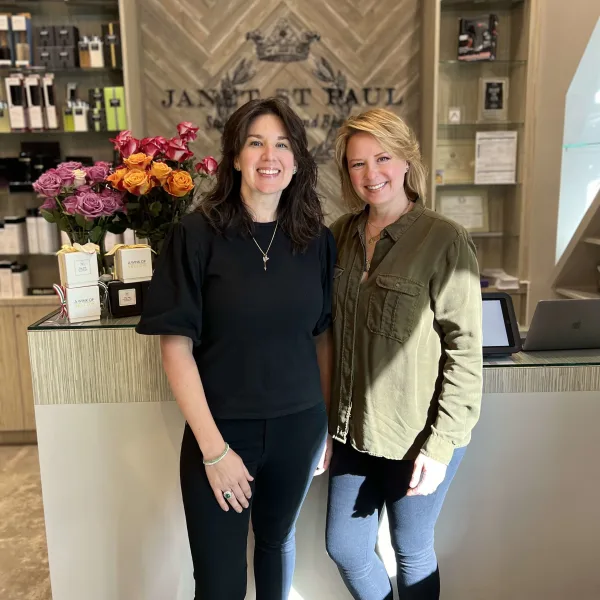
At Janet St. Paul Studio for Hair and Beauty, Director of Operations Natasha McMillen helps bring her wife Janet St. Paul's vision to life, elevating every system from education to operations.