









You Don't Own a Salon. You Own A Business.
In his latest blog, Leon Alexander Ph.D., challenges industry conventional thinking to help owners add more to their bottom lines.
 MENU
MENU SEARCH
A non-compete agreement helps one salon retain staff and protect its investment in education.
Dolce Divino Salon and Body Spa in Corpus Christi, Texas, is truly a family business.
Sisters Ariel Gonzalez-Moore and Alexa Gonzalez-Barter co-own the salon, which opened in 2000. Sister Celeste Gonzalez is a nail tech in the salon and brother Ambrose Gonzalez is the salon coordinator. The siblings’ parents—father Humberto Gonzalez is a hair stylist and mother Lamar is an esthetician—also work in the salon.
But, says Ambrose, just because the owners have a built-in staff within their own family doesn’t mean the other employees are any less important. That’s precisely why last year the owners took a significant step—drafting a non-compete agreement—to help ensure their top talent stays with them.
“It’s been a great help to our business,” says Ambrose. “We haven’t had anymore wasted education and it lets us see who wants to work here. Now everyone on staff has the same focus and goals.”
PROTECTING AN INVESTMENT
Because Dolce Divino offers some of the best education perks among salons in the Corpus Christi area, the owners felt a non-compete agreement was a necessary step to protect their investment.
“We’re really the only salon in town that offers extensive training; it’s a big marketing tool for us and our biggest competitive advantage,” says Ambrose. “When a client discovers that our stylists have trained in England or Paris, they want to come here. And it’s the same for recruiting stylists. They come for the opportunity for international training. But that education costs us money and it’s an investment we need to protect.”
Any stylist at the salon who does $100,000 a year in business qualifies for the international training. Ambrose estimates each educational trip costs about $4,000 per person.
“We had one stylist who we sent to a studio in Paris,” says Ambrose. “We paid for the hotel, the flight, the training, everything. Then she came back, was here a week, and quit. I think that’s what really prompted the non-compete agreement.”
Although that stylist ended up moving out of state, the Gonzalezes heard rumors that other salons had been trying to coax her, and other stylists, to get the training at Dolce Divino and then come to their salons.
“We heard rumors that other salons in town were telling stylists to ‘Go to Dolce Divino, get their education, and then leave,”’ says Ambrose.
THE LOGISTICS
Concerned over the issue, the owners discussed the problem with a client who is an attorney.
“We were unfamiliar with noncompete agreements, but that client suggested we draw one up,” says Ambrose. “He offered to do it in exchange for a couple free hair cuts.”
The agreement only applies to senior level technicians who produce $100,000 a year or more— because that’s who qualifies for the international education. It states they cannot work for another salon within a five-mile radius for a year after leaving Dolce Divino nor can they use the salon name in any sort of marketing or advertising after leaving. The owners explain the agreement to all new technicians during the interview process. That is one important stipulation for new employees—they must know about it up front for it to be enforceable, says Ambrose.
He also points out that the laws on such agreements vary widely from state to state. For instance, in California they are very difficult to enforce; in Texas, the agreements are more enforceable. Thankfully, he says, they haven’t yet had to take any legal action, although the agreement has helped to weed out employees who weren’t serious about staying at the salon.
“A while back, we had three top producers resign because of the contract,” sap Ariel. “They freaked out and didn’t want to sign it. I had a long discussion with them and they refused. It turned out that the whole time they had been planning to open their own salon. They were going to get our international training and then leave. They ended up leaving before the training.”
In the long run, having the agreement has saved the salon money and helped strengthen the staff.
“We have six top producers on staff who have signed the agreement and are very happy with it,” says Ariel. “We don’t want them to see it as a bad thing—we believe it’s good for them and for us. If they’re doing well and are loyal, we hope to have opportunities in the future for them to do things like franchise additional locations.”
EXPANSION PLANS Additional locations figure in the very near future for Dolce Divino. In fact, this year the Gonzalezes will open two salons—one is 2,800 square feet and the other is 4,200 square feet—in addition to their current location, which is 2,800 square feet.
“As of right now, we’re recruiting at the hair schools and we hold classes there every Monday,” says Ambrose. “We have great relationships with the students and have hired six or seven assistants in the past three weeks.”
At the larger location, the salon will need about 30 employees. Some technicians will come over from the current location, which is overstaffed.
Salon management includes a Gonzalez family member to oversee each location.
In his latest blog, Leon Alexander Ph.D., challenges industry conventional thinking to help owners add more to their bottom lines.

In her latest blog, Amy Pal helps you develop your own clear guidelines around complimentary free employee services.
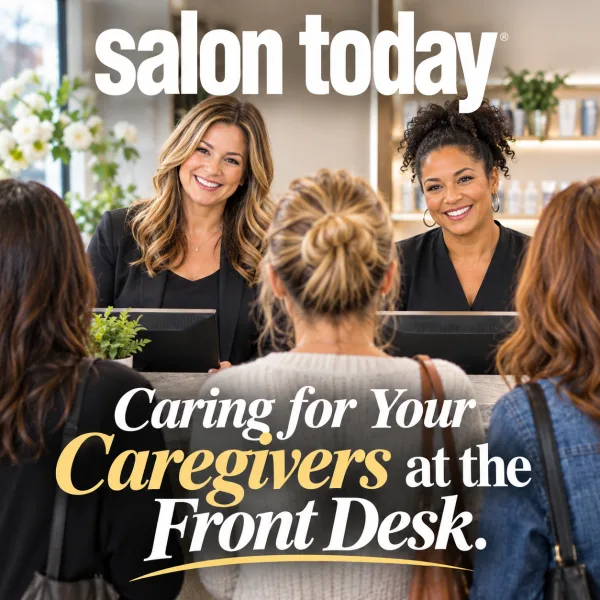
From managing air traffic on busy days to handling frustrated guests' complaints, your front desk team often serves as the salon's emotional shock absorber. From a customer service lesson from the DMV to a list of strategies for caring for your front line, our experts offer ideas for alleviating stress, celebrating wins, and setting goals.

According to the KIM Report, top-line salon revenue appears steady or slightly up, but that growth is driven primarily by service price increases. Beneath the surface, retail performance and client visit frequency (appointment drift) are under real pressure. In his latest blog, Alain Audet offers strategies for keeping your salon's retail sales strong.

Putting your family to work in the salon offers some real tax benefits, but you have you have to play by the rules of the tax code to claim them. Azarvand Tax Law's Leticia Skrabut, Esq., shows you how.

Discover how to create a true “WOW experience” for every client by first building a culture where your team feels engaged, empowered, and inspired. Drawing on Calvin Stovall’s Iconic Framework, this blog explores how salon, spa, and clinic leaders can strengthen culture, elevate customer experience, and build a business that stands out for the long term.
Sponsored by Phorest Salon Software

The wellness industry is growing fast, and salons and barbershops already are an important part of it. In her first blog, Tracy Rado shares where the wellness dollars are heading, and how salons can grow with this movement.

While salon sales are increasing, owners often feel they're working harder for the same or less profit. Leverage Q2 data from The KIM Report, Alain Audet reveals some of the structural changes that are dampening your growth and why your region and your salon size matters.

Weaknesses in your business are amplified during the Holiday Season. Spark Pro Global's Lucy Randall shows you five things to do now to have the strongest holiday season yet.

In Kati Whitledge's latest blog, she shares how salons have moved away from dress codes and embraced appearance standards. But by removing strict dress codes, some businesses may have unintentionally lowered their appearance standards. Whitledge helps you explain to your team why an appearance standard is important and how to smoothly implement a new appearance policy.
The Small Business Health Care Tax Credit is a non-refundable tax credit for for-profit businesses that provides a financial incentive for eligible employers who offer health insurance coverage to their employees. Leticia Skrabut, Esq., walks you through how to claim that credit.

Developing strong work habits early in one's career supports long-term success in the salon industry. Jesse Linares offers new stylists his top five tips.

Most salon owners have no idea what these numbers are. You can hit record sales and still have a profit problem. The difference comes down to four numbers almost nobody was taught to track.
Sponsored by Strata Salon Systems™

A five-area audit every owner-dependent salon needs to run. You built something that looks successful. Now find out if it can survive without you.
Sponsored by Strata Salon Systems™

Every month you put off fixing the problem, it gets bigger, more expensive, and harder to solve.
Sponsored by Strata Salon Systems™
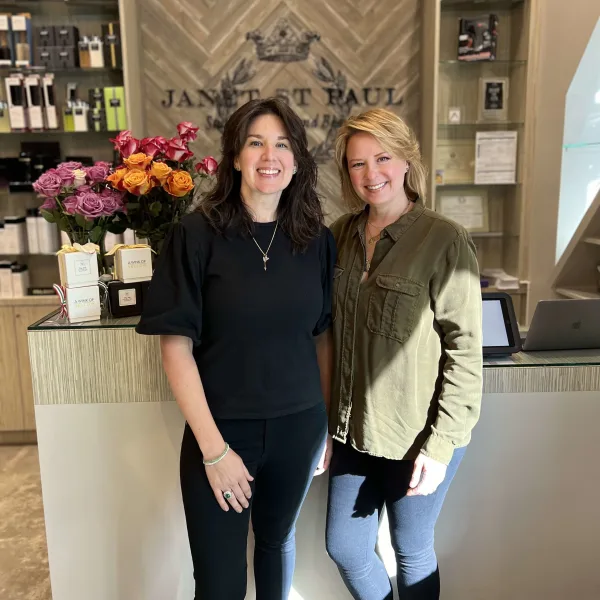
At Janet St. Paul Studio for Hair and Beauty, Director of Operations Natasha McMillen helps bring her wife Janet St. Paul's vision to life, elevating every system from education to operations.

Expand your color service menu with the Pinstripe technique. Brooks and Brooks' Marlon Hawkins walks you through the technique.