Retail sales are more than a great way to boost revenue—offering products to help your clients maintain their new style is just part of good service. How do you decide what lines best support your salon brand? We asked an award-winning salon owner, a distribution executive and a leading salon industry marketing professional:
What is the best process for evaluating a new retail line?
by Staff
July 10, 2011
3 min to read
Retail sales are more than a great way to boost revenue-offering products to help
your clients maintain their new style is just part of good service. How do you decide
what lines best support your salon brand? We asked an award-winning salon owner,
a distribution executive and a leading salon industry marketing professional:
What is the best process for evaluating
a new retail line?
THE DIZZYING VOLUME of new product
lines on the market makes choosing one a
daunting task. Besides the obvious need for
a product to be effective, there are several
points to consider in determining if a particular
product line is for you.
The right line will reflect your salon and
its clientele; it should complement your
current offerings and fall in line in terms
of cost and target market.
At Voce, we also closely examine product
features like fragrance, ingredients and
packaging, and consider the product's ease
of use. How complex is the application or
how much time is involved in using it-is
it something a client will use at home?
The best retail product information comes
from your stylists and clients, so solicit
feedback. Think about how the manufacturer
markets the product and how you will
market it to your clients. We always try to
determine what kinds of education and support
we can count on from the manufacturer
when we introduce a new line.
For me, the key question is, is it better
or is it simply new? If you aren't careful,
you can duplicate your current offerings and
end up just trading dollars for dollars.
More isn't always better. Sometimes
it's just more.
Robert Yates
Senior Vice President of Marketing,
John Paul Mitchell Systems
WHEN WE LAUNCH a new product for
retail, we focus on the needs of the hairdresser.
We ask ourselves if this product is
something hairdressers really need in their
arsenal of products.
We speak to our top salons and solicit
their feedback via our company website
and through e-blasts. Our educators are
out working in the front lines and, as such,
are in a perfect position to determine the
expected response from our best salons.
We use this input to gauge the demand the
product will generate.
Ultimately, reorders give us the measure
of a new product's success and future
sales potential.
Lastly, we turn to beauty editors to validate
a product's worthiness and its position
in relation to our competitors.
WHEN I AM EVALUATING a new retail
line, there are a few fundamental questions,
which must be answered:
• How much support (marketing literature,
promotions, education sessions) will we
receive from the manufacturer?
• Do I truly believe in the performance and
integrity of the brand enough to stake
my personal reputation behind it?
• Is there a consistent commitment on behalf
of the manufacturer to do whatever
it takes to grow the line?
After I meet with the manufacturer, I
consider whether the brand fits today's
salon culture as well as current and future
market trends. For example, we know stylists
are more conscientious about organic
products and services.
I place a lot of value on doing individual
research. Whether it is simply "Googling"
the brand's history and reputation, asking
for feedback on our UBC Facebook page,
or asking existing customers.
We make our product decisions after
considering the performance, concept
and culture of the brand. Because we
value our customers, they value us, and
I refuse to give them brands that are not
exceptional.
All beauty professionals should know how to identify when a client may need some health guidance. Tracy Rado discusses some common questions that clients ask in the chair, how to advise them, and when to refer them to a specialist.
From managing air traffic on busy days to handling frustrated guests' complaints, your front desk team often serves as the salon's emotional shock absorber. From a customer service lesson from the DMV to a list of strategies for caring for your front line, our experts offer ideas for alleviating stress, celebrating wins, and setting goals.
According to the KIM Report, top-line salon revenue appears steady or slightly up, but that growth is driven primarily by service price increases. Beneath the surface, retail performance and client visit frequency (appointment drift) are under real pressure. In his latest blog, Alain Audet offers strategies for keeping your salon's retail sales strong.
Putting your family to work in the salon offers some real tax benefits, but you have you have to play by the rules of the tax code to claim them. Azarvand Tax Law's Leticia Skrabut, Esq., shows you how.
Discover how to create a true “WOW experience” for every client by first building a culture where your team feels engaged, empowered, and inspired. Drawing on Calvin Stovall’s Iconic Framework, this blog explores how salon, spa, and clinic leaders can strengthen culture, elevate customer experience, and build a business that stands out for the long term.
The wellness industry is growing fast, and salons and barbershops already are an important part of it. In her first blog, Tracy Rado shares where the wellness dollars are heading, and how salons can grow with this movement.
While salon sales are increasing, owners often feel they're working harder for the same or less profit. Leverage Q2 data from The KIM Report, Alain Audet reveals some of the structural changes that are dampening your growth and why your region and your salon size matters.
Weaknesses in your business are amplified during the Holiday Season. Spark Pro Global's Lucy Randall shows you five things to do now to have the strongest holiday season yet.
In Kati Whitledge's latest blog, she shares how salons have moved away from dress codes and embraced appearance standards. But by removing strict dress codes, some businesses may have unintentionally lowered their appearance standards. Whitledge helps you explain to your team why an appearance standard is important and how to smoothly implement a new appearance policy.
The Small Business Health Care Tax Credit is a non-refundable tax credit for for-profit businesses that provides a financial incentive for eligible employers who offer health insurance coverage to their employees. Leticia Skrabut, Esq., walks you through how to claim that credit.
Developing strong work habits early in one's career supports long-term success in the salon industry. Jesse Linares offers new stylists his top five tips.
Most salon owners have no idea what these numbers are.
You can hit record sales and still have a profit problem. The difference comes down to four numbers almost nobody was taught to track.
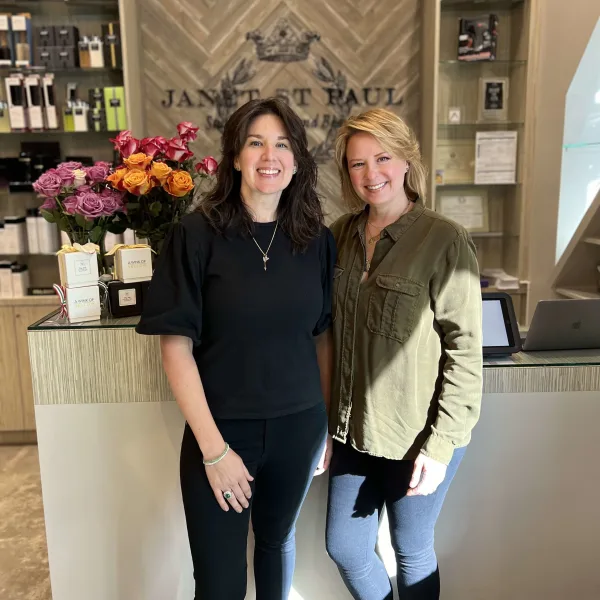
At Janet St. Paul Studio for Hair and Beauty, Director of Operations Natasha McMillen helps bring her wife Janet St. Paul's vision to life, elevating every system from education to operations.