Philanthropic-minded salons offer inspiration, ideas, and strategies for launching your own salon-based charitable endeavors.
Meg McCall・Director of Marketing - MINDBODY,
March 5, 2014
1/8
9 min to read
When most salon and spa owners donate their first gift basket to a silent auction, take a seat at their first event planning committee meeting, or pledge their team’s support to the first awareness campaign, they do it with the well-being of the charitable organization and the people it serves strictly in mind. But what owners soon realize is their generosity yields so much more—in terms of community goodwill, team-building and even new clientele and expanded business opportunities.
“It’s really a way to get your name out in the community in a positive way,” says Stephanie Gregoire, owner of Salon 6 in Indianapolis, Indiana. “People know that we’re doing this, and they get excited, too.”
Ad Loading...
How salons offer help and who receives that support varies greatly, running the gamut from donating haircuts at a local shelter to organizing an extravagant runway show. Gregoire’s team entered the charitable domain, after being inspired to support Childhelp, an organization that works to prevent child abuse, at the 2006 Eufora Global event.
“They did a presentation saying that if every Eufora salon did something small, imagine what we could accomplish together,” Gregoire says. That first year, the salon sent its first check for $800. Just seven years later, Salon 6 contributes $10,000 a year by hosting a variety of events, including ‘One Tip, One Child’ in which all stylists donate their biggest tip of the day. The salon also sponsors an annual music event, Rock for Hope, at a local bar, with food and a silent auction. “Everything is donated through our clients and some local participating businesses. We don’t spend any money to host the event,” Gregoire explains.
A Multi-Faceted Approach
The Ihloff Salon and Day Spa, with three locations in Oklahoma, also takes a multi-faceted approach to raising funds and awareness for local non-profits. The owner, Marilyn Ihloff, says after being behind the chair for 30 years, she started getting out of the salon and working with local community groups like the Chamber of Commerce. A friend who worked on transitioning women from prison back into the community through an organization called Resonance mentioned that if the women could have a “decent haircut” when they went on job interviews, they’d have a much better chance of getting the job.
“That’s how we started,” says Ihloff. Now her team participates in many events, including walk-a-thons, service auctions, jean days and Locks of Love events, all of which have benefited groups such as the Gulf Restoration Network, the Mental Health Association, and Lymphoma and Leukemia research.
Ad Loading...
The salon is also in its 16th year of hosting an annual Creative Team Fall Show benefit, a high-energy runway show in which her team displays their talents.
Sponsors and VIPs are invited to enjoy food, wine, music and mini-spa services, as well as win donated prizes. Team members take on all roles from directing, DJ and costuming to ticket sales and soliciting prizes. They perform hair services on more than 100 models and interview 20 to 30 beauty school students to become interns for the show. Often, these interns are later hired by the salon.
The show raises $30,000, which is currently being directed to The Arts and Humanities Council of Tulsa. Ihloff thinks the show is a fund-raising model that can work for most salons.
Ihloff believes being involved with the community is much more effective than other types of marketing expenditures. “We have ceased to do any kind of print advertising unless it’s involved with some sort of community benefit,” she said. Community networking has increased word-of-mouth referrals, and Ihloff says she sees more men coming in for spa services because they feel more confident due to the personal relationships she’s established with them.
Creating A Non-Profit
Ad Loading...
Omagi Salon Spa in Louisville, Kentucky, has been recognized by the SALON TODAY 200 for four consecutive years for its philanthropic efforts. “During the recession, so many charities were facing extinction. Their government funding was cut off, grants were few and far between, and donations fell off considerably. We asked ourselves, ‘What can we do to help that will make a meaningful, lasting impact,’” says general manager Wes Auberry.
In Omagi’s case, the answer was to create their own non-profit, Beauty for a Benefit, that partners with one charity for an entire year to raise both public awareness and funds. “This strategy builds relationships, and we see the fruits of our labor.” In recent years Omagi has donated nearly $30,000 each to Best Buddies, a program for people with cognitive disabilities, and Home of the Innocents, which serves children in crisis.
Auberry, who has a background in managing non-profits, admits this approach isn’t for every salon. “It’s an area that is very involved and can be quite tedious and intimidating,” he said. But for Omagi, the model has worked well.
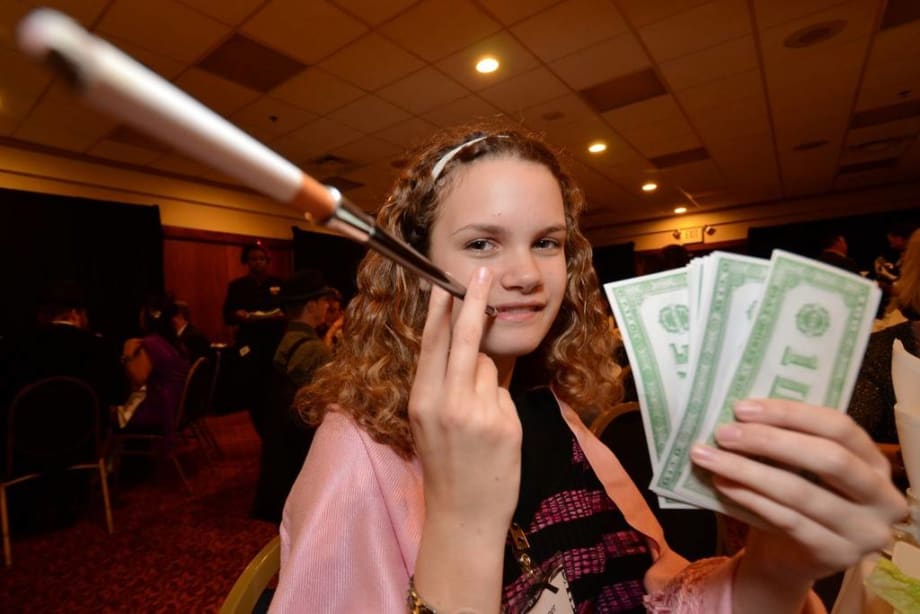
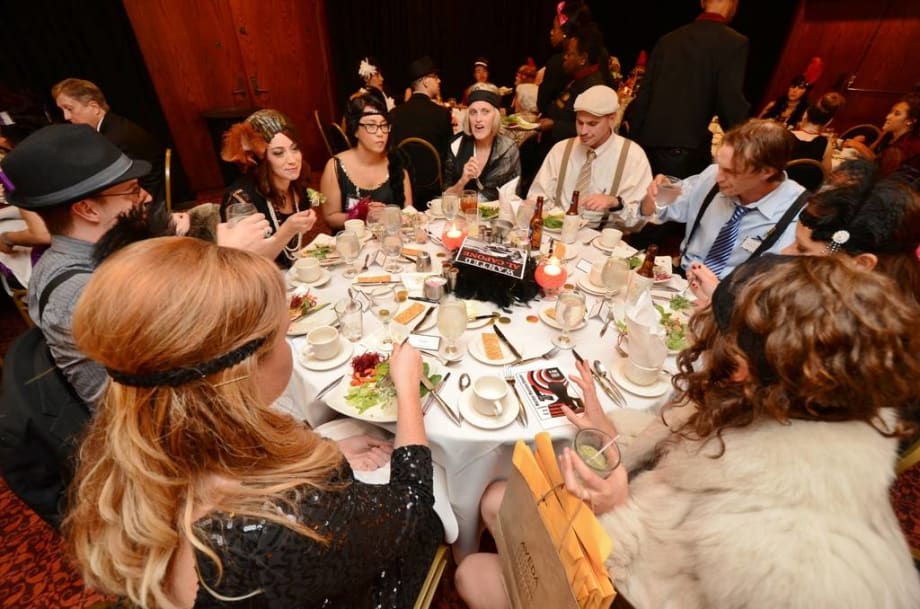
The salon hosts two major events each year, a high profile event called Louisville’s Derby Fashion Festival, which features original Derby hat designs by local fashion designers that are worn by local celebrities, and a Murder Mystery Dinner. The Derby Festival includes a runway fashion show, sit down dinner, auctions and entertainment, as well as a presentation from the chosen benefactor. The Mystery Dinner is a ticketed event that invites community members to come in costume. Both events have been covered extensively by local news media.
“The salon could’ve never purchased advertising with that kind of impact,” said Auberry. “We’re astounded by how many people say, ‘We saw you on (the news) this morning.’ It gets our message out in a very subtle way.” Based on guest satisfaction surveys, he estimates that 24% of their new clients come from hearing about their events.
Ad Loading...
Building a Movement
Rachel DeMolfetto and Cynthia Sansone are two of five sisters who watched helplessly as their bright-eyed mother became sullen and depressed as she battled cancer in the 1980s. “It was the time of AIDS, and the salon she went to didn’t know how to care for a client with cancer,” says Sansone. “She was a double-processed blonde and they didn’t know how to help her with her hair, and we watched her endure the stares and the whispers and at the time we didn’t have the tools to help her. She passed in 1989.”
Today, the sisters have those tools and they are putting them to good use. Together, they own Racine Salon de Beaute and Spa in Islip, New York, and 10 years ago they started opening their salon and spa once a month on Monday afternoons (MondaysatRacine.org) and giving away support, comfort and services to people who are receiving treatments for cancer. Over time the program, the program has grown to become a safe have for cancer patients as well as an important community resource center that’s helped hundreds of women deal with their affliction in a positive and caring way.
In 2010, an oncology nurse wrote a blog about the salon in The New York Times where she revealed that a cancer patient’s first question often is “Am I going to lose my hair?” That led HBO Films to Racine’s doorstep and they took two years to shoot the documentary <I>Mondays at Racine<I> which was nominated for an Oscar in 2013. The movie brought attention, and the attention brought donations, which urged the sisters to open their doors every Monday afternoon, file for non-profit status and think about how to grow this movement even bigger.
Over the course of a decade, they’ve gathered quite a bit of knowledge about offering services to clients who are undergoing cancer treatment and they are putting that together in a inch-thick manual they are calling the Mondays at Racine Toolkit and offering it to salons that want to launch similar effort in their own establishments. “You already have the real estate, and you can start slowly without a lot of cost,” says Sansone. “But there are a lot of protocols for dealing with cancer patients—from what services you can do and how you can do them safely to what you can say to someone before shaving their head. ”
Ad Loading...
In addition to receiving the toolkits, participating salons also will be added to the salon’s search function/map on their website. Mondays at Racine is asking interested salons to donate $500 to help them cover their legal costs.
“We’ve found that being involved in this program over the last 11 years has served us and our business right back—it’s truly addressed every part of our soul,” says Sansone. “My mother was a good business woman and she always wanted her daughters to do well,” says Sansone. “I know she’s she looking down and is extremely proud of this program.”
Philanthropic Paperwork
Before embarking on fundraising activities, salons should consider the administrative and staffing ramifications. The Teddie Kossof Salon Spa, which has 88 employees and has been in business since 1975, has set up an online portal, called Bidding for Good, to track incoming requests. “We never say no to a donation request,” said Alan Kossof, who is now a partner with his father, Teddie Kossof. When the salon is unable to provide a monetary donation, they will offer a gift certificate for services instead. The salon goes so far as to proactively solicit non-profits if they hear they’re having an event. “This approach is warmly welcomed by non-profits – it sometimes even shocks them – and helps us form strong connections with local leaders,” noted Kossof.
The Bidding for Good services comes with a nominal fee. “It’s definitely helped us get more organized since we have a high volume of requests,” said Kossof, noting the salon donated to more than 150 organizations and volunteered their time at eight fashion shows in 2012. “It’s also helped us reduce a lot of paper in the office and forced us to be a little more tech savvy.”
Ad Loading...
Building Teamwork
The salons all agree that their community activities have contributed to a sense of teamwork among staff. “It definitely helps with retention, and the show is great for letting our people get those creative juices out,” noted Ihloff.
It also creates a culture of giving in the salon, but it wasn’t without some bumps along the way. “The idea of giving back can be a challenge for any salon culture, but every employee that gets hired is informed that we graciously expect (him or her) to contribute to the community,” explained Kossof. Auberry agrees. “I only hire people that I feel have values in alignment with ours,” he said. Ihloff says her salon also has a list of “non-negotiable” criteria for hiring, and community involvement and a commitment to their annual show are among them.
Collectively, these salons and their staff contribute remarkable amounts of money, time and services each year, ranging from $30,000 to $175,000. And while that is certainly impressive, Gregoire says a lot of time salons feel like they have to do something big, when really “even a small donation like our One Tip, One Child makes a big difference.” So whether you do numerous small fundraisers or one large event every year, the mere act of getting involved will create win-win scenarios for your community and your salon.
All beauty professionals should know how to identify when a client may need some health guidance. Tracy Rado discusses some common questions that clients ask in the chair, how to advise them, and when to refer them to a specialist.
From managing air traffic on busy days to handling frustrated guests' complaints, your front desk team often serves as the salon's emotional shock absorber. From a customer service lesson from the DMV to a list of strategies for caring for your front line, our experts offer ideas for alleviating stress, celebrating wins, and setting goals.
According to the KIM Report, top-line salon revenue appears steady or slightly up, but that growth is driven primarily by service price increases. Beneath the surface, retail performance and client visit frequency (appointment drift) are under real pressure. In his latest blog, Alain Audet offers strategies for keeping your salon's retail sales strong.
Putting your family to work in the salon offers some real tax benefits, but you have you have to play by the rules of the tax code to claim them. Azarvand Tax Law's Leticia Skrabut, Esq., shows you how.
Discover how to create a true “WOW experience” for every client by first building a culture where your team feels engaged, empowered, and inspired. Drawing on Calvin Stovall’s Iconic Framework, this blog explores how salon, spa, and clinic leaders can strengthen culture, elevate customer experience, and build a business that stands out for the long term.
The wellness industry is growing fast, and salons and barbershops already are an important part of it. In her first blog, Tracy Rado shares where the wellness dollars are heading, and how salons can grow with this movement.
While salon sales are increasing, owners often feel they're working harder for the same or less profit. Leverage Q2 data from The KIM Report, Alain Audet reveals some of the structural changes that are dampening your growth and why your region and your salon size matters.
Weaknesses in your business are amplified during the Holiday Season. Spark Pro Global's Lucy Randall shows you five things to do now to have the strongest holiday season yet.
In Kati Whitledge's latest blog, she shares how salons have moved away from dress codes and embraced appearance standards. But by removing strict dress codes, some businesses may have unintentionally lowered their appearance standards. Whitledge helps you explain to your team why an appearance standard is important and how to smoothly implement a new appearance policy.
The Small Business Health Care Tax Credit is a non-refundable tax credit for for-profit businesses that provides a financial incentive for eligible employers who offer health insurance coverage to their employees. Leticia Skrabut, Esq., walks you through how to claim that credit.
Developing strong work habits early in one's career supports long-term success in the salon industry. Jesse Linares offers new stylists his top five tips.
Most salon owners have no idea what these numbers are.
You can hit record sales and still have a profit problem. The difference comes down to four numbers almost nobody was taught to track.
At Janet St. Paul Studio for Hair and Beauty, Director of Operations Natasha McMillen helps bring her wife Janet St. Paul's vision to life, elevating every system from education to operations.