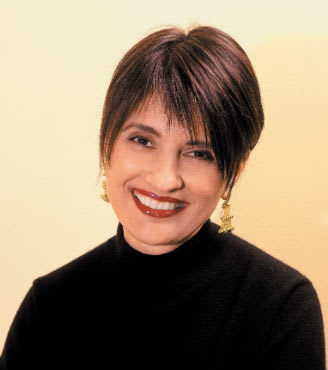
Gina Khan Owner, Gina Khan Salons in San Francisco Logics International Color Spokesperson
When Gina Khan graduated from cosmetology school in 1973 and joined Yosh for Hair on San Francisco’s Maiden Lane, her intention was to become the best hair cutter she could, but newfound passions quickly led her in other directions. While Khan quickly attained the designation of Master Stylist, her strong leadership skills emerged, and she was appointed as the salon’s manager. Then in 1986, she decided to pursue her interest in haircolor and joined Matrix's Logics team as an educator. In 1999, Khan and her husband purchased the salon from Yosh Toya, and four years ago, they opened a second salon, rebranding both under her name. As an educator, Gina Khan's approach is real-world and no-nonsense—she prides herself on presenting actual salon situations and client case studies from her own experience. “I have the same challenges as everyone in my classes, so I give advice that has worked for me.”
From where does your entrepreneurial drive originate?
I have this need for relevance in the world and doing something that’s relevant. I want to be successful, which I do not define financially, but by doing things well and making a difference to people. I wanting to be the best—I was raised that way.
As you grew your company/brand, what “ah-ha” moments of clarity helped you shape its future course?
Ad Loading...
When I was young I was managing the salon before I purchased it. When I took over as manager, I didn’t know anything about managing and I didn’t want to just bark orders. So I picked up the Tom Peters book In Search of Excellence. That book shaped how I thought about management. It was written in the 1980s but gives a lot of insight and is still relevant. One of the things I took away from it was about how important it is to get clients involved in decision making. Yes, it’s about the client. Often we are defined by our vision, but we need to try to marry that with the clients’ needs. We are client-driven—or should be. It was a very insightful moment.
I also learned about developing talent from within. In those days, many people hired outside managers. This book talked about developing your own team and giving them the opportunity to grow within your company. That’s why I have staff who’ve been with me 15-20 years. Our old staff meetings used to be about all the problems—I decided it had to change when I took over and I made staff meetings positive.
How would you describe your management style? What do you think makes you a good leader, and in what areas would you to improve?
Lead by example. There is nothing I expect my team to do that I wouldn’t do. I’m a very hands-on manager. As women we’re workers. We like to jump in and get the job done. I’m also very meticulous with an eye for detail. I’d like to improve my patience. I was very patient five to 10 years ago and that has definitely changed.
How do you set goals for yourself? For example, do you prefer more small accomplishable goals or fewer large goals? How do you hold yourself accountable?
I definitely set small goals—I have to feel accomplished. I have the simplest daily goals to feel like I’ve got something done. These small goals are the path to the big picture. I also hold my team accountable. If it doesn’t get done, there’s a consequence. But I make sure it gets done. If I’m not going to get stuff done, I can’t expect anyone else to. I’m hardest on myself—even my clients tell me that.
Ad Loading...
Throughout your professional history, what’s the best lesson you’ve learned after making a mistake?
To be a better listener. I think I’ve missed some very important signals and signs and things that could’ve made a difference because I wasn’t listening well. Now I listen better—actually hearing what people are saying and trying to be effective.
From whom or what do you draw your strength, courage, vision?
My family. My upbringing was very centered. We’re all very secure and comfortable with ourselves because we had fantastic parents. My siblings and I know how to deal with crisis, we don’t fall apart. I also get courage from my husband—he’s definitely the risk taker. And I get a lot from our staff. I’m very much engaged in their success. I think by listening to them and wanting them to be just as successful, I get a lot of vision.
As you grew your company, what, if anything, has held you back?
Ad Loading...
Probably the same as most people—fear of failure. Failure is not really in my vocabulary, but my husband Vijai is fearless. His whole thing is you never know if you don’t try it. My whole thing is we need to proceed with caution. Fear of failure can prevent you from moving forward.
What is the number-one quality you look for when hiring employees, and how do you evaluate if they possess that trait?
When I’m interviewing candidates I’m most interested in their answers about their relationships with their parents, siblings, friends, etc. If they have a good support system around them, they will be successful. I like to hear a person has good values and good relationships. I try to gauge if people are happy. I don’t want people to think I’m going to make them happy—that’s never going to happen. I want them to be engaged, secure and happy.
What’s the best thing an employee/colleague ever said about you?
From work colleagues it’s more about the things they’ve learned and what a difference I’ve made in their careers, like: “You changed my life/career.” And then from my employees, the best thing I hear is how much I care about them. They know I’m tough, but that I care.
If you were training another woman to takeover your job, what’s the most important advice you would offer her?
Ad Loading...
Be very clear with your expectations. Set them up front and be very consistent. That has served me well. I’m the most consistent human being on the planet. People know what to expect and there are no surprises from me. Be a great communicator—be present with the people you’re leading.
If someone were to write a book about your life, what would be an appropriate title?
GK: I asked my staff and one of the girls said, The Girl That Can. Everyone laughed but I think it’s true. I will work at it until it happens.
If you weren’t in the beauty industry, what would you be doing?
I would be doing something with gardens or flowers—maybe a florist. I like my garden to be random and wild—a very natural kind of garden. I plant things, and if they bloom, great. If not, I move it. I got that from my dad. He was a huge gardener and we grew up with the most beautiful gardens.
What are you working on now?
Ad Loading...
For the first time we had a small walk-out: We lost five people in about a week. It happened in our Walnut Creek location and I didn’t see it coming. I was not prepared at all so all our focus has been on rebuilding the space—hiring and training. It’s been a challenge. Obviously we’ve had people leave here and there, but this was a very weird situation.
How would you like to spend your retirement?
I don’t know if I’ll ever retire. I love what I do and I can’t imagine not doing it. As long as my body holds up I will continue to do hair. I don’t see retirement as doing something different. I love to nurture young ones. I don’t feel like I should start thinking about retirement—it’s not even on my radar. I feel very healthy.
One of the things I love about this career is the relationships you build. Having that social interaction every day is such a driving force. I just love those relationships and can’t imagine giving that up. It’s motivating and inspiring. It’ll change a little bit some day, but I can’t imagine giving it up completely. I don’t feel like this is work. Coloring hair and the interactions with clients are not work at all.
All beauty professionals should know how to identify when a client may need some health guidance. Tracy Rado discusses some common questions that clients ask in the chair, how to advise them, and when to refer them to a specialist.
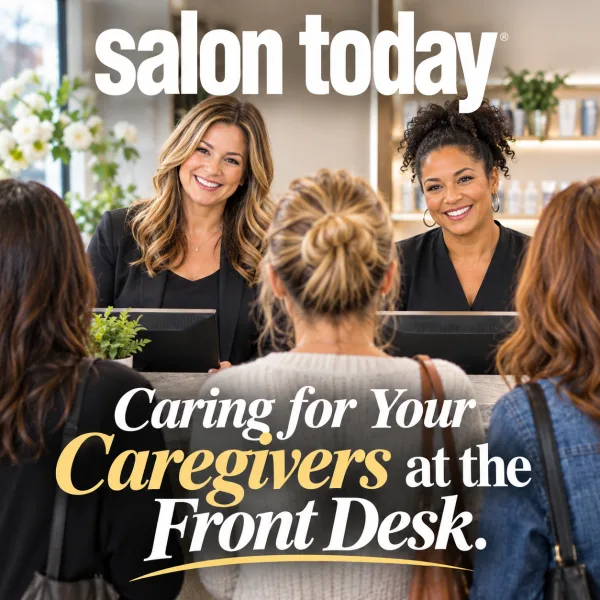
From managing air traffic on busy days to handling frustrated guests' complaints, your front desk team often serves as the salon's emotional shock absorber. From a customer service lesson from the DMV to a list of strategies for caring for your front line, our experts offer ideas for alleviating stress, celebrating wins, and setting goals.
According to the KIM Report, top-line salon revenue appears steady or slightly up, but that growth is driven primarily by service price increases. Beneath the surface, retail performance and client visit frequency (appointment drift) are under real pressure. In his latest blog, Alain Audet offers strategies for keeping your salon's retail sales strong.
Putting your family to work in the salon offers some real tax benefits, but you have you have to play by the rules of the tax code to claim them. Azarvand Tax Law's Leticia Skrabut, Esq., shows you how.
Discover how to create a true “WOW experience” for every client by first building a culture where your team feels engaged, empowered, and inspired. Drawing on Calvin Stovall’s Iconic Framework, this blog explores how salon, spa, and clinic leaders can strengthen culture, elevate customer experience, and build a business that stands out for the long term.
The wellness industry is growing fast, and salons and barbershops already are an important part of it. In her first blog, Tracy Rado shares where the wellness dollars are heading, and how salons can grow with this movement.
While salon sales are increasing, owners often feel they're working harder for the same or less profit. Leverage Q2 data from The KIM Report, Alain Audet reveals some of the structural changes that are dampening your growth and why your region and your salon size matters.
Weaknesses in your business are amplified during the Holiday Season. Spark Pro Global's Lucy Randall shows you five things to do now to have the strongest holiday season yet.
In Kati Whitledge's latest blog, she shares how salons have moved away from dress codes and embraced appearance standards. But by removing strict dress codes, some businesses may have unintentionally lowered their appearance standards. Whitledge helps you explain to your team why an appearance standard is important and how to smoothly implement a new appearance policy.
The Small Business Health Care Tax Credit is a non-refundable tax credit for for-profit businesses that provides a financial incentive for eligible employers who offer health insurance coverage to their employees. Leticia Skrabut, Esq., walks you through how to claim that credit.
Developing strong work habits early in one's career supports long-term success in the salon industry. Jesse Linares offers new stylists his top five tips.
Most salon owners have no idea what these numbers are.
You can hit record sales and still have a profit problem. The difference comes down to four numbers almost nobody was taught to track.
At Janet St. Paul Studio for Hair and Beauty, Director of Operations Natasha McMillen helps bring her wife Janet St. Paul's vision to life, elevating every system from education to operations.