Once the color has been lifted to the desired level, the hair is ready for colorization.
While Mother Nature created the most beautiful natural tresses, technology is hard at work recreating them in the form of hair extensions. Brett Butcher, national program director for Great Lengths USA recently outlined four points where technology helps Great Lengths USA produce a premium extension.
Sourcing. “While many extension companies source from India, Great Lengths doesn’t utilize brokers and actually has developed a system where it can guarantee traceability and ethicality of its source. Great Lengths hair is documented to the temples in India, where people of certain faith pilgrimage to donate hair in a religious tonsorial ceremony, which is why we can guarantee its quality,” he says.
Ad Loading...
Colors are developed by hand dipping hair into textile dyes.
The De-pigmentation/Pigmentation Process. “We don’t use any toxic chemicals, bleach or ammonia to lift the pigment from the hair,” say Butcher. “Instead, we employ a special osmosis process which takes several days to completely remove the color molecule, instead of shattering like a bleaching agent would. That way, we can pigment the hair one of our 50-plus colors and it will maintain its virgin-hair quality.”
Functionality of the Keratin Bond. In 1992, Great Lengths patented the keratin bond. “What’s really important is how that bond functions,” says Butcher. “When hair is wet, it expands, and when dry it contracts, and our keratin bond has the ability to expand and contract with it, making the extension gentle but also resilient. This means it won’t shed or come out until the technician removes it.”
Certification Process. Great Lengths only work with pass certain criteria and pass a Great Lengths certification process. “Our education program is three times longer than any other program and it is hands-on, but all our policies are put in place to protect the consumers and the professional hairdressers,” says Butcher. “For example, if someone has ordered from us in over a year, we’ll require that you retake the education, but it’s free of charge, because we’re serious about that protection.”
All beauty professionals should know how to identify when a client may need some health guidance. Tracy Rado discusses some common questions that clients ask in the chair, how to advise them, and when to refer them to a specialist.
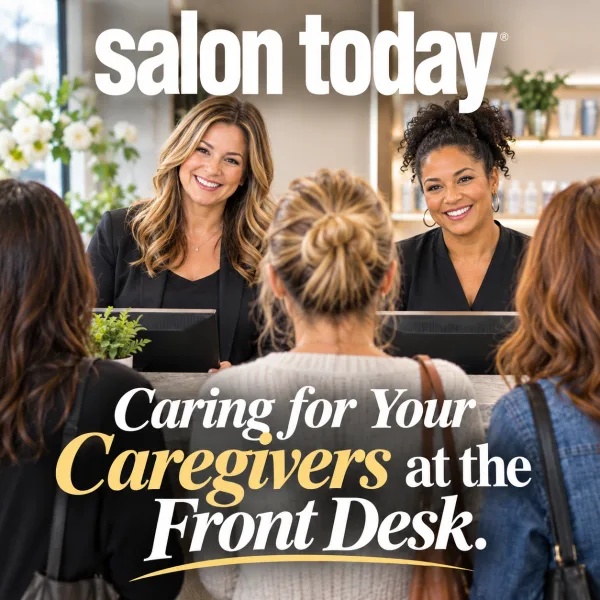
From managing air traffic on busy days to handling frustrated guests' complaints, your front desk team often serves as the salon's emotional shock absorber. From a customer service lesson from the DMV to a list of strategies for caring for your front line, our experts offer ideas for alleviating stress, celebrating wins, and setting goals.
According to the KIM Report, top-line salon revenue appears steady or slightly up, but that growth is driven primarily by service price increases. Beneath the surface, retail performance and client visit frequency (appointment drift) are under real pressure. In his latest blog, Alain Audet offers strategies for keeping your salon's retail sales strong.
Putting your family to work in the salon offers some real tax benefits, but you have you have to play by the rules of the tax code to claim them. Azarvand Tax Law's Leticia Skrabut, Esq., shows you how.
Discover how to create a true “WOW experience” for every client by first building a culture where your team feels engaged, empowered, and inspired. Drawing on Calvin Stovall’s Iconic Framework, this blog explores how salon, spa, and clinic leaders can strengthen culture, elevate customer experience, and build a business that stands out for the long term.
The wellness industry is growing fast, and salons and barbershops already are an important part of it. In her first blog, Tracy Rado shares where the wellness dollars are heading, and how salons can grow with this movement.
While salon sales are increasing, owners often feel they're working harder for the same or less profit. Leverage Q2 data from The KIM Report, Alain Audet reveals some of the structural changes that are dampening your growth and why your region and your salon size matters.
Weaknesses in your business are amplified during the Holiday Season. Spark Pro Global's Lucy Randall shows you five things to do now to have the strongest holiday season yet.
In Kati Whitledge's latest blog, she shares how salons have moved away from dress codes and embraced appearance standards. But by removing strict dress codes, some businesses may have unintentionally lowered their appearance standards. Whitledge helps you explain to your team why an appearance standard is important and how to smoothly implement a new appearance policy.
The Small Business Health Care Tax Credit is a non-refundable tax credit for for-profit businesses that provides a financial incentive for eligible employers who offer health insurance coverage to their employees. Leticia Skrabut, Esq., walks you through how to claim that credit.
Developing strong work habits early in one's career supports long-term success in the salon industry. Jesse Linares offers new stylists his top five tips.
Most salon owners have no idea what these numbers are.
You can hit record sales and still have a profit problem. The difference comes down to four numbers almost nobody was taught to track.
At Janet St. Paul Studio for Hair and Beauty, Director of Operations Natasha McMillen helps bring her wife Janet St. Paul's vision to life, elevating every system from education to operations.