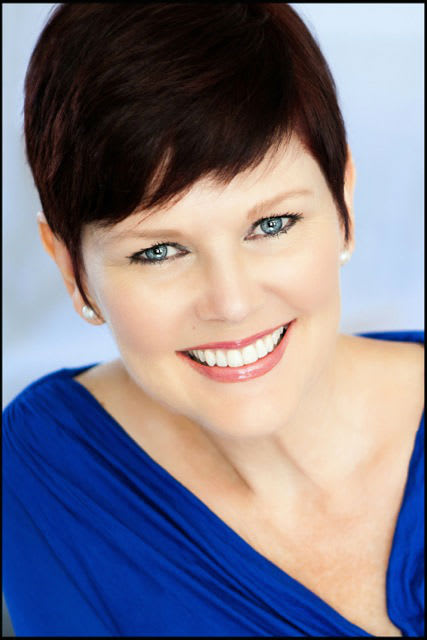
Melanie Thomas Kopeikin President, Pivot Point International
Building on an illustrious career in the professional beauty industry, Melanie Kopeikin joined Pivot Point International two years ago as its new president. Kopeiken started her career during the formative year of Nexxus and Jheri Redding, where she was responsible for establishing distribution in the central and southern California markets. She created infrastructure for the new distribution, including operations, finance, sales, marketing and education. After spending nearly 19 years in this capacity Kopeikin joined P&G Professional as the director of strategic trade development, and later served as senior director of business development. Most recently president of her own consulting firm, Kopeikin served as acting vice president of marketing for KPSS USA (Goldwell and KMS), mentored young executives seeking roles in the professional beauty industry, and led sales, marketing, education and distribution efforts for several prestige brands. Kopeikin sold the business in order to join Pivot Point, where she looks forward to carrying on the legacy of Leo Passage.
Ad Loading...
How are you a risk taker? Kopeikin: I have had my own companies, worked for a variety of larger corporations, explored different channels of opportunity in the industry from distribution, manufacturing to pure education. I have never been afraid or the least bit reticent about taking on the challenge of new opportunities in any particular discipline, as long as it involves beauty. My path, while perhaps unconventional, has given me a broad-based understanding and expertise for which I am grateful. I embrace the fact that life is a journey, and try to get out of the way of any limiting thoughts.
Since you started your own business, how have your motivations changed? Kopeikin: When I first entered the professional beauty industry as a young, inexperienced entrepreneur, I really looked at business as “transactional.” It was about doing “it” better, faster, etc. I was shrouded in rules, and rule making. Now, as I look at things through a different lens of experience, I see my one-to-one relationships with individuals as my number-one business objective. I understand order and “policy,” but also that it can get in the way. The business success will come later, if it’s the right thing for each person involved. If the business never comes, then I still have gained wonderful relationships I cherish. I am now compleely comfortable with that.
What do you do on a daily basis to help you grow as an entrepreneur? Kopeikin: Life-long learning, and staying “relevant” is key to business or career success and growth. As president of Pivot Point, I want to understand what the new learner/buyer (Generation ‘C’) is all about. I talk to my children about what they are doing, what they like, how they live. I read a lot each day about business and trends. I am also a part of a CEO Exchange made up of top leaders in the Chicago area. We meet and talk about the impact of global issues on our businesses, including in-depth discussions about what is going on in the Middle East, technology, the global economy. I’m the only woman in the group, but they listen!
Who or what inspires you? Kopeikin: My parents amaze me. They are my greatest supporters and fans, but they don’t let me get away with anything. They help me keep all my oars in the water. I have Paula’s (Kent Meehan) picture on my refrigerator and my computer screen saver. When I feel like I am having a rough day I remember her story, and am infused with inspiration. I am also inspired by people who are open to learning and have light in their souls.
What is the most important lesson you’ve learned from running your own business that you would share with other women? Kopeikin: Don’t burn bridges.
Ad Loading...
As you grew your company/brand, what “Ah-Ha” moments of clarity helped you shape its future course? Kopeikin: It’s easy to get distracted by others, and second-guess your strategy, but essential in building your brand to be consistent. I’ve learned the importance of determining a course, and sticking with it. But also not to be afraid to course-correct when needed. Above all, it’s important to be sure your brand speaks with truth, and is what you say it is.
In developing your company, what is the biggest roadblock you’ve faced, and how did you conquer it? Kopeiken: As a distributor your partnership with your brands is critical, but sometimes things happen that are out of your control. Brands are sold, they change their strategy. I had this happen several times in my own business. It only took this happening once for me to discover I can’t control everything, but I can prepare for what may be around the corner. More diversification, additional revenue streams, and highly developed brand strength got me through it.
How would you describe your management style? What do you think makes you a good leader, and in what areas would you want to improve? Kopeikin: I personally dislike being micro-managed. Nothing kills my happiness faster. Therefore, I dislike micromanaging as a leader. I empower others to do their job well, and work to help them understand why we are moving in the direction we are, and ask for their expertise and assistance in getting where we want to go. Teaching what you know is also important. I love seeing the lights go on in people, and when they unlock their potential as a consequence. I always want to improve my clarity with my team members. I always try to ask at the end of a meeting if I have provided enough information to move to action.
Throughout your professional history, what’s the best lesson you’ve learned after making a mistake? Kopeikin: Get over it and move on.
What is the number-one quality you look for when hiring employees, and how do you evaluate if they possess that trait? Kopeikin: Motivation to learn. I ask them what they do to keep up with the changing business environment.
Ad Loading...
Share something personal that very few people at your work would know about you. Kopeikin: I worked as a professional model from a very young age through college. I did over 25 television commercials and “made for TV” movies back in the day. I grew up in the country on a ranch and my father is a cattle rancher to this day. I am still good friends with people from kindergarten through college and enjoy going home to spend time with them.
What’s the best thing an employee/colleague ever said about you? Kopeikin: That I changed their life, and am the reason for their career success. That’s kind of big.
If you were training another woman to take over your job, what’s the most important advice you would offer her? Kopeikin: Take care of yourself—rest, eat properly. Build a strong leadership team. Get really good at knowing who on your team are the A players. You will need all hands on deck.
If you were to look at scrapbook of your professional career, what would be your favorite page? Which page would you like to remove? Kopeikin: My time at Sebastian was the best time for me, because I learned the most there and have friendships from that experience that I know will be life-long. I have no pages to remove. It would change my learning to remove anything. I have had low moments I thought I wouldn’t survive, but I did.
If someone were to write a book about your life, what would be an appropriate title? Kopeikin: Taking Chances, Changing Courses
Ad Loading...
If you weren’t in the beauty industry, what would you be doing? Kopeikin: I would probably be working in entertainment law (I spent a brief time in the movie/television industry). Had I not married a hairdresser, I probably would have stayed in Hollywood. Someday I would like to go home to the ranch in California. I love animals and gardening.
What is your vision for the future of your company? What is your vision for the future of the industry? Kopeikin: Pivot Point is all about life-long learning. The Passage family is dedicated to empowering hairdressers and beauty professionals around the world. We will continue to focus on this as our vision. Our industry is changing and evolving every day. We all need to become more organized to protect it, and grow our people.
All beauty professionals should know how to identify when a client may need some health guidance. Tracy Rado discusses some common questions that clients ask in the chair, how to advise them, and when to refer them to a specialist.
From managing air traffic on busy days to handling frustrated guests' complaints, your front desk team often serves as the salon's emotional shock absorber. From a customer service lesson from the DMV to a list of strategies for caring for your front line, our experts offer ideas for alleviating stress, celebrating wins, and setting goals.
According to the KIM Report, top-line salon revenue appears steady or slightly up, but that growth is driven primarily by service price increases. Beneath the surface, retail performance and client visit frequency (appointment drift) are under real pressure. In his latest blog, Alain Audet offers strategies for keeping your salon's retail sales strong.
Putting your family to work in the salon offers some real tax benefits, but you have you have to play by the rules of the tax code to claim them. Azarvand Tax Law's Leticia Skrabut, Esq., shows you how.
Discover how to create a true “WOW experience” for every client by first building a culture where your team feels engaged, empowered, and inspired. Drawing on Calvin Stovall’s Iconic Framework, this blog explores how salon, spa, and clinic leaders can strengthen culture, elevate customer experience, and build a business that stands out for the long term.
The wellness industry is growing fast, and salons and barbershops already are an important part of it. In her first blog, Tracy Rado shares where the wellness dollars are heading, and how salons can grow with this movement.
While salon sales are increasing, owners often feel they're working harder for the same or less profit. Leverage Q2 data from The KIM Report, Alain Audet reveals some of the structural changes that are dampening your growth and why your region and your salon size matters.
Weaknesses in your business are amplified during the Holiday Season. Spark Pro Global's Lucy Randall shows you five things to do now to have the strongest holiday season yet.
In Kati Whitledge's latest blog, she shares how salons have moved away from dress codes and embraced appearance standards. But by removing strict dress codes, some businesses may have unintentionally lowered their appearance standards. Whitledge helps you explain to your team why an appearance standard is important and how to smoothly implement a new appearance policy.
The Small Business Health Care Tax Credit is a non-refundable tax credit for for-profit businesses that provides a financial incentive for eligible employers who offer health insurance coverage to their employees. Leticia Skrabut, Esq., walks you through how to claim that credit.
Developing strong work habits early in one's career supports long-term success in the salon industry. Jesse Linares offers new stylists his top five tips.
Most salon owners have no idea what these numbers are.
You can hit record sales and still have a profit problem. The difference comes down to four numbers almost nobody was taught to track.
At Janet St. Paul Studio for Hair and Beauty, Director of Operations Natasha McMillen helps bring her wife Janet St. Paul's vision to life, elevating every system from education to operations.