






You Don't Own a Salon. You Own A Business.
In his latest blog, Leon Alexander Ph.D., challenges industry conventional thinking to help owners add more to their bottom lines.
 MENU
 SEARCH
Known as the First Lady of Nails, Suzi Weiss-Fischmann is responsible for creating every OPI nail lacquer shade based on each season's fashion and beauty forecast
Suzi Weiss-Fischmann
Executive vice president and artistic director, OPI
Suzi Weiss-Fischman is known as the First Lady of Nails, as she is single-handedly responsible for creating every OPI nail lacquer shade based on each season’s fashion and beauty forecast. With an extensive background in the New York garment industry and a degree from Hunter College, she combines fashion-forward thinking with business savvy. In addition to setting new trends, Weiss-Fischmann makes ongoing education of nail professionals a priority—throughout the year OPI educators share developments in salon hygiene and sanitation, new products, tools and techniques with nail techs.
From where does your entrepreneurial drive originate?
I was hungry—I don’t know how else to put it. I don’t come from money and I always had the drive. I’m an immigrant from Hungary and I saw the opportunities here and realized what a fool I would have been to not go for it.
As you grew your company/brand, what “ah-ha” moments of clarity helped you shape its future course?
I think in 1989 when OPI got into nail color, we made it relevant to women. We rebranded category—made it fun, sexy and inspirational. We made this whole category. Before it was a color and number. We came up with collections, geographic locations and fun names. We wanted to be the Starbucks of nail polish. I travel all over, and you say “OPI” and people know what you’re talking about. They look forward to the colors because they’re fashion forward and on trend. Lincoln Park after Dark made vamp mainstream when it was released in 2005.
As you shaped your company, what have been some of the biggest stumbling blocks?
When you grow there are growing pains with the infrastructure. George Schaeffer and I built company and expansion, hiring more people, buying machinery—those things are painful. Those things can hinder growth if you aren’t able to ship on time.
How would you describe your management style? What do you think makes you a good leader, and in what areas would you to improve?
I surround myself with people who can translate my vision. I love the people I work with and look forward to seeing them every day. I learned in the beginning that you need to get over the hump of thinking you are the only one who can do anything. For example—social media—I’m learning from young people every day on this topic. I have to live in the world of all this technology. Also, I follow my own vision and work with people who understand how to think out of the box and be different. For OPI, quality is number one. Always has been, always will be. As for improving; I make decisions—procrastination is bad in a leader. Maybe I should shut up sometimes (laughing).
How do you set goals for yourself? For example, do you prefer more small accomplishable goals or fewer large goals? How do you hold yourself accountable?
I always set myself goals—selling for OPI is not difficult. Sell through is the key. Even after this many years, I still worry. I tell the sales team, we sell each new collection like we’ve never sold one before. I look at a new red like it’s the first one I’ve ever seen.
Throughout your professional history, what’s the best lesson you’ve learned after making a mistake?
Everybody makes mistakes—move on. We’ll do better the next time.
From whom or what do you draw your strength, courage, vision?
My mom—she’s 90 years old—and my two children. They inspire me.
As you grew your company, what, if anything, has held you back?
Nothing.
What is the number-one quality you look for when hiring employees, and how do you evaluate if they possess that trait?
Being creative and passionate in what they do. I really look for someone who loves what they do. If you hate it, it shows in the quality of your work. I love to listen to people and ideas. You get a gut feeling about people, but there are no guarantees.
What’s the best thing an employee/colleague ever said about you?
That I have a lot of integrity, am honest and funny.
If you were training another woman to takeover your job, what’s the most important advice you would offer her?
Never lose sight of this incredible jewel of a brand and what it stands for. It stands for quality and really makes a personal connection to the consumer. That personal connection is key. We’ve spent the past 30 years building that.
If you were to look at scrapbook of your professional career, what would be your favorite page? Which page would you like to remove?
The first 30 shades of nail color I created—OPI Red, Cajun Shrimp, Dutch Tulip to name a few would be my favorite. My least favorite would be letting go of the company (OPI is currently owned by Coty)—but that’s ok. It was decision we all made. I say thank you every day and have been very lucky.
If someone were to write a book about your life, what would be an appropriate title?
What a Ride it Has Been
If you weren’t in the beauty industry, what would you be doing?
I love home décor—maybe designing fabrics.
What are you working on now? What’s your next professional step?
I do more and more speaking at business schools like Wharton about branding and marketing. I also speak to women’s groups. It has been very successful. like to speak to young people and inspire them to be passionate.
How would you like to spend your retirement?
I love to travel. I love art history. Maybe I’d do more gardening and really learn how to cook—those kinds of things.
In his latest blog, Leon Alexander Ph.D., challenges industry conventional thinking to help owners add more to their bottom lines.
In her latest blog, Amy Pal helps you develop your own clear guidelines around complimentary free employee services.
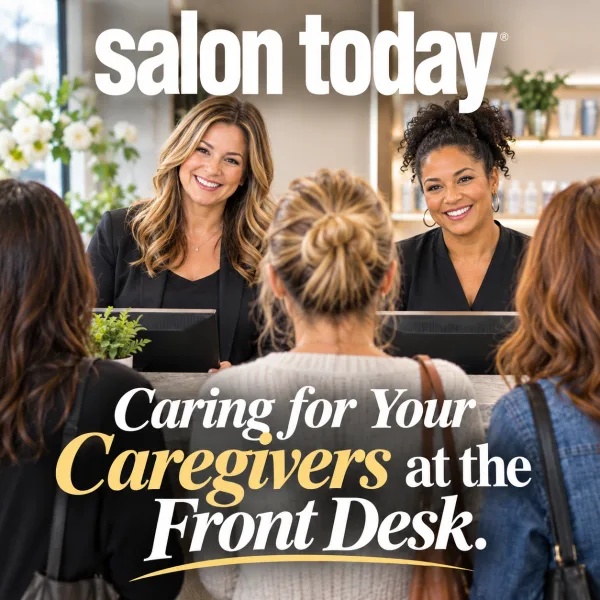
From managing air traffic on busy days to handling frustrated guests' complaints, your front desk team often serves as the salon's emotional shock absorber. From a customer service lesson from the DMV to a list of strategies for caring for your front line, our experts offer ideas for alleviating stress, celebrating wins, and setting goals.

According to the KIM Report, top-line salon revenue appears steady or slightly up, but that growth is driven primarily by service price increases. Beneath the surface, retail performance and client visit frequency (appointment drift) are under real pressure. In his latest blog, Alain Audet offers strategies for keeping your salon's retail sales strong.

Putting your family to work in the salon offers some real tax benefits, but you have you have to play by the rules of the tax code to claim them. Azarvand Tax Law's Leticia Skrabut, Esq., shows you how.

Discover how to create a true “WOW experience” for every client by first building a culture where your team feels engaged, empowered, and inspired. Drawing on Calvin Stovall’s Iconic Framework, this blog explores how salon, spa, and clinic leaders can strengthen culture, elevate customer experience, and build a business that stands out for the long term.
Sponsored by Phorest Salon Software

The wellness industry is growing fast, and salons and barbershops already are an important part of it. In her first blog, Tracy Rado shares where the wellness dollars are heading, and how salons can grow with this movement.

While salon sales are increasing, owners often feel they're working harder for the same or less profit. Leverage Q2 data from The KIM Report, Alain Audet reveals some of the structural changes that are dampening your growth and why your region and your salon size matters.

Weaknesses in your business are amplified during the Holiday Season. Spark Pro Global's Lucy Randall shows you five things to do now to have the strongest holiday season yet.

In Kati Whitledge's latest blog, she shares how salons have moved away from dress codes and embraced appearance standards. But by removing strict dress codes, some businesses may have unintentionally lowered their appearance standards. Whitledge helps you explain to your team why an appearance standard is important and how to smoothly implement a new appearance policy.

The Small Business Health Care Tax Credit is a non-refundable tax credit for for-profit businesses that provides a financial incentive for eligible employers who offer health insurance coverage to their employees. Leticia Skrabut, Esq., walks you through how to claim that credit.

Developing strong work habits early in one's career supports long-term success in the salon industry. Jesse Linares offers new stylists his top five tips.

Most salon owners have no idea what these numbers are. You can hit record sales and still have a profit problem. The difference comes down to four numbers almost nobody was taught to track.
Sponsored by Strata Salon Systems™

A five-area audit every owner-dependent salon needs to run. You built something that looks successful. Now find out if it can survive without you.
Sponsored by Strata Salon Systems™

Every month you put off fixing the problem, it gets bigger, more expensive, and harder to solve.
Sponsored by Strata Salon Systems™
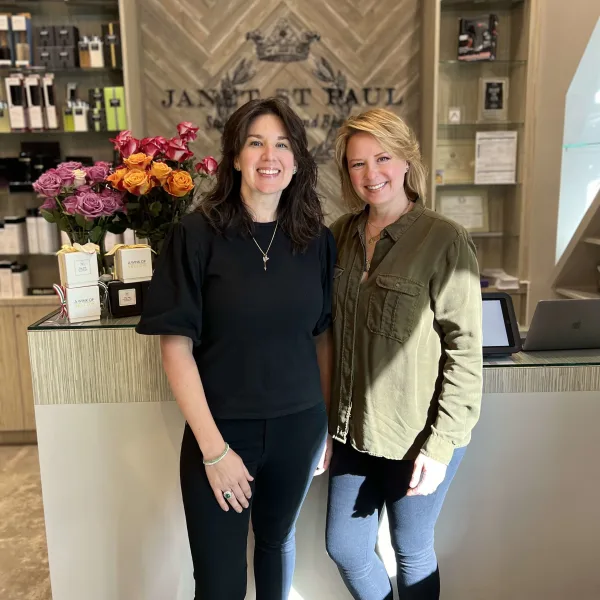
At Janet St. Paul Studio for Hair and Beauty, Director of Operations Natasha McMillen helps bring her wife Janet St. Paul's vision to life, elevating every system from education to operations.

Expand your color service menu with the Pinstripe technique. Brooks and Brooks' Marlon Hawkins walks you through the technique.