The modern consumer has myriad of commercial choices at his disposal. Paradoxically, consumers are increasingly unimpressed by these developments. Customer loyalty has dropped for most businesses.
In the past, economic progress—from an agrarian to an industrial economy—was driven by transformations in the value proposition of commercial offerings.
Ad Loading...
Product and service personalization will undoubtedly be part of the new emerging economy. One should expect an increase in formulated customized hair care products, cosmetics and perfumes for consumers.
Consumer markets will need to be refreshed with radical new proposals that will have to bring greater substance, meaning and excitement back to the market. Marketers need to reconsider the consumer and his needs from a deeper perspective.
We care about satisfying our needs and preferences. Thus, the perennially obvious and compelling question becomes: What is the modern consumer missing?
Human beings have many needs, which are physical, psychological, social and spiritual. Marketers dig for clues about these needs in order to discover new commercial opportunities. They have been focusing their market research on the attributes of a product and service on their immediate psychological benefits, at the expense of the emotional benefits. In other words, companies have been avoiding digging deeper into the consumer's unconscious needs, while fighting over superficial differences.
The fundamental motivation of humans is expressed in two forms: a desire for both esteem and self-esteem. While esteem is mostly a public perception (the desire to be esteemed or respected by others in order to gain status and acceptance), self-esteem is motivated by private beliefs and feelings, including the desire for self-satisfaction, self-respect, self-confidence, and achievement. We want to be esteemed by others, as well as by ourselves.
Ad Loading...
Until recently, businesses have concentrated mostly on our desire to be esteemed by others, while paying little attention to consumer self-esteem. Media advertising persistently feeds illusions by communicating the anticipated gratification of being noticed, accepted, appreciated and praised by others as a result of wearing, eating or owning certain products. "Just drive this care if you want to look great!" "Eat our healthy food and you'll look beautiful!" or "Our cosmetics make you stand out and look wealthy!" Often these illusions are created at the expense of a person's self-esteem in the form of self-deception.
On another level, we are also increasingly questioning the meaning of our purchases. The collapse of the financial markets was the tip of the iceberg that led to the resetting of our consumer behavior. We paused and now question our consumption habits. As a consequence, we want more than mere illusions and have become attentive to more meaningful and deeper transformations that involve both external and deeper internal changes.
Things are beginning to change though. Driven by several factors, consumers are increasingly aware of their unstable self-esteem. Companies are starting to recognize the opportunities that this awareness creates. Apple is a company that has been successful in feeding into the consumer's self-esteem. "We will help you get more out of your Mac, so you can get more out of yourself." Mac users experience deeper than usual emotional satisfaction. Nike's "Just Do It" campaign is another example. Its internet program lets you compare personal performance results.
Until now the fundamental need that has received the least attention is our need for self-esteem. This powerful human motivator will shape future economies. As customer experience becomes more relevant, a broader view of business-customer relationship must be adopted. The business-customer relationship should be approached from a system perspective as opposed to the current process approach: experiences should be emphasized rather than services. The customer becomes an integral part of the economic offering: he is now the product.
Personalized experiences designed to contribute to the self-esteem of consumers will be the most esteemed propositions in the new economy.
Discover how to create a true “WOW experience” for every client by first building a culture where your team feels engaged, empowered, and inspired. Drawing on Calvin Stovall’s Iconic Framework, this blog explores how salon, spa, and clinic leaders can strengthen culture, elevate customer experience, and build a business that stands out for the long term.
The wellness industry is growing fast, and salons and barbershops already are an important part of it. In her first blog, Tracy Rado shares where the wellness dollars are heading, and how salon's can grow with this movement.
While salon sales are increasing, owners often feel they're working harder for the same or less profit. Leverage Q2 data from The KIM Report, Alain Audet reveals some of the structural changes that are dampening your growth and why your region and your salon size matters.
Weaknesses in your business are amplified during the Holiday Season. Spark Pro Global's Lucy Randall shows you five things to do now to have the strongest holiday season yet.
In Kati Whitledge's latest blog, she shares how salons have moved away from dress codes and embraced appearance standards. But by removing strict dress codes, some businesses may have unintentionally lowered their appearance standards. Whitledge helps you explain to your team why an appearance standard is important and how to smoothly implement a new appearance policy.
The Small Business Health Care Tax Credit is a non-refundable tax credit for for-profit businesses that provides a financial incentive for eligible employers who offer health insurance coverage to their employees. Leticia Skrabut, Esq., walks you through how to claim that credit.
Developing strong work habits early in one's career supports long-term success in the salon industry. Jesse Linares offers new stylists his top five tips.
Most salon owners have no idea what these numbers are.
You can hit record sales and still have a profit problem. The difference comes down to four numbers almost nobody was taught to track.
At Janet St. Paul Studio for Hair and Beauty, Director of Operations Natasha McMillen helps bring her wife Janet St. Paul's vision to life, elevating every system from education to operations.
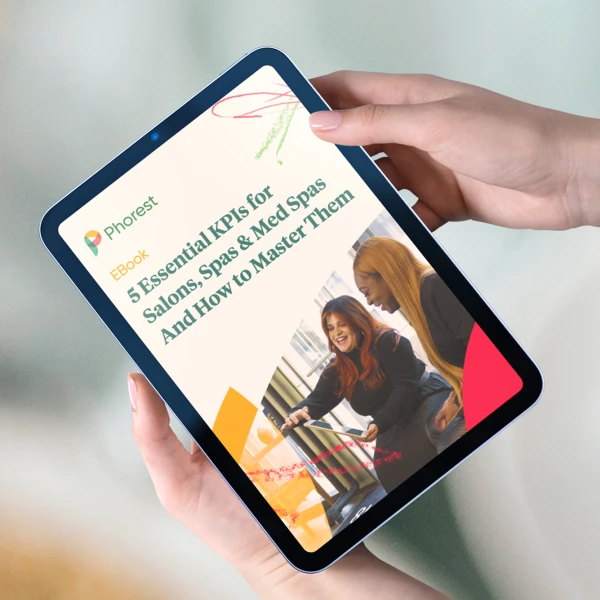
The strongest salons, spas, and med spas know which numbers tell the real story of their business. In this practical guide, Phorest breaks down the five essential KPIs every business should track to improve retention, boost revenue, and make smarter decisions with confidence.
At Bella Style Salon in Slidell, Louisiana, Director of Operations Angela Meyer tackles inventory, team management, and guest relations. Read all about her in our latest Meet the Manager.
Starting at Impressions front desk in 2006 when he was 19 years old, General Manager Paul Petrowsky is a seasoned professional who owner Sarah Taylor says is responsible for much of her own success.
Planning is in full swing for the most anticipated events and promotions for the 2026 holidays. As owners share their favorite ways to celebrate, they prove that a carefully planned event can also build culture, increase client loyalty, boost sales, and set a business up for a successful 2027.
When things run amok at Mane Attraction Salon, Owners Chris and Jenny Knudsen say General Manager Sami Hernandez is their go-to resource and ultimate sounding board. Meet Sami in this installment of Meet the Manager.