What's Really Happening with Salon Retail and How to Reclaim Your Revenue
According to the KIM Report, top-line salon revenue appears steady or slightly up, but that growth is driven primarily by service price increases. Beneath the surface, retail performance and client visit frequency (appointment drift) are under real pressure. In his latest blog, Alain Audet offers strategies for keeping your salon's retail sales strong.
by Alain Audet, VP of Sales and Marketing for SalonInteractive and the KIM Report
September 28, 2026
In his latest blog, Alain Audet offers advice for keeping your salon's retail sales strong.
Credit:
The KIM Report
6 min to read
Salon top-line revenue is stable or slightly increasing due to service price hikes, not retail sales.
Retail performance and client appointment frequency are experiencing significant challenges.
Alain Audet's blog provides strategies to strengthen retail sales in salons.
*Summarized by AI
If you’ve felt like retail sales have been harder to come by over the past year or two, you aren’t imagining it, and it isn’t just you. Looking at the broader numbers across our industry, a clear paradox is happening on salon floors today: top-line salon revenue appears steady or slightly up, but that growth is driven primarily by service price increases. Beneath the surface, retail performance and client visit frequency (appointment drift) are under real pressure.
Here is a look at what the data tells us about where salon retail stands right now, where it’s headed, and how you can build a retail strategy to capture the revenue your salon deserves.
Ad Loading...
The Current Landscape: In-Salon Retail Sales Are Trending Downward
Over the last decade, salons have seen retail revenue steadily slip away. Many professional hair products that were once salon-exclusive are now widely available on big-box shelves and major e-commerce platforms. Compounding this challenge, many beauty professionals feel uncomfortable with "selling" products, contributing further to the decline. Even so, the global professional beauty market is projected to top $56 billion by 2032. Salon clients haven't stopped buying hair care—with online beauty sales growing in double digits, they have simply shifted where they shop.
According to The KIM Report, here’s the magnitude of this shift:
In-Salon Retail Drop: In-salon retail sales fell nearly 4% to 5% year over year, part of a broader 20% loss in salon retail market share over the past decade.
Volume and Units: Retail units sold in salons dropped by 7.48%—a loss of over $102 million in retail revenue across the industry (roughly 5.2 million products) as clients bought elsewhere.
The "Value-Led" Illusion: Average service tickets are up, sitting between $87 and $90+. But client visits are stretching from 6 weeks out to 8 or 9 weeks. When clients wait longer between appointments, they run out of products at home and reorder online from non-salon sources.
A Strategy for Growing and Reclaiming Retail
To adapt to changing client habits, salons should elevate the client experience, offer modern services, and remove friction from buying. Here’s how:
Educate Clients on Recreating Looks at Home
Clients often leave the salon loving their new look but struggle to recreate it at home. Bridge this gap by walking clients step by step through the tools, thermal protectants, and styling products needed to replicate trending finishes—whether it's a volumized blowout, soft waves, or a sleek finish. Recommending the precise styling regimen empowers clients while increasing product sales per visit.
Ad Loading...
Increase Color Care Sales
According to KIM, color services are trending upward. While retail units are down, client demand for high-value services remains strong. In fact, color revenue grew nearly 2% year over year. Clients are willing to invest in premium color services, which creates a natural opening for at-home hair care education.
Take a moment before starting any color service to discuss how maintaining that salon look requires a dedicated at-home routine. As more clients wait longer between appointments, remind them that using your recommended professional color care keeps their hair healthy and preserves their color longer.
Embrace Trending Texture Needs
As people continue to embrace their natural wave and curl patterns, the need for texture services and curl care also grows. Tap into this growing niche by offering haircuts that unlock wave and curl and in-salon deep moisturizing treatments. Finish these services with personalized aftercare: teach clients which moisturizing treatments, leave-in conditioners, and curl-enhancing products to use to maintain their natural pattern to drive consistent retail reorders.
Capitalize on the Scalp Health Boom
With more consumers recognizing that healthy hair starts at the root, scalp care has become one of the fastest-growing categories in hair care today. Now is the perfect time to add scalp detox treatments, clarifying rinses, and nourishing serums to your service menu and backbar. Create an entirely new retail category for your existing clientele by recommending exfoliating scrubs or soothing oils for continued at-home scalp care.
Create Eye-Catching Displays
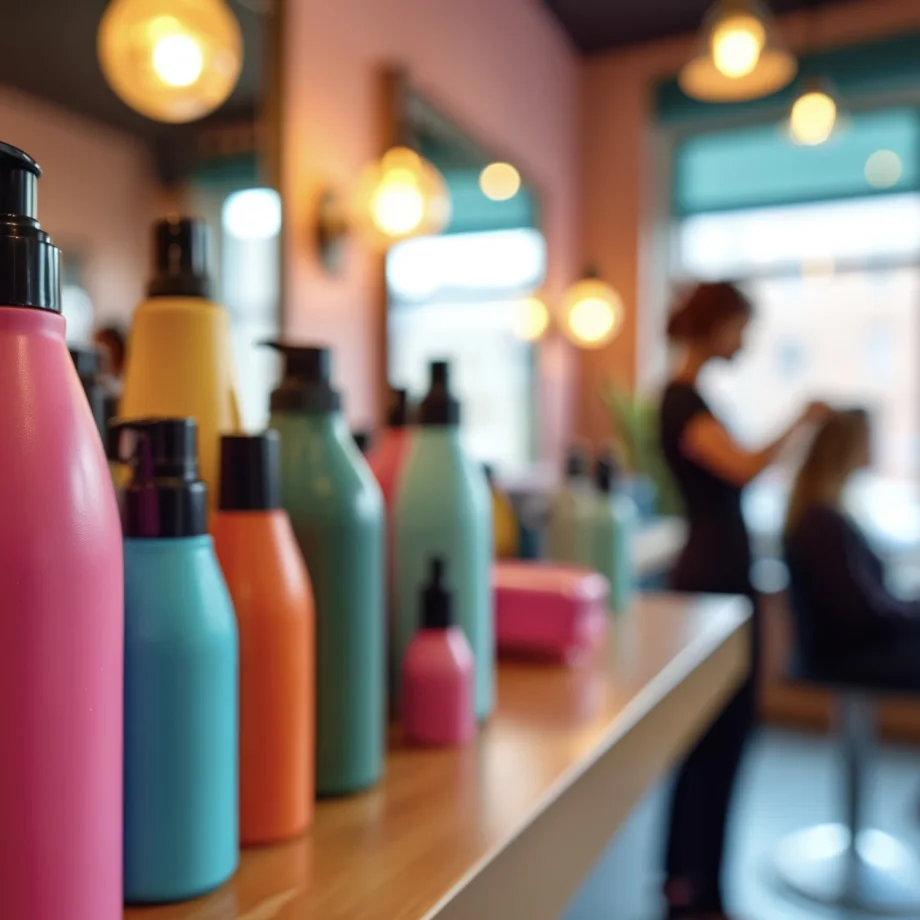
Your retail area is prime real estate. Instead of thinking of it as inventory you're trying to move, transform your retail space into a shopping experience with neatly organized displays, clear signage, and warm lighting. Use this opportunity to make the area a point of interest. Celebrate each season or holiday with festive decorations, and showcase new or trending products or care regimens with easy-to-explore displays paired with brand tent cards or shelf talkers.
Ad Loading...
Offer Holiday Gift Sets and Packages
Give clients extra value without major discounts that cut into your profit with curated holiday product sets. Imagine the display and merchandising opportunities for your retail area. Build themed bundles around specific hair goals and stock seasonal brand gift sets; even pair product purchases with gift card incentives. These holiday gift options can lift your average order value and enhance the overall client experience.
Go Beyond the Chair with Online Retail
One of the biggest reasons clients buy their hair care elsewhere is convenience. Meeting clients online removes floor-space constraints and inventory risk. By offering an online store connected to professional beauty suppliers and access to a virtual catalog of 500+ pro beauty brands, clients can reorder their favorite products whenever they want and have them shipped directly to their doors.
For salons, embracing online retail complements in-salon retail and meets clients where they like to shop. For smaller salons and independents without the space, online retail provides a way to sell products at all, increasing revenue while giving clients a better, trusted way to shop online.
Market What You Offer
Whether you create your own marketing strategy or rely on brands to market on your behalf, it's important to let clients know which brands your salon stands behind. Even with beautiful displays and in-salon consultations, many clients zone out the moment they step through your door or sit in your chair. To many, it's part of the much-needed self-care experience. However, their hair and scalp health is your area of expertise, so it's on you to make sure they have access to the right products for their needs. That access includes ongoing marketing.
Make Product Recommendations Part of the Experience
While your client is in your chair, work in product education naturally into the conversation. In fact, teach your team to make it a part of the service. Let clients hold the bottle, enjoy the scent, even feel the texture, as you dispense the suggested amount into the palm of their hand. Explain why you recommend that product for their hair type and walk them through how to replicate the look at home.
Ad Loading...
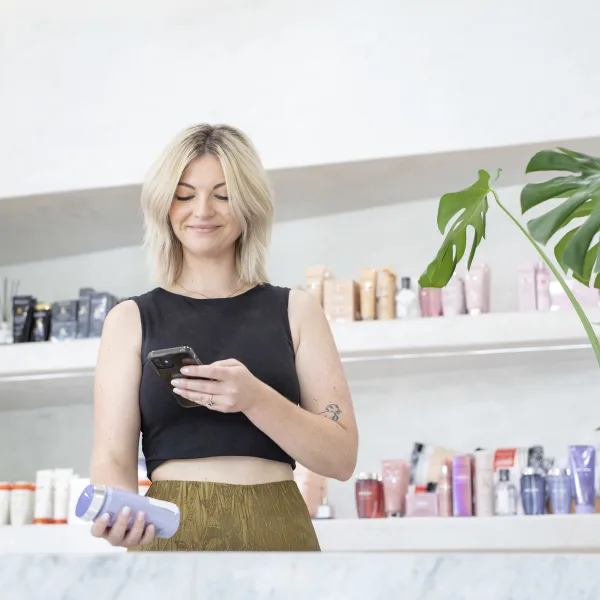
For clients who do not purchase the products needed to maintain their hair health and recreate the look at home, send a digital product recommendation. With online retail platforms like SalonInteractive, a built-in feature adds recommended products to a shopping cart, ready to purchase when the client is ready.
Step Up as the Expert—Always
Big-box algorithms and online retailers cannot replicate the personal relationship, trust, and tailored expertise of a professional stylist. By stepping up as their dedicated beauty advisor both inside the salon and online, you protect your professional relationship, elevate your client care, and build a resilient retail business for years to come.
To adapt to changing client habits, salons should elevate the client experience, offer modern services, and remove friction from buying. Here’s how:
Credit:
The KIM Report
About the Author: Alain Audet is Vice President, Sales and Marketing at SalonInteractive, where he oversees growth and market development for The KIM Report and On Behalf Marketing. His diverse international career includes leadership roles across the beauty, technology, consulting, education, and association sectors with companies such as Phorest, L'Oréal PPD, Solnyx Consultants, and the Allied Beauty Association. His background also includes luxury fashion leadership in Singapore and Indonesia with Club 21, as well as serving as Education Director at LaSalle International Fashion School. Known for combining strategic vision with practical industry expertise, Alain helps beauty brands and partners turn insight into action and opportunity into growth. For more information, visitwww.thekimreport.com or follow SalonInteractive onInstagram.
Quick Answers
The steady or increased salon revenue is primarily driven by service price increases, according to the KIM Report.
Salons are experiencing real pressure on their retail performance due to decreasing client visit frequency and appointment drift.
Salons can address appointment drift by implementing strategies that encourage more frequent client visits, as suggested by Alain Audet in his blog.
Alain Audet's blog provides strategies for salon owners to strengthen their retail sales and combat the challenges of declining visit frequencies.
Focusing on retail sales is crucial for salons to maintain and reclaim revenue streams, especially when service price increases are the primary growth driver.
Putting your family to work in the salon offers some real tax benefits, but you have you have to play by the rules of the tax code to claim them. Azarvand Tax Law's Leticia Skrabut, Esq., shows you how.
Discover how to create a true “WOW experience” for every client by first building a culture where your team feels engaged, empowered, and inspired. Drawing on Calvin Stovall’s Iconic Framework, this blog explores how salon, spa, and clinic leaders can strengthen culture, elevate customer experience, and build a business that stands out for the long term.
The wellness industry is growing fast, and salons and barbershops already are an important part of it. In her first blog, Tracy Rado shares where the wellness dollars are heading, and how salon's can grow with this movement.
While salon sales are increasing, owners often feel they're working harder for the same or less profit. Leverage Q2 data from The KIM Report, Alain Audet reveals some of the structural changes that are dampening your growth and why your region and your salon size matters.
Weaknesses in your business are amplified during the Holiday Season. Spark Pro Global's Lucy Randall shows you five things to do now to have the strongest holiday season yet.
In Kati Whitledge's latest blog, she shares how salons have moved away from dress codes and embraced appearance standards. But by removing strict dress codes, some businesses may have unintentionally lowered their appearance standards. Whitledge helps you explain to your team why an appearance standard is important and how to smoothly implement a new appearance policy.
The Small Business Health Care Tax Credit is a non-refundable tax credit for for-profit businesses that provides a financial incentive for eligible employers who offer health insurance coverage to their employees. Leticia Skrabut, Esq., walks you through how to claim that credit.
Developing strong work habits early in one's career supports long-term success in the salon industry. Jesse Linares offers new stylists his top five tips.
Most salon owners have no idea what these numbers are.
You can hit record sales and still have a profit problem. The difference comes down to four numbers almost nobody was taught to track.
At Janet St. Paul Studio for Hair and Beauty, Director of Operations Natasha McMillen helps bring her wife Janet St. Paul's vision to life, elevating every system from education to operations.
The strongest salons, spas, and med spas know which numbers tell the real story of their business. In this practical guide, Phorest breaks down the five essential KPIs every business should track to improve retention, boost revenue, and make smarter decisions with confidence.
At Bella Style Salon in Slidell, Louisiana, Director of Operations Angela Meyer tackles inventory, team management, and guest relations. Read all about her in our latest Meet the Manager.
Starting at Impressions front desk in 2006 when he was 19 years old, General Manager Paul Petrowsky is a seasoned professional who owner Sarah Taylor says is responsible for much of her own success.
Planning is in full swing for the most anticipated events and promotions for the 2026 holidays. As owners share their favorite ways to celebrate, they prove that a carefully planned event can also build culture, increase client loyalty, boost sales, and set a business up for a successful 2027.