









ASCP, ISPA and PBA Receive 2026 Power of Associations Award for Esthetics Licensure Compact
This shared recognition celebrates the strength of industry collaboration in advancing professional mobility.
by Stacey Soble
 MENU
MENU SEARCH
Wella Company announced a partnership with the Musée des Arts Décoratifs in Paris to bring the exhibition ‘Des Cheveux et des Poils’ (Hair & Hairs) to the public April 5-September 17, 2023.

Wella Professionals Global Creative Artist Printed Hairpiece 2021 (collection La Favorite).
Photo: Wella Company
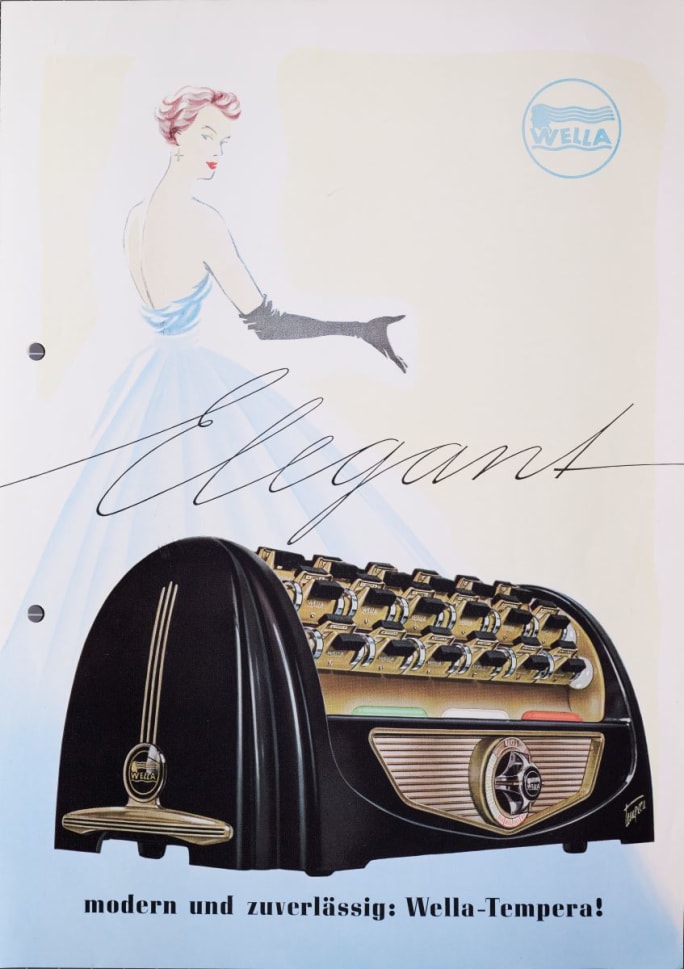
Wella Tempera, perming device marketing materials — Wella Tempera booklet 1952.
Image: Wella Company
Wella Company is partnering with the Musée des Arts Décoratifs in Paris to bring the exhibition ‘Des Cheveux et des Poils’ (Hair & Hairs) to the public April 5-September 17, 2023.
The exhibition, Wella Company’s first global showcase, focuses on the intersection between fashion and beauty to bring to life the historical, cultural, and personal influence hair, hairstyles, and grooming have made on personal appearance and societal perception through the centuries.
Among the 600 works presented, from the 15th century to the present day, the exhibition highlights some of Wella Company’s preeminent contributions across products, services, and tools, including:
The first hair dryers with built in motors, and other archival hair tools.
Historic marketing materials for products including Wella-Koleston, ‘the first hair color cream in a tube.’
Never-before-seen work by Wella Professionals global creative artist Alexis Ferrer.
The ‘Des Cheveux et des Poils’ exhibition demonstrates how hairstyles and the grooming of human hair have contributed to the construction of appearances for centuries. Hair is an essential aspect of one’s identity and has often been used as a means of expressing our adherence to a fashion, a conviction, or a protest while invoking much deeper meanings such as femininity, virility, and negligence, to name just a few.
The exhibition explores through 600 works, from the 15th century to nowadays, the themes inherent in the history of hairstyles, but also the questions related to facial and bodily hair. The trades and skills of yesterday and today are highlighted with their iconic figures: Léonard Autier (favorite hairdresser of Marie Antoinette), Monsieur Antoine, the Carita sisters, Alexandre de Paris, and more recently studio hairdressers. Great names in contemporary fashion such as Alexander McQueen, Martin Margiela, or Josephus Thimister are present with their spectacular creations made from this unique material that is hair. The exhibition is presented in the Christine & Stephen A. Schwarzman’s fashion galleries of the Musée des Arts Décoratifs. The scenography will be created by David Lebreton of the Designers Unit agency.

Wella Professionals Global Creative Artist Printed Hairpiece 2021 (collection La Favorite).
Photo: Wella Company
After the hairless faces of the Middle Ages, a turning point occurred around 1520 with the appearance of the beard, symbol of courage and strength. In the early 16th century, the three great Western monarchs: Francis I, Henry VIII, and Charles V were young and wore beards, which were then associated with the virile and warrior spirit. From the 1630s until the end of the 18th century, the hairless face and the wig were the hallmarks of courtiers. Facial hair did not reappear until the early 19th century with the mustache, sideburns, and beard: this century was by far the hairiest in the history of men’s fashion. A multitude of small objects used (mustache wax, brushes, curling irons, wax, etc.) testify to this enthusiasm for mustaches and beards. During the 20th century, the rhythm of bearded, mustached, and smooth faces continued, until the return of the beard among Hipsters in the late 1990s. The maintenance of hairiness among these young urbanites has given rise to the profession of barber, which had disappeared since the 1950s. Today, the thick beards tend to give way to the mustache that had deserted faces since the 1970s.
In an atmosphere where shades of blond, brown, and red evoke the main hair colors, the course, divided into five themes, questions what makes hair, in Greek Roman and Judeo-Christian cultures, an attribute of the animal and wildness and explains why hair had to be constantly tamed to remove the woman or man from the beast.
The first part of the exhibition opens with the study of the evolution of feminine hairstyles, a real social indicator and marker of identity. In the Middle Ages, obeying the command of Saint Paul, the wearing of the veil imposes itself on women until the 15th century. Gradually, they abandon it in favor of extravagant hairstyles that are constantly renewed. In the 17th century, the hairstyle “to the Hurluberlu” (dear to Madame de Sévigné) and “to the Fontange” (after the name of Louis XIV’s mistress) are emblematic of real fashion phenomena.
The choice of keeping, eliminating, hiding, or displaying hair on other parts of the body is also a subject of history that the exhibition addresses through the representation of nude bodies in visual arts and written testimonials. Hairiness is rare, or even absent from ancient painting. The hairless body is synonymous with the antique and idealized body, while the hairy body is associated with virility, or even triviality. Only enthusiasts of virile sports such as boxing and rugby, as well as erotic illustrations or medical engravings, show individuals covered in hair. Around 1910-1920, when women’s bodies were exposed, advertisements in magazines touted the benefits of hair removal creams and more efficient razors to eliminate them. In 1972, actor Burt Reynolds posed naked, hairy body for Cosmopolitan magazine, but fifty years later, an abundance of hair is no longer in fashion. Since 2001, sportsmen being photographed naked for calendars like Les dieux du stade (The Gods of the Stadium) have had rigorously controlled hairiness.
Hair styling is an intimate act. Moreover, a well-born lady could not show herself in public with her hair down. A painting by Franz-Xaver Winterhalter, dated 1864, depicting Empress Sissi in a robe and with her hair untied, was strictly reserved for Franz Joseph’s private cabinet.
Louis XIV, who became bald at a very young age, adopted the so-called “bright hair” wig, which he then imposed on the court. In the 20th century, Andy Warhol had the same misfortune: the wig he wore to hide his baldness became an icon of the artist. Nowadays, hairpieces and wigs are used in high fashion, during fashion shows or, of course, to compensate for hair loss.
The natural hair colors and their symbolism are studied along with what they convey. Blonde is said to be the color of women and childhood. Red hair is attributed to sultry women, witches and some famous stage women. As for black hair, it would betray the temperament of brown and brunettes. From the experimental colorations of the 19th century to the more certain dyes from the 1920s: artificial colors are not forgotten. The work of the hairdresser Alexis Ferrer who makes digital prints on real hair is also presented.
Finally, a special focus will allow us to evoke the iconic hairstyles of the 20th and 21st centuries: the 1900 chignon, the 1920s garçonne haircut, the 1930s permed and notched hair, the 1960s pixie and sauerkraut, the 1970s long hair, the 1980s voluminous hairstyles, the 1990s gradations and blond streaks, not to mention afro-textured hair.
The arrangement of hair in a particular form can reveal the belonging to a group and manifest a political and cultural expression in opposition to society and the established order. More ideological than aesthetic, the Iroquois crest of the punks, the neglected hair of the grunges or the shaved heads of the skinheads are strong moments of hair creativities.
Wearing the hair of another, known or unknown, has an eerie dimension, and this superstition seems well-entrenched. Despite these apprehensions, some creators choose to transcend this familiar material into fashion objects. This is the case of contemporary designers such as Martin Margiela, Josephus Thimister, and Jeanne Vicerial. The question of identity, treated lightly or more deeply, is often at the heart of the reasoning, whether the hair is real or fake.
The Musée des Arts Décoratifs has benefited from exceptional loans from the Château de Versailles, the Musée des Beaux-Arts d’Orléans, the Musée du Louvre and the Musée d’Orsay.
The exhibition reveals the different hair professions: barbers, barber-surgeons, hair stylists, wigmakers, ladies’ hairdressers, etc., through archival documents and a host of small objects: signs, tools, various products, and the astonishing perming machines and dryers of the 1920s. In 1945, the creation of haute coiffure elevated the profession to the rank of an artistic discipline and a French savoir-faire. 20th century hairdressing is marked by Guillaume, Antoine, Rosy, and Maria Carita, Alexandre de Paris styling princesses and celebrities. Nowadays, great hairstyling is mainly expressed during the fashion shows of prestigious fashion houses. Sam McKnight, Nicolas Jurnjack, and Charlie Le Mindu were invited to the exhibition to create extraordinary hairstyles for top models and show business personalities.
Originally posted on Modern Salon
This shared recognition celebrates the strength of industry collaboration in advancing professional mobility.
In Dubai, a salon visit isn’t an appointment. It’s a weekly routine, and clients can spend $800 to $1,400 a month on it, according to Gaurav Tripathi of MADI International. On October 6-8, 2026, the market behind those numbers opens its doors as Beautyworld Dubai marks its 30th edition at the Dubai World Trade Centre, bringing together distributors, brands, stylists and salon owners from all over the world.

In October, volunteers plan to walk and take the plunge during at the annual event, HairToStay Does the Bay. Find out how you can participate and support the organization that grants subsidies to cancer patients so they can receive cold cap treatments to save their hair during chemotherapy.

At Premiere Orlando 2026, SALON TODAY catches up with Easihair Pro's Angela Gilmore, who talks about why stylists lose clients who are suffering from thinning hair and hair loss, and how their new Hairlosophy line can help.

Illuminated Paths is a boxed set of 52 cards, a guidebook, and an Oracolor Wheel, a visual framework that helps readers reconnect with the qualities they want to bring into everyday life.

In this rare essay, the president of a haircare brand takes us behind-the-scenes into a world we never see when we pick up a product off the shelves--the arduous, thought-probing, second-guessing journey of rebranding a legacy product line. Not only is her reflection fascinating, but it is also incredibly useful for any salon owner or manufacturer contemplating their own brand.

Twenty lucky winners will be selected July 30th, and each will be able to choose from three different service tray models.

Motivated by loved ones who have battled cancer, Phorest's Barry Quinn and two friends will embark on a three-day trek to the summit of the highest peak in North Africa in September, raising money for HairToStay. Find out how you can help them.
The company's Back to Business Sweepstakes is a direct investment in the stylists and salon owners who are building something that lasts.

Owners start to worry when a month's sales come up short compared to the same period last year, but that may have more to do with the days in the month than with an actual decline. The KIM Report's Alain Audet points to May 2026 as a prime example.

ELEVATE delivers the complete, immersive retail experience, combining interactive touchscreens, AI-powered product guidance, sales support, and immersive visualization into a single retail solution.

The strategic investment strengthens the company's North American presence and accelerates private label innovation in professional beauty.
The new partnership brings Amika products into Tricoci University and student salons across its 15 campuses, reflecting Tricoci's continued commitment to providing students with hands-on experience using modern, in-demand products that align with today's beauty industry needs.

Bringing global haircare authority closer to the chair, the partnership marks a renewed investment in New England's salons and stylists.
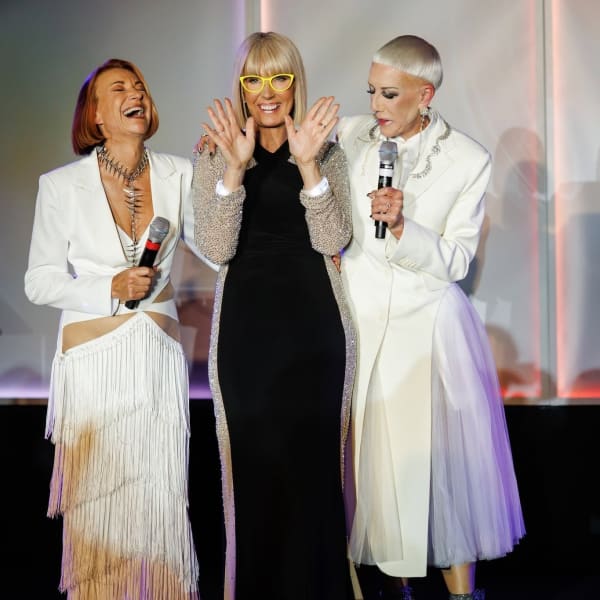
This growing must-attend industry event honors leaders across hair, nails, and wellness while creating opportunities for the next generation.

Calling all students! Intercoiffure America Canada will select five student-nominated teachers for all-expenses-paid trips to its Fall Atelier in New York. Nominations are due June 15, 2026.

Billed as the most important three days for beauty in North America, the leading B2B event returns July 13-15th, uniting brands, suppliers, buyers, and the larger beauty industry across the full industry ecosystem.