











Jotform
Form Builder & Data Management
 MENU
MENU SEARCH
Former Corporate Executive Cindi Quinn-Ventura follows a dream and taps into a new career as a salon owner with the help of Rosy Salon Software and its integrated partners.

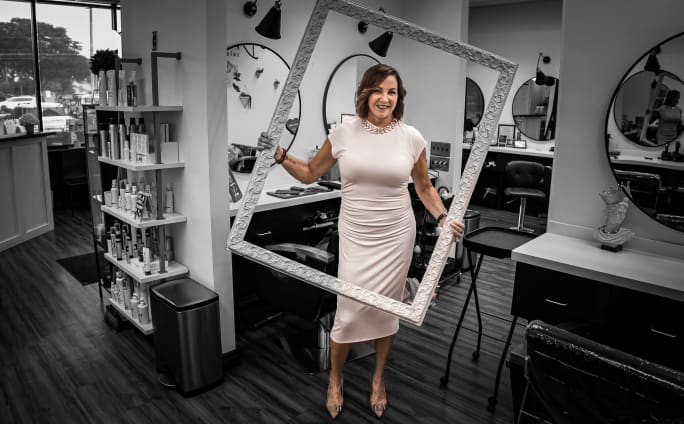
Former Corporate Executive Cindi Quinn-Ventura reframes her future when she follows a dream and taps into a new career as a salon owner.
The professional beauty world definitely lured Cindi Quinn-Ventura in. Growing up on a farm with all sisters, hair and makeup always fascinated her, but wasn't really part of her life. Coming out of college she entered the corporate world in marketing and sales in fields spanning from medical supplies to commercial real estate.
“When I was about 22 or 23, I met this woman who owned a salon, and I was just fascinated with all these beautiful people coming out of the salon and all the happiness going on inside it,” Quinn-Ventura says. “One day I said to her, ‘If you ever need any help at the front desk, I’d love to help out.’ Of course, I had no idea what a front desk job really entailed, nor did I figure it out until 30 years later when I bought that very salon. But that moment put the idea in the back of my mind that when I retired, I’d like to work in a hair salon.”
In January 2019, Quinn-Ventura became the new owner of En Unison Salon in Livonia, Michigan, which she later renamed Katherine Drew Salon. “I didn’t have any real tie to the name, so after we made it through COVID, I knew it was going to be a tough go, and I wanted an emotional tie to the name of the salon. My son-in-law proposed the name because Katherine is my mother’s middle name, and my uncle was Donald Drew. Those two names are also my daughters’ middle names. We thought the combination of a masculine and feminine name was a nice marketing touch and showed our community we are for all genders.
Quinn-Ventura feels her background gives her a unique set of experiences for a salon owner. Not only do the sales and marketing skills help with salon operations, she knew she could come in as the salon’s leader but not directly compete with her new team members as someone who serviced clients would. But Quinn-Ventura also pulls from her experience as a licensed yoga instructor.
“That defined what I wanted the guest experience to be like in the salon—yoga is about being calm and having your breath do the work for your body, and I wanted our guests to have that feeling of relaxation at the salon and leave feeling healthier and happier,” she says.
“We also want the salon to feel like they're visiting a friend's home, which is why we keep detailed notes in the client profiles. For example, if we had a conversation about your dog, your child or a relative, we see the notes and can ask about it at the next appointment,” she continues. “My expectation is that the front desk can keep an eye on guests as they walk in and greet them by name because they see their photo in the profile. We want everybody to feel as though they belong here.”
That inclusivity extends to any person in any stage of life, as long as the salon can accommodate them physically, emotionally or psychologically. “We have a private room that we can use for religious purposes or if we have a client with issues of insecurity,” says Quinn-Ventura. “Sometimes we use it for guests who represent the LGBTQ+ community who aren’t ready to be out in the middle of everybody while they are learning to style their new hair.”
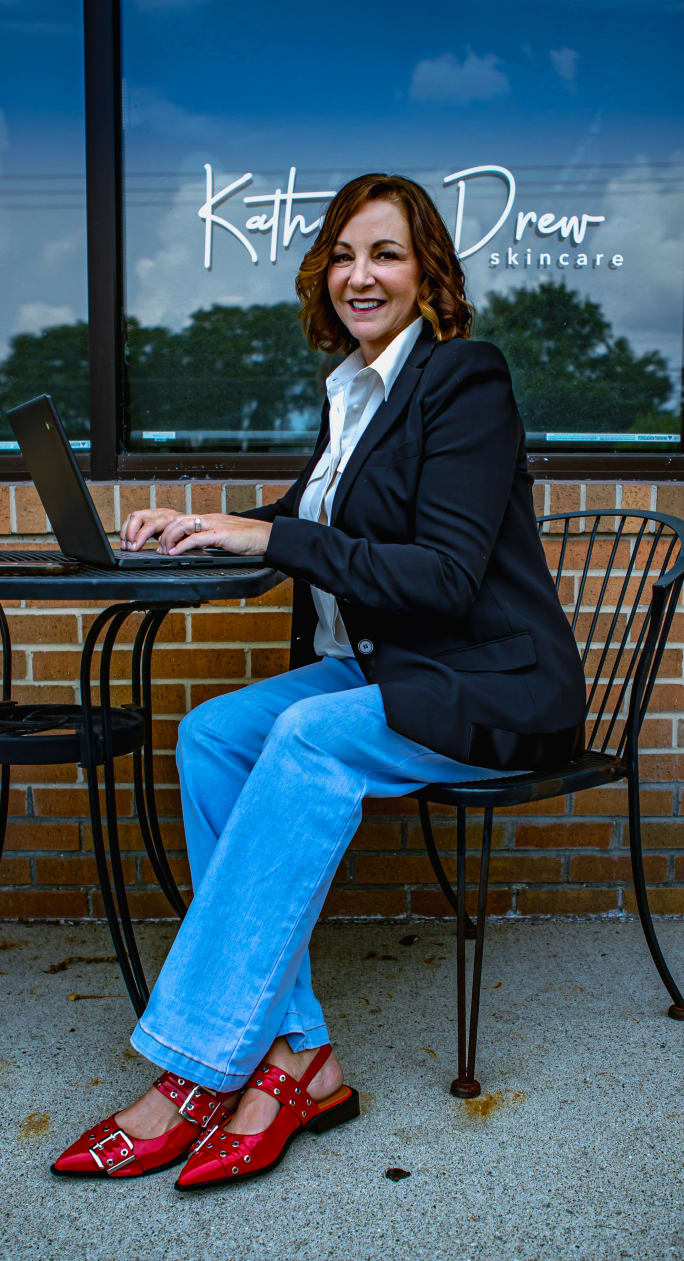
Owner Quinn-Ventura says that at any one time, Rosy, Vish, Salon Ninja and Girl Fridays are open on her computer and communication with one another as the programs are integrated.
One of the wisdoms Quinn-Ventura brought from the corporate world, was the knowledge that there are multiple ways to improve a business’ bottom line other than just increasing prices. That could include decreasing expenses, increasing efficiencies and decreasing the risk for mistakes or waste. Quinn-Ventura says the pandemic gave her the blessing of time to do some research into ways to improve salon operations.
“During those three months we were closed I really dug into every resource I could find, and I was lucky enough to get connected with a fabulous group of salon owners that came out of a Facebook group called Beauty Business Reset,” she says. “Every Monday night, this group of owners and consultants would get together and have a live online session where they would interview different beauty leaders or give presentations offering beauty business advice. My husband and I would log in like clockwork, usually while we were eating dinner; we paid attention and took notes. One of the vendors that came on wasRosy Salon Software, and I had already determined that the booking system that I inherited when I purchased the salon didn’t provide enough data for me to be able to run accurate and detailed reporting.”
Quinn-Ventura says she took the downtime to investigate many of the software programs on the market and she felt while several had the capability she needed, they weren’t all weren’t giving her the personal response that she felt she needed.
“I felt I was a little bit at a disadvantage being a small business owner who wasn’t a stylist, so I needed a little bit of extra hand holding,” she says. “At the same time, I’m a tough customer and when I can find an area that we can improve my question is always, ‘Why don’t we?’ I found Rosy was open to my suggestions and treated me very much like an individual, and not just another salon coming onto their platform.”
The running joke at Katherine Drew Salon is that Quinn-Ventura is an Excel spreadsheet guru. She like numbers, facts and data, and at the time, she didn’t feel had the depth she needed, and she certainly knew she didn’t have a detailed client database with room for personalization. She felt Rosy would be able to give her both.
Now, Quinn-Ventura analyzes trends based on the daily, weekly and yearly sales reports comparing different years. “I’ll look at the same time period to see how we are doing. Where are we lagging? Where are we ahead of the game? How can we improve?” she says. “I’ll use those same reports as I coach stylists in our one-on-ones each quarter. How do they compare to last year? To last quarter? How can we get them where we need to be?”
Quinn-Ventura most loves to dig into the client histories and try to unravel some of the mysteries within. For example, if a client is loyal for two years, but all of a sudden she hasn’t been in for six months, she’ll study the client reporting, and look for an opportunity to send the client a quick note, or ask their stylist to drop them a line. Or if a client only came in once and hasn’t been back, she’ll check to see if they were in from out-of-town for an event, just using a coupon to get a deal, or she’ll check to see if they had a bad experience And, most times, will reach out personally.
In the quarterly one-on-ones, Quinn-Ventura and each stylist review a number of Key Performance Indicators (KPIs), including service sales, retail sales, client retention and productivity. For her front desk team, she’ll look at prebooking rates and add-on sales.
“Because I have stylists ranging from one that just graduated from cosmetology school last Spring to one who has been in the industry 41 years, they are all going to be coached differently,” she says. “That experienced stylist only works Tuesdays, Wednesdays and Thursdays because she’s earned the right to not work weekends. In Michigan, everyone has cottages up North, and she heads there on the weekends. For her, I use the reports to help her see how she could expand her clientele. Could she offer a new service or talk about a seasonal change in color?”
When it comes to coaching, Quinn-Ventura says studying a service provider’s history helps her identify strengths and challenges: “I can study specific categories for a service provider and run a report that tells me if their highlights are up or down or they’re not selling bonding treatments like they did in past years. Sometimes that will change because they’ve learned new trends or techniques, and they shifted what they’re selling to a client, but sometimes it’s an indicator that there’s room for improvement or education.”
Quinn-Ventura also likes to analyze when a ticket is opened and when it is closed. “If a stylist is working on a three-hour appointment and the bill is only $120, then something isn’t right,” she continues. “They’re either not charging for the right service or they’re working a little too slow—that’s how I like to dig in.”
When it comes to the overall business, that historical data also can be comforting to an owner. “We had a rough July this year, but I looked back at last year, and July sales were sluggish then too,” she says. “We’re in a big automotive state, and depending when July 4th falls, many companies will close for a week or more, and then everyone goes on vacation. Of course, it makes sense when you understand the why, but when you first see sales dip like that, you can panic as an owner.”
As a salon with a steady gift-card business, Quinn-Ventana appreciates the ability to always check the remaining balance on a particular gift card, as well as the ability to accept a gift card even when a guest doesn’t have it in hand. The salon also sells package options for services such as hydrafacials and blow outs, and she finds the reporting function is helpful for tracking those.
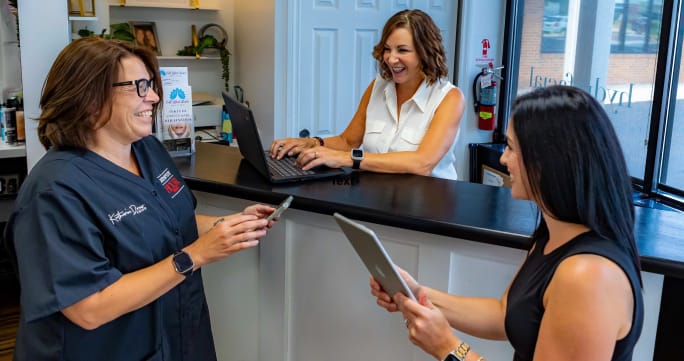
Atlhough Katherine Drew Salon taps into a service to answer incoming calls, online inquiries and text messages, Quinn-Ventura still keeps a receptionist in the salon who acts as a concierge who can assist guests with retail or prebooking their next appointment.
To provide a heightened client experience and help the staff focus on the guests who are in the salon, Quinn-Ventura brought in Girl Fridays, a cloud-based, cost-effective alternative to hiring a full front desk. Incoming calls, online inquiries and text messages are answered by a remote operator who has access to the salon’s Rosy software as well as its Salon Ninja marketing platform. It’s like having a centralized booking center, but on a scale that a single location can tap into.
Quinn-Ventura still keeps a receptionist in the salon most days, but they act more as a concierge who really cares for the guests rather than someone who attends to the phone. “They give new clients tours, offer the guests a beverage, assist guests with retail purchases and prebooking their next appointment and if a guest’s stylist is running a bit behind, I expect to see the receptionist out from behind the desk and sitting on the sofa engaging that client in conversation,” she says. “Through Girl Fridays, our virtual assistant has full access to Rosy, and does a fabulous job following up if we don’t get a response to a text or email confirmation. She also makes notations in Rosy that lets us know if she’s gotten ahold of the client.”
Even with a new guest, Quinn-Ventura says Girl Fridays combined with Rosy help the stylists feel like they already know the guest. “There’s always a little note in the system of why a new guest is coming in and what they are looking for, as well as current and desired finish photos,” she says.
In addition, the assistant from Girl Fridays also handles all of Katherine Drew Salon’s social media. “She has her own access to our social media accounts, and our stylists send her their pictures. She will create content for me in draft form, then once I review it, I’ll make it active on Facebook and Instagram,” Quinn-Ventura says.
Quinn-Ventura also loves the capabilities she gets from RosyPay, the embedded payment processing system. Not only does RosyPay offer some of the lowest rates and costs associated with payment processing because it’s integrated with the software, it saves time and reduces user error compared to when the front desk has to manually enter in the ticket into an external payment processing system. That also saves time at day’s end when the desk is trying to reconcile accounts.
Before bringing in RosyPay, Quinn-Ventura examined her credit card processing rates. “I had a good rate with my existing service, I was grandfathered in and it worked perfectly fine, so I had no incentive to change it, but I did the analysis and RosyPay beat those rates,” she says.
What Quinn-Ventura discovered after bringing in RosyPay was the tremendous benefits of being able to safely store clients’ credit card information. “Lots of clients love that they don’t need to bring their purse or wallet in, we simply charge the card on file,” she says. “When they do pay at the front desk, they can either slide, insert or tap their card, and many clients love being able to tap.”
Having the card on file also helps if someone else is paying for the guest’s services, for example an elderly guest whose family members don’t like them to carry around credit cards or a college-age daughter who comes in when she’s home on break.
“RosyPay also gives us the ability to walk over to a guest who is processing and cash them out with a wireless pay station,” says Quinn-Ventura. “And, the stylist can prebook the client’s next appointment using the Rosy app on her phone.”
Once the credit card is stored, no one at the salon can access the whole number. Quinn-Ventura says skeptical clients are reassured their information is protected, because she’ll flip the computer screen around and show them that she only sees the last four numbers.
What’s really been a business gamechanger though is the ability to take deposits and charge the card on file for no-shows or last-minute cancellations. The salon charges clients who no-show or try to cancel within 24 hours of the time of the appointment, charging either $50 or 50% of the service price. At the same time, Quinn-Ventura says they are fairly reasonable.
“We’ve just come out of a national pandemic and we are sensitive to the fact that guests sometimes have to cancel because they are sick. We will always give someone a one-time courtesy pass, and that’s exactly what we tell them,” she says. “But I’m also not afraid to go to bat for my stylists when people get a little defiant about the charge. I explain to them how stylists make their money and the amount of money they spend on their education, and that a $50 cancellation fee is a very, very small token to make up for that stylist’s time.”
If a client has to cancel within 24 hours before, Quinn-Ventura will offer up that free appointment time and if someone snags it, she doesn’t charge the client who had to cancel. But she says, she also has a handful of clients that don’t bat an eye at being charged the $50 cancellation fee.
While the cancellation fee was a big gamechanger to both the salon’s bottom line and its stylists’ take-home pay because it reduced no-shows, it goes hand in hand with the salon’s ability to send clients’ text and/or email confirmations and reminders. In today’s smartphone-focused world, sending a text confirmation a few days before the scheduled event is fairly standard for any appointment-based business, but Quinn-Ventura loves to follow that up with a reminder a few hours before the appointment.
“I don’t know about you, but I get up in the morning and I’ll know I have a three o’clock appointment, but things get busy and I get distracted and lose track of time,” she says. “We love to send a casual reminder that says something like, ‘We’re looking forward to seeing you in two hours!’ The client doesn’t have to respond, but it helps pull their head out of whatever they are doing, and we’ve gotten a lot of feedback from people who have busy lives about how much they love those reminders.”
Another thing the salon does is send a client a text right after they book their next appointment. “I tell them I’m sending the appointment to them in a text and ask them to glance at their phone to make sure I got everything correct,” she says. In today’s world, a text chain is the first place people look when they’re trying to remember an upcoming appointment.
Quinn-Ventura loves investing additional profits back into her team. For example, shes rented a house on Lake Michigan and did a long weekend that served as a really great teambuilding event.
As an owner and manager, Quinn-Ventura appreciates that Rosy integrates with a number of business-focused technologies that help strengthen her business. She says that at any one time, she’ll have Rosy, GirlFridays, Salon Ninja and Vish’s color management system open on her computer, and those systems all communicate to one another, making the integration seamless.
Salon Ninja was another program Quinn-Ventura was introduced to through the Beauty Business Reset program. Overall, Salon Ninja helps the salon capture warm leads that come through the salon’s website and turn them into new guests.
“Salon Ninja helped design our website and they embedded a tracker into it, and if someone is on our site for more than 10-15 seconds, they get a pop-up with a new client special that invites them to fill out a form with their email, phone number and the specific services they are looking for,” explains Quinn-Ventura. “That starts a dialogue with that person through texting or email. Salon Ninja automatically loads that client information into Rosy, and a welcome note goes out to that client from me with an offer. The conversion rate is tremendous.”
About a year after coming back from the pandemic, Katherine Drew Salon brought in the Vish color management system. The Vish app, combined with a smart Bluetooth scale, ensures accurate formula tracking, inventory management and color profit intelligence.
Quinn-Ventura has always been environmentally conscious, and controlling waste is very important to her. “It took the stylists a bit of time getting used to Vish, but by the second time a guest came in, they could be much more precise in measuring that client’s formula,” she says. “Now we’re finding it exceedingly helpful if a different stylist needs to care for someone’s guest or an assistant is asked to mix someone’s color because they can access the exact formula.”
At Katherine Drew, a stylist gets paid more if they do extra work and Vish helps determine that. For example, if a client comes in for a balayage and she has hair down to her waist, the guest gets charged for the extra product, and the stylist gets paid extra commission.
“Not all salon owners do that, but I feel like the stylist had to spend more time and energy to get the result, then they deserve a percentage of that,” says Quinn-Ventura.
Vish also helped the salon capture revenue that they had been losing out on, for example when a stylist added on a color service but that didn’t get communicated correctly to the front desk.
As an owner and manager, Quinn-Ventura loves infusing those additional profits back into her team. “The first year, I took that money and we rented a house on Lake Michigan with water all the way around, and we did a long weekend that served as a really great teambuilding event,” she says. “The team loved it so much, we’re doing it again this year.”
Form Builder & Data Management
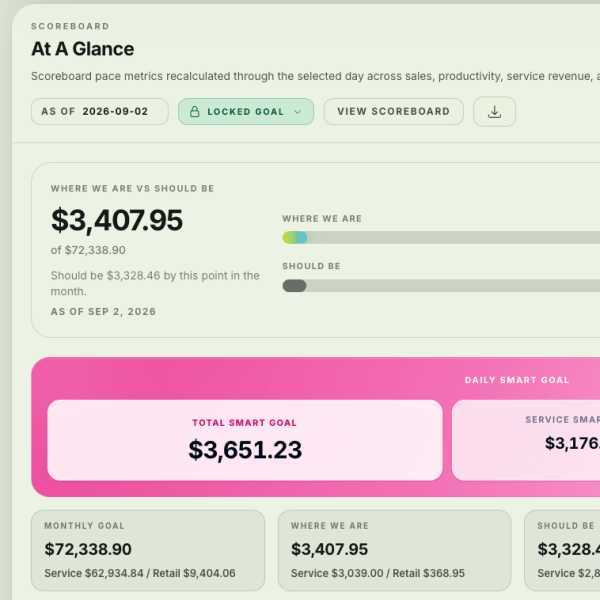
Financial & Team Management Software
Multi-Location Management Software
Business Management, POS & Booking
AI Front Desk
Growth Marketing Software Solutions
Business Management & Booking Software

As technology evolves at an accelerated rate, you want to make sure you have the best in your business toolkit to help you grow sales, motivate your team, communicate with your current and future clientele, and streamline your managerial tasks. The 2026 SALON TODAY Technology Solutions Guide is designed to help you navigate today's growing landscape of salon and spa technology. In this guide, you'll find a curated look at more than 50 of the latest software platforms, digital solutions, and innovative features to help you compare options and identify the best fit for your business.
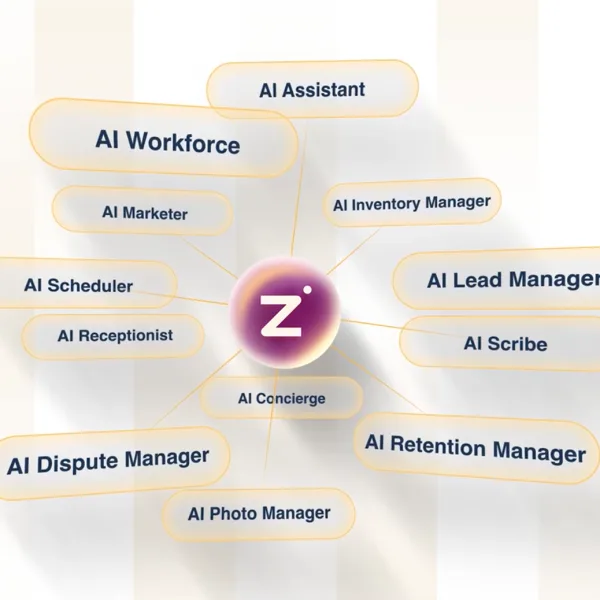
AI-Powered Salon Software
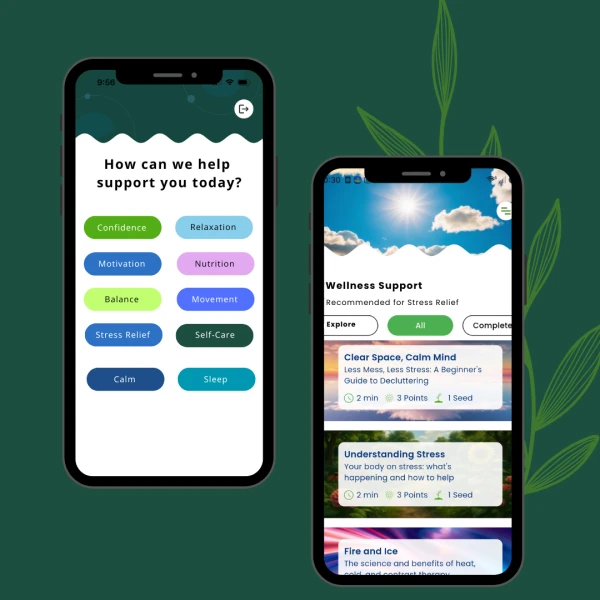
Employee Wellbeing Platform
Business Management
Tipping Software
SMS Management
AI Retail Sales
Supply System
Tipping App
Business Management