A New Adversarial AI App Analyzes Beauty Reviews to Expose What Influencers Miss
Three personas give consumers differing advice on beauty products based on AI analysis of more than 250,000 non-sponsored video reviews and social conversations.
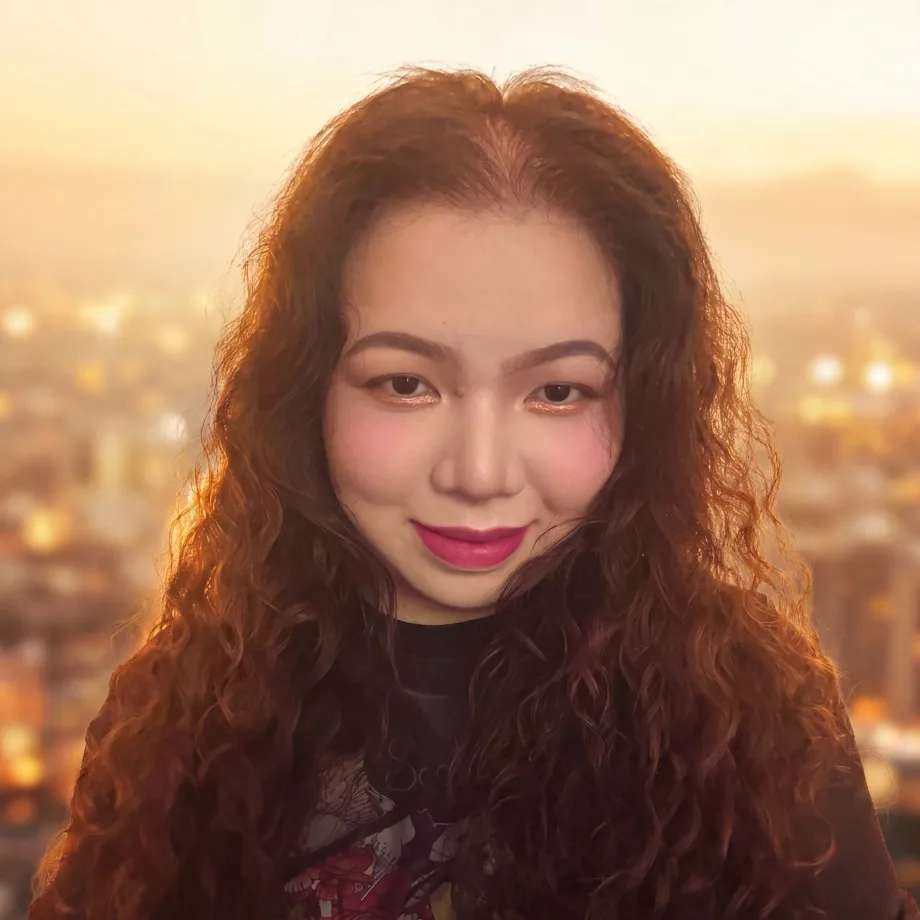
Melody Yang founded the adversarial AI app TiraMuisu to analyze unpaid or non-sponsored video reviews and social conversations on beauty products to surface recurring complaints, hidden drawbacks, and standout performers.
Credit:
TiraMuisu
4 min to read
TiraMuisu is a new Adversarial AI app that analyzes over 250,000 unpaid reviews and conversations to uncover overlooked product issues and strengths in the beauty industry.
The app features three AI personas—Tira (Hype Girl), Muisu (Skeptic), and Mochi (Skincare Chemist)—that analyze beauty products through unstructured video reviews to offer personalized recommendations.
Founded by Melody Yang, TiraMuisu aims to help consumers make informed beauty purchases by providing data-driven insights and avoiding potential missteps.
*Summarized by AI
As influencer fatigue rises, one startup is betting that beauty consumers want data over hype. The new beauty AI app, TiraMuisu analyzes more than 250,000 unpaid or non-sponsored video reviews and social conversations to surface recurring complaints, hidden drawbacks, and standout performers that may be overlooked in traditional influencer content.
Melody Yang is the founder and CEO of TiraMuisu, an adversarial AI search engine fact-checking the $600 billion beauty industry. She describes the new beauty tech option designed to help consumers skip costly misses and discover personalized "Holy Grails”.
Ad Loading...
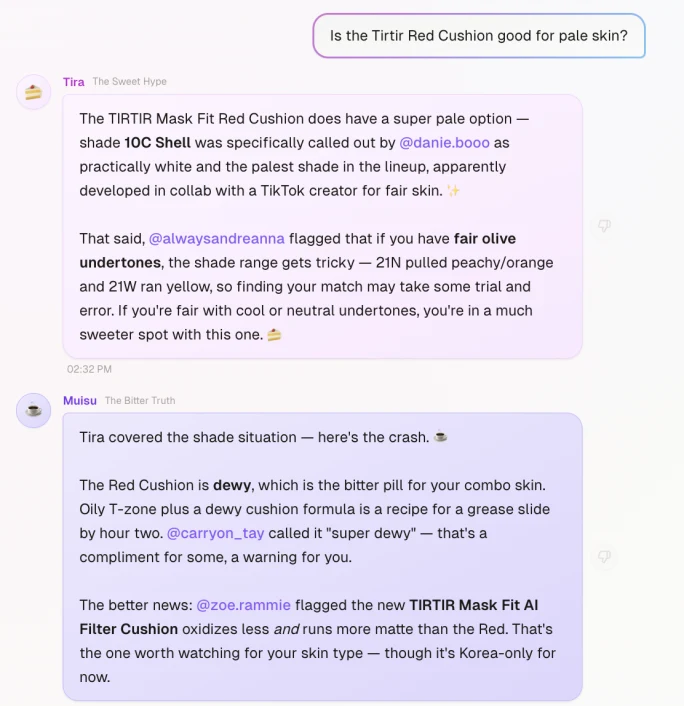
Users drop a product into the app, and three fighting AI personas, Tira (Hype Girl), Muisu (Skeptic), and Mochi (Skincare Chemist) debate the formula. They analyze unstructured video reviews to extract the physical truth (like texture and pilling) and generate personalized recommendations based on the user's exact skin biology. Together, they stop consumers from buying bad makeup.
An example of how the different personas debate a beauty product
Credit:
TiraMuisu
“The platform represents a new approach to beauty discovery rooted in collective unpaid consumer experience rather than a single voice,” Yang believes. “Born out of pure frustration with fake reviews and undisclosed influencer ads, TiraMuisu was created to bring radical transparency to the beauty supply chain. We believe that makeup is a physics and chemistry problem, not just a marketing one. By leveraging multi-agent AI and community-driven verification, we empower consumers to audit their routines, avoid expensive product failures, and force the beauty industry to operate on hard data rather than guesswork.”
TiraMuisu solves the “agentic trust gap. General AI like ChatGPT just scrapes outdated SEO blogs and tries to sell you things, Yang believes. “TiraMuisu is an adversarial AI that protects you,” she continues. “I created the company because I saw a $600 billion industry running entirely on guesswork.”
The biggest misconception in the beauty industry Yang believes is Viral = Good.
“In reality, viral usually just means a brand has a massive influencer budget. Furthermore, text reviews on retail sites are heavily botted or incentivized,” she reflects. “TiraMuisu addresses this by bypassing text and analyzing raw video transcripts for physical proof. If a creator says a product is ‘glass skin,’ our AI looks for the 400 comments underneath it saying ‘it separated after two hours.’ We bring the hidden reality to the surface.”
Ad Loading...
The TiraMuisu logo.
Credit:
TiraMuisu
Prior to the launch of TiraMuisu beauty app, Yang by day, was a Tech Lead at Apple, building global infrastructure for iCloud+ and Private Cloud Compute with precision. But outside the server room, she saw the beauty industry operating in the dark with brands guessing what to manufacture, and consumers guessing what to buy based on filtered influencer ads.
“I realized Silicon Valley engineers do not understand the beauty consumer, and beauty executives do not know how to build deep tech. I created TiraMuisu to be the bridge between those two rooms, bringing data-center engineering rigor to the physical beauty space,” she adds.
Yang says at TiraMuisu, they treat its users as co-architects, not a wallet. “Through our platform, users actively log their chemical failures and ‘Toast or Roast’ products, training our AI to protect the next user,” she says. “Our community should feel a fierce ownership over the algorithm because they are helping us build the ultimate truth detector.”
More than a search engine, Yang explains, “We are rapidly evolving from a search engine into a system of record and spatial computing platform. Users aren't just searching; they are logging their entire physical makeup bags into their digital vaults. Because of this, our AI acts as a daily accountability partner, warning users about chemical formulation clashes. With our recent launch of live 3D Face Scanner, we are moving beyond text entirely, mapping the physical contours of our users to prep for our robotics integration.”
General AI shopping tools are built to sell you things, Yang believes. Beauty review sites are flooded with incentivized text reviews. TiraMuisu is an adversarial AI.
Ad Loading...
“We don't rely on text; we index raw video transcripts to find physical proof of failure. We also have distinct personas: Muisu handles the brutal truth, Tira handles the aesthetic, and our newest addition, Mochi, acts as a dedicated skincare chemist to protect your skin barrier,” she describes.
Silicon Valley is giving AI agents a wallet; TiraMuisu is giving them a conscience.
“We are the un-bribable AI fiduciary that will stop consumers from wasting money and ruining your skin,” Yang adds.
Quick Answers
TiraMuisu is a beauty AI app that analyzes over 250,000 unpaid or non-sponsored beauty reviews to uncover common complaints, hidden drawbacks, and noteworthy products not usually highlighted in traditional influencer content.
The founder and CEO of TiraMuisu is Melody Yang.
TiraMuisu assists beauty consumers by providing data-driven insights and personalized product recommendations, helping them avoid costly mistakes and find suitable 'Holy Grail' products based on their skin biology.
The AI personas in TiraMuisu are Tira (Hype Girl), Muisu (Skeptic), and Mochi (Skincare Chemist). They analyze beauty reviews, highlight product truths like texture and pilling, and debate formulas to offer personalized recommendations.
TiraMuisu addresses the issue of influencer fatigue by providing consumers with objective, data-backed insights into beauty products, countering the often biased and promotional content typically shared by influencers.
Salon Owners Mike Nass, Allyson Hurley, Martin White, and Tim Fisk join SALON TODAY to talk about how they're using different AI agents to book appointments, market to at-risk clients, attract new clients, improve the consultation, and boost the overall guest experience.
MeevoIQ brings a team of AI-powered Advisors to Meevo, giving salon, spa & med spa owners the growth tools, business intelligence, and front desk support they need with full visibility and control at every step.
A great salon experience starts well before the appointment. See how beauty businesses are using digital forms, automation, and AI to simplify routine work and create a more seamless experience for every client.