Design surrounds you, it influences your thoughts, and subsequently your behavior. Understanding that relationship between the environment and your mind is important. Your brain is not only hard-wired to interpret certain spatial characteristics in certain ways, but your mind also plays a role in how you make decisions based on those interpretations. All in all, design is a type of "food for thought" where your surroundings impact not only how you perceive that world, but also how you interact within it.
Design impacts our creativity, focus, health, attention, mood and social ability. Design plays a major role for our brains, not just as we perceive space; but also as we engage in interactions, behaviors and thoughts.
Processing Architecture with Your Brain
Ad Loading...
"Designing salons around the mind." The ceiling of a room has an affect on how consumers process information. A lower ceiling within a room promotes greater attention to detail by occupants. Higher ceilings promote greater abstract and creative thinking by occupants.
Feeding Your Thoughts Via Your Senses
The beauty of salon design is that it can be designed as interactive, embedded with sensors and triggers that allow it to respond as well. The main idea is that the brain interprets design through your mind and plays a role in influencing your thoughts and subsequent behavior.
The recent slowdown in consumer spending particularly affected the retail sector. However, this most competitive and dynamic of sectors is fighting back with some innovative design strategies at the cutting-edge of experimental psychology.
In just a few decades, this sector has changed out of all recognition, driven by fierce competition, and has been at the forefront of new marketing concepts, such as brand management and customer loyalty.
Ad Loading...
Now, in a period of economic uncertainty, retailers are adopting another weapon: the manipulation of our minds.
It's developing science, but one that retailers are increasingly relying on because what matters, particularly in a downturn, is footfall through the door and converting browsers into customers. Parting us from our money has never been more important
Needless to say, it's a science that varies between men and women. For example, 65 percent of men who take a pair of jeans into a changing room to try them on will buy them, while only 25 percent of women will make that purchase. Likewise, a woman shopping with a man will make that purchase. Likewise, a women shopping with a man will spend less time in a store than shopping by herself or with a child.
The trick, as retailers know, is to first entice a shopper inside their store, and then to make them linger. The longer they linger, the more they are likely to buy. That's why supermarkets stock their most popular staple items like bread and milk at the back of their stores, forcing customers to walk further and pass other products on the way. It works: research suggests that more than 50 percent of supermarket purchases are bought on impulse.
However, modern research-based and observational techniques have gone much further in trying to understand how we shop. For example, we walk around shops in the same way as we drive a car. If we drive on the right, we tend to keep to the rights when walking down sidewalks or supermarket aisles. The British and Australians, conversely, ten to turn left when entering a store. It's a branch of scientific observation that now has a name – environmental psychology. And, it's proponents claim that it will revolutionize the design of shops and public areas.
Ad Loading...
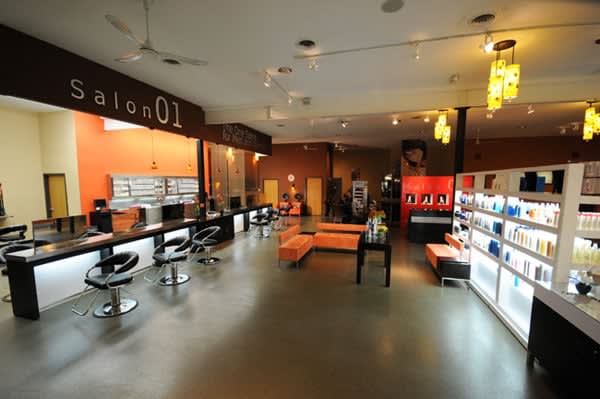
Salon 01 in Indianapolis, designed by Alexander, features a makeup area that entices clients to linger and purchase.
Sound unlikely? Well, putting the theory into practice, it means that in a well-designed airport, travelers walking to their gates should find fast-food outlets on their left and gift shops on their right. The mind game being played is that, if a traveler is hungry, he or she is quite happy to cross a lane of pedestrian traffic to buy something to eat. However, they'll rarely do so to make an impulse gift purchase.
Some retailers who have bought into the new psychology have taken it to extremes. Samsung, for example, has experimented with what it calls coercive atmospherics in its flagship store in Manhattan, pumping in the smell of honeydew lemon and constantly and subtly changing the lighting scheme to create a tropical and relaxed atmosphere.
That level of sophisticated manipulation does raise ethical issues, but as an overall strategy, it's no more than retailers have been doing to us for many years – appealing indirectly to our subconscious minds. In recent years, retailers have acquired a greater understanding of psychology and its role in the sales process.
It's a fast-developing branch of psychology. In clothing stores, when "feminine scents" like vanilla were introduced, sales of women's clothing increased. The same was true for men's clothing when "male" scents were used.
Ad Loading...
The Psychology of Color
The one major psychological influence that all retailers can and do, is to make use of color. Color can be everything to a successful store, if palettes work well across the whole shop and complement other elements, such as product displays and lighting. The point isn't about creating the most beautiful shop, but one that has coherence.
Color is central to coherence because we react instinctively to it. Red means "stop" and green means "go." Our brains are hot-wired to respond to color, and for modern retailers, the trick to using color is to understand both its physiological and psychological influences.
We react fundamentally to colors because they help us make sense of our surroundings; indeed, some 80 percent of information reaches our brains via our eyes. It means that we are instinctively more comfortable when colors remind us of something familiar. For example, a soft shade of blue triggers associations with the sky and a psychological sense of calm. Prisons and hospitals now use color to influence the behavior of inmates and patients.
With children, color associations are still being formed, which is why youngsters respond best to bright primary colors. Bold colors are the color of most toys, clothes and children's books – and the color schemes of the most successful kids' retailers.
Color psychology perhaps explains why people are allegedly more relaxed in a green room and why weightlifters perform better in blue gyms. It's certainly the reason some paint manufacturers now have color cards setting out the therapeutic aspects of each color, and why some cosmetic companies have introduced 'color therapy' ranges.
Ad Loading...
We all share similar responses to color, although some cultural variations exist. For example, white is the color of marriage in Western societies, but it is the color of death in China. In Brazil, purple is the color of death. Yellow is sacred to the Chinese, but signifies sadness in Greece and jealousy in France. People from tropical countries respond most favorably to warm colors, while people from Northern climates prefer cooler colors.
Our heart rate and blood pressure rise when we look at intense reds; conversely, we can become tired or anxious by looking at large areas of bright whites or grays. In a retail environment, understanding those responses can be crucial to enticing that customer inside, and then enticing them to open their wallet or purse.
To make things more complicated, the success of a retail store isn't so much influenced b the chosen color scheme, but by how their target customers react to it. Is the store aimed at teenagers? Thirty-somethings? Senior citizens? The success of the store depends on how the customer reacts to both the products on display and the sales environment. Younger people like the energy of bold colors; older people prefer more subtle palettes. Get those colors wrong, and a retailer will find that their customers simply won't relate to their brand.
Color association also extends into food retailing. For example, fast-food restaurants are decorated in vivid reds and oranges. These are colors that encourage us to eat quickly and leave – exactly what the fast-food operator wants us to do. Luxurious brands, on the other hand, favor softer colors and browns that appear more sophisticated. In fine dining restaurants, those are the colors that are more conducive to hunger, encourage us to linger, and to order another drink or coffee.
Creating strong and effective color associations is about using every surface to convey the brand message, and that includes floor coverings. In some retail environments, it really does start from the floor upwards, because colors, if required, can enhance mood or change special awareness.
For example, lighter floor colors can make a smaller room appear larger and a dark floor color will make a room appear more intimate. Combined with wall paint colors, a short narrow room can be transformed by matching light colors to deeper color on the short walls and lighter color on long walls.
Some retailers are now using colors to influence patterns of travel around the store – particularly from the crucial zone just inside the shop entrance, often referred to as the compression or transition zone – the place where customers first orientate themselves with what's inside. Here, color is being used to subtly 'direct' shoppers deeper into the store or, by using different colors and patterns, create subconscious walkways that shoppers tend to follow.
Ad Loading...
By recognizing how color influences us, retailers are better able to induce feelings of warmth, intimacy or serenity – or, by using more vibrant palettes to excite or stimulate. It's about understanding target markets, the product lines to appeal to them and the kind of brand the retailer wants to convey. Lastly, it's about conveying that brand through color and design.
As with everything, creating that perfect palette is about balance between strong colors, sophisticated neutrals, and subtle textures. It's about creating style and projecting a corporate image that resonates with customers. It's about using the walls and the floor to help create a coherent image.
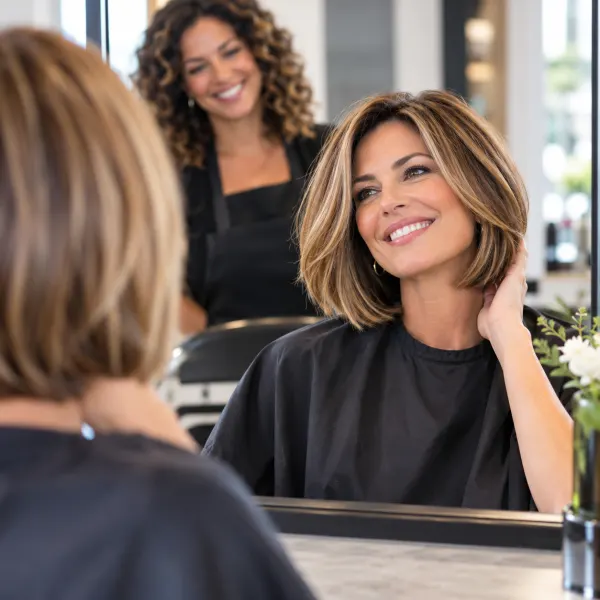
Salon design influences your customer's behavior. The primary design objective is to create and implement a design that combines the physical rejuvenation with an emotional space. Achieving a powerful experience. As a result, it creates an environment that is conducive to buying and maximizing the potential of the salon business.
According to the KIM Report, top-line salon revenue appears steady or slightly up, but that growth is driven primarily by service price increases. Beneath the surface, retail performance and client visit frequency (appointment drift) are under real pressure. In his latest blog, Alain Audet offers strategies for keeping your salon's retail sales strong.
Putting your family to work in the salon offers some real tax benefits, but you have you have to play by the rules of the tax code to claim them. Azarvand Tax Law's Leticia Skrabut, Esq., shows you how.
Discover how to create a true “WOW experience” for every client by first building a culture where your team feels engaged, empowered, and inspired. Drawing on Calvin Stovall’s Iconic Framework, this blog explores how salon, spa, and clinic leaders can strengthen culture, elevate customer experience, and build a business that stands out for the long term.
The wellness industry is growing fast, and salons and barbershops already are an important part of it. In her first blog, Tracy Rado shares where the wellness dollars are heading, and how salon's can grow with this movement.
While salon sales are increasing, owners often feel they're working harder for the same or less profit. Leverage Q2 data from The KIM Report, Alain Audet reveals some of the structural changes that are dampening your growth and why your region and your salon size matters.
Weaknesses in your business are amplified during the Holiday Season. Spark Pro Global's Lucy Randall shows you five things to do now to have the strongest holiday season yet.
In Kati Whitledge's latest blog, she shares how salons have moved away from dress codes and embraced appearance standards. But by removing strict dress codes, some businesses may have unintentionally lowered their appearance standards. Whitledge helps you explain to your team why an appearance standard is important and how to smoothly implement a new appearance policy.
The Small Business Health Care Tax Credit is a non-refundable tax credit for for-profit businesses that provides a financial incentive for eligible employers who offer health insurance coverage to their employees. Leticia Skrabut, Esq., walks you through how to claim that credit.
Developing strong work habits early in one's career supports long-term success in the salon industry. Jesse Linares offers new stylists his top five tips.
Most salon owners have no idea what these numbers are.
You can hit record sales and still have a profit problem. The difference comes down to four numbers almost nobody was taught to track.
At Janet St. Paul Studio for Hair and Beauty, Director of Operations Natasha McMillen helps bring her wife Janet St. Paul's vision to life, elevating every system from education to operations.
The strongest salons, spas, and med spas know which numbers tell the real story of their business. In this practical guide, Phorest breaks down the five essential KPIs every business should track to improve retention, boost revenue, and make smarter decisions with confidence.
At Bella Style Salon in Slidell, Louisiana, Director of Operations Angela Meyer tackles inventory, team management, and guest relations. Read all about her in our latest Meet the Manager.
Starting at Impressions front desk in 2006 when he was 19 years old, General Manager Paul Petrowsky is a seasoned professional who owner Sarah Taylor says is responsible for much of her own success.