Empowering Hairdressers to Support Clients Facing Hair Loss
Hairdressers can make a difference for clients dealing with hair loss if they are equipped with the right consultation questions to identify the type of hair loss, and then the right products to respond to the challenge. In two exclusive interviews, we learn how Rene Furterer helps support healthy hair growth and how the brand empowers stylists to become the ultimate expert and ally.
by Staff
November 15, 2023
Understanding the type of thinning that is occurring empowers the stylist to address the root problem.
3 min to read
As gardeners know, the best flowers bloom from fertile soil. And as stylists know, the most beautiful hair grows from a healthy scalp.
In the following two exclusive videos, MODERN hears from René Furterereducator and ambassador, Charles "Chuck" Hezekiah, on how thinning hair and hair loss can be treated by creating the optimal conditions on the scalp.
Ad Loading...
When it comes to beauty, Chuck Hezekiah is an expert. As Key Educator for Rene Furturer, a cosmetologist and gifted makeup artist, Hezekiah travels across the country educating stylists on the beautiful possibilities that exist for everyone using Rene Furturer treatments and products.
He is a firm believer of the Rene Furturer philosophy that: “Beautiful hair grows from a healthy scalp, like a plant in fertile soil.”
Help for Thinning Hair
René Furterer, a French hairstylist and pioneer in the field of hair care, is credited with introducing the concept of scalp treatments to the world of hair care. His approach focused on understanding the specific needs of the scalp and addressing any issues that could impact the health and vitality of the hair.
His philosophy laid the foundation for the development of a range of hair care products that not only cleansed and styled but also treated and nourished the hair and scalp. The brand's products offer a holistic approach, working together to address, treat, and support.
Here, Hezekiah offers an overview to thinning hair concerns, and to products that promote thicker, healthier hair.
The two types of thinning hair concerns--reactional thinning and progressive thinning.
How to educate clients on the underlying causes of progressive, hereditary thinning hair and how to treat with botanical extracts, essential oils and vitamins. (Products include COMPLEXE 5 stimulating plant extract, NEW TRIPHASIC strengthening shampoo, NEW TRIPHASIC PROGRESSIVE concentrated serum, and VITALFAN PROGRESSIVE dietary supplement.)
René Furterer has a wide variety of drug-free products to promote scalp health and hair growth, but for those who are struggling with thinning hair, there are two recommended regimens: Triphasic Reactional and Triphasic Progressive.
Ad Loading...
Triphasic Reactional is for women and men who experience sudden, temporary hair thinning caused by stress, dietary imbalance, postpartum hair loss or other factors. Triphasic Reactional Concentrated Serum helps encourage stronger, healthier-looking hair by maximizing the scalp’s nutrient intake, creating an optimal environment for the hair.
Triphasic Progressive is recommended when clients communicate a slow and steady hair loss that has been going on more than six months: it’s most likely long-term, progressive hair loss.
Chuck, can you share what consultation questions you would ask so you can determine if your client is experiencing reactional thinning hair or progressive thinning hair?
Could you walk us through application of the serums and the system?
And what are the home care products the client will take away?
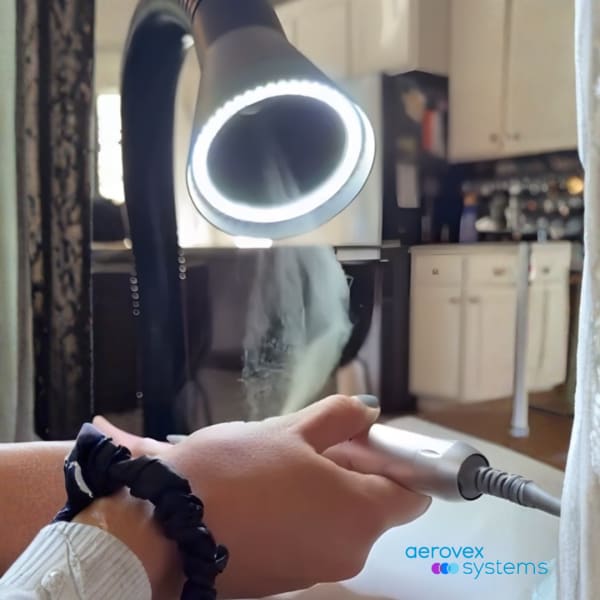
Both systems capture vapors and dust right at the nail table. The difference is where that air goes next, and that one detail can decide whether your salon passes inspection.
Your guest decides what kind of salon this is in the first ten seconds, long before she is in the chair, and scent is the piece most owners leave to chance. Aura House co-owner Leif Frey lays out what ambient scent can and cannot do, why air quality is an engineering question rather than a fragrance one, and the four decisions that matter more than the scent you choose.
You do not need to be a therapist to listen well. You do need to know where your role begins and ends. In her first blog for SALON TODAY, Modjossorica (Rica) Elysée shares five ways you and your team members can respond with care.
Your body doesn't necessarily tell the difference between a promotion and a deadline. In her first wellness blog for SALON TODAY, Wellify Co-Founder Laura Fuqua explains why even good stress has an impact.
Popping up across the UK, Menopause Cafés are helping women seek professional help with their menopause journeys. What better place to play host to one of these gatherings than a spa?
New services on the menu can create new opportunities, but they can also expose your business to greater liability. SASSI's Kathy Lopez shares a few services that pose greater risk, discusses some of the mistakes owners make when expanding their menus, and lists simple risk management strategies.
From acrylic monomers to airborne bio-dust, the air inside a nail salon carries risks most professionals never see coming. Aerovex Systems reveals the source-capture and room-purification strategies that are setting a new standard for salon safety.
Good hair starts at the scalp. But most salons aren’t offering services or products that address scalp health. Relish, a new product line from the founders of Signature Formulations, has everything salons need to deliver an effective head spa service and offer guests a robust at-home scalp care line.
A new book by Joel Steele shows that the most powerful change people can make is to think differently if they want different results. The author believes in the 'Life Switch' so fervently that he's willing to donate $1 million from book sales when he sells his millionth copy.
New global search data from beauty and wellness booking platform Fresha reveals that Botox remains the world’s most in-demand aesthetic treatment in 2025—but regenerative “tweakments” like polynucleotide injections, thread lifts and IV drips are seeing explosive growth across key markets.
As rates of anxiety, depression, and substance use continue to climb across the U.S., conversations around mental health are more urgent than ever—yet one crucial perspective remains missing. In her captivating new book, Aymie Daniels introduces the little-known concept of “Spiritual Emergency” and opens a timely conversation about how America understands (and often mislabels) extreme psychological states.