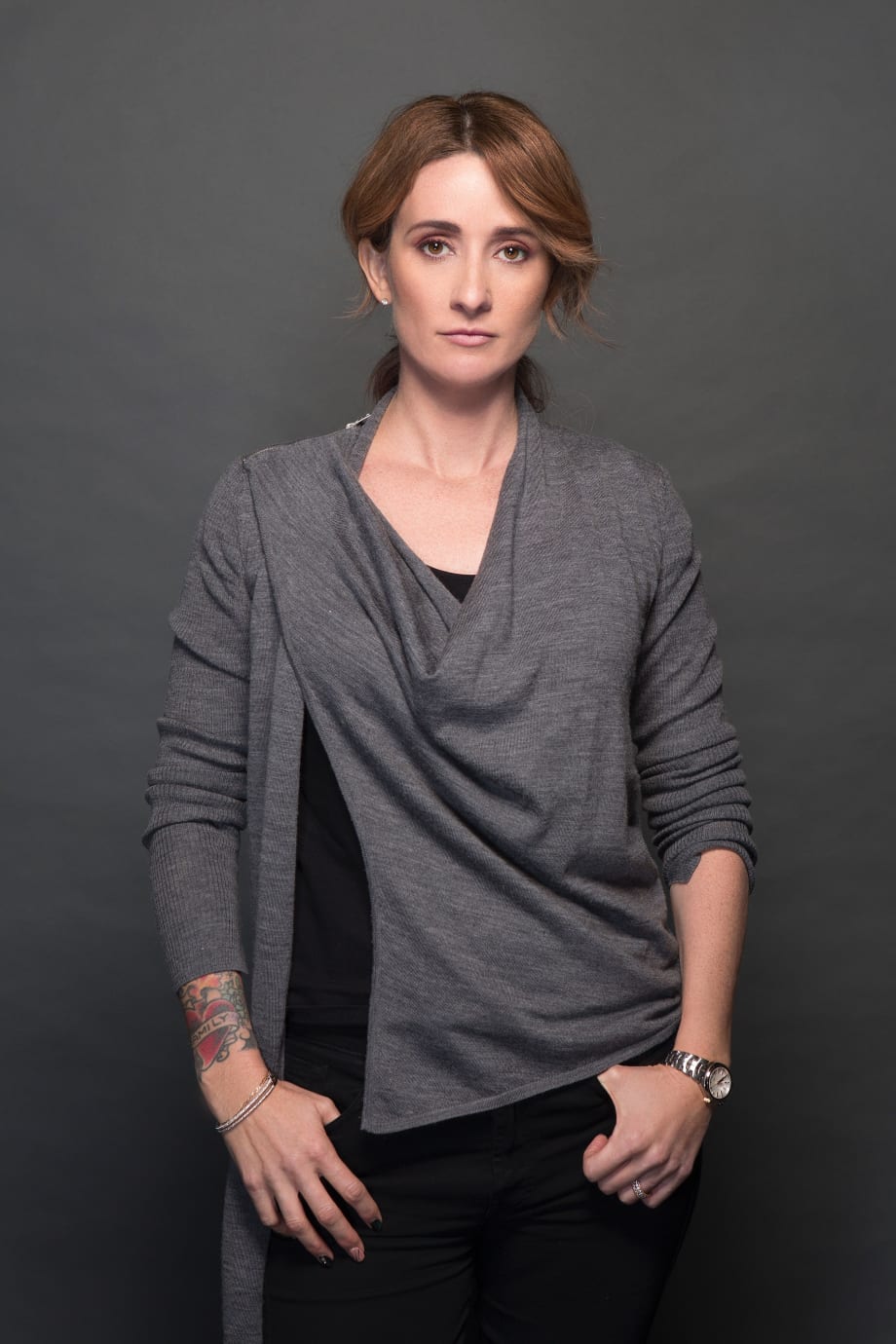
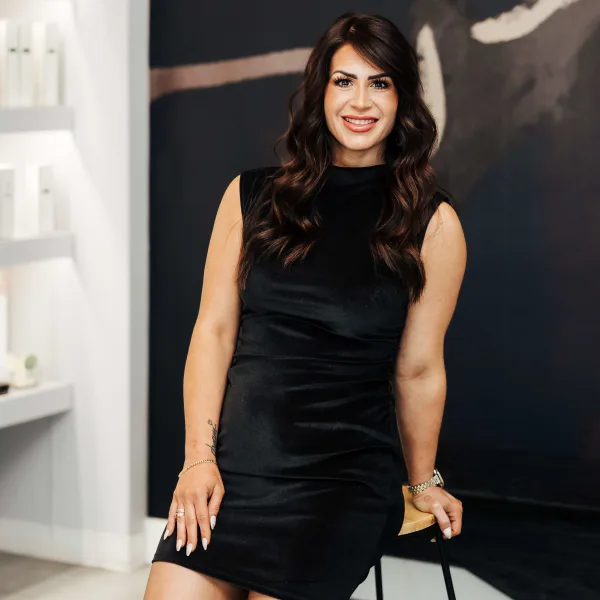
Erica Keelen doesn't do things by halves. This artist, lady boss, and competition coach is building on the traditional salon model with passion and drive. Here's a peek at her journey.
Erica Keelen@ericakeelen_hair_love is an internationally recognized, award winning artist who excels in bold artistic color, content creation, and competition coaching. She owns Studio Sage Artistry Space in Jacksonville Beach, FL. Sage has a waiting list of artists who want to be a part of this new hybrid concept. Keelen envisions Sage 2.0 (by 2021) to be located in a warehouse where she can bring in more talent (even tattoo artists). We sat down with Keelen to talk about how she continues to evolve the modern day salon concept.
MODERN SALON: Ok, let’s start from the beginning…
ERICA KEELAN: So, I went into a salon fresh out of high school in North Carolina. I was always lucky enough to work in nice salons and went straight down on the floor. Now, I would tell anybody to assist, but I didn't do it that way. I moved to Florida, worked in commission salons for about 10 years and when I started doing all of my competition work, and I needed space, I realized I would have to make a change. I would not be where I am, though, if it wasn't for my time there because they really taught me business; they taught me about my numbers, figuring out your average retail tickets, your average service ticket, clients per day. I'd never done any of that stuff and they taught me, kicking and screaming, honestly, but it was something I really needed.
MS: What happened to propel you towards starting your own business?
EK: I'm not the kind of person that could have planned to leave because the owner of that salon had been one of my best friends, and so, I couldn't. But I had a bad day one day and I left crying and didn't know what I was gonna do. I went to another girlfriend's salon and rented a booth, and thought that I would be fine doing that. The girls I worked with, who I love dearly, they were all young mothers; they came to work, they did their hair, and they left. It wasn’t the team feeling I wanted so that's when my business partner, Jessica Stokes, and I started the idea of Studio Sage.
It took us about six months to get the doors open, and it's been a little over two years now. When we started Studio Sage, there were three of us and we each had an assistant. Now we're up to 12 stylists and three microbladers in 1,500 square feet.
MS: So, in that six months from crying to opening, how did you define what you wanted it to look like?
EK: I wanted an artist’s space. It's a lot of wood, some metal, and a mix of contemporary and vintage. I wanted it very clean, with white walls, so when I record I don't have a bunch of stuff in the background. My station is actually against a wall. (My next design, though, I will not have stations as close to the walls as I do right now just because I'm a hairdresser, color flies, and I’m constantly touching up that white paint!) All the artwork on the wall is our work that we've created in our photography studio, and that's what I wanted.
MS: Was it a salon before?
EK: It was not a salon. We tried to find, one, knowing it might have been easier, money-wise, but I didn't want to go somewhere that the salon had not made it.
MS: Because of negative energy in that space?
EK: Yeah, I mean, the name of our salon is Sage.
Luckily, I had saved money and we were able to open the salon with no debt.
MS: That’s not something most businesses can say.
EK: No, I’m very proud of that.
MS: And how do you have things structured with your team?
EK: Our team is made up of independents who provide us with a rental fee each month. They buy their own hair color and we pay for all electrical, sodas, waters, coffee, towels, and back bar. We have a full retail area, so there is one point of sale. I didn't want it to be, ‘Okay, you pay your hairdresser for your hair, but you buy your product here.’
MS: If you had to describe your salon culture, how would you describe it?
EK: Teamwork and education. I think a lot of people see the fun stuff we do, the editorial work, but we don't get paid for most of it. Our everyday clientele is base colors, highlights.
We have an area in the back with a screen and mannequins so we can practice. I’d say you have to be self-motivated to work with us. And I'm probably gonna hate these words in a few years but I try not to micro-manage. We keep our own books, we provide Millennium so we can follow our numbers and track them.
MS: You also do a great deal of mentoring and reverse mentoring. Can you talk about that?
EK: Yes, we all learn from each other and everybody in my salon is not only passionate about doing hair on their clients, but they're truly passionate about the art of hair. Recently, one of my junior stylists had gone to New York to do the DevaCurl class and she came back and taught me how to do my hair.
And we have specialists like Sarajane (Maples Buttner) who shows us how to do different braids. We're all equal. Some of us just know a little bit more than others.
MS: You’ve become very adept with social media; what are your thoughts on how it can help you as an artist and a business person?
EK: I don't think social media is gonna keep your books full forever but you've at least got to be open to trying it. I happened to get into it at the right time. This year, I'm going to try to build my following because I've never tried to. I feel honored that I've just gotten the following I do have but I’m going to concentrate on it more, this year.
MS: What’s next?
EK: I love listening to Eric Taylor's (founder of Salon Republic) podcast and I love his business model. Ideally, I would love to open a bigger space with more options. If some of my team feel ready to open their own salons, I would like to have space for them to have a group of studio suites. I'm not trying to get a thousand hairdressers, like Salon Republic, but I would like to have 20 or 30 in suites as honorary team members who would also be excited about photo shoots and videos.