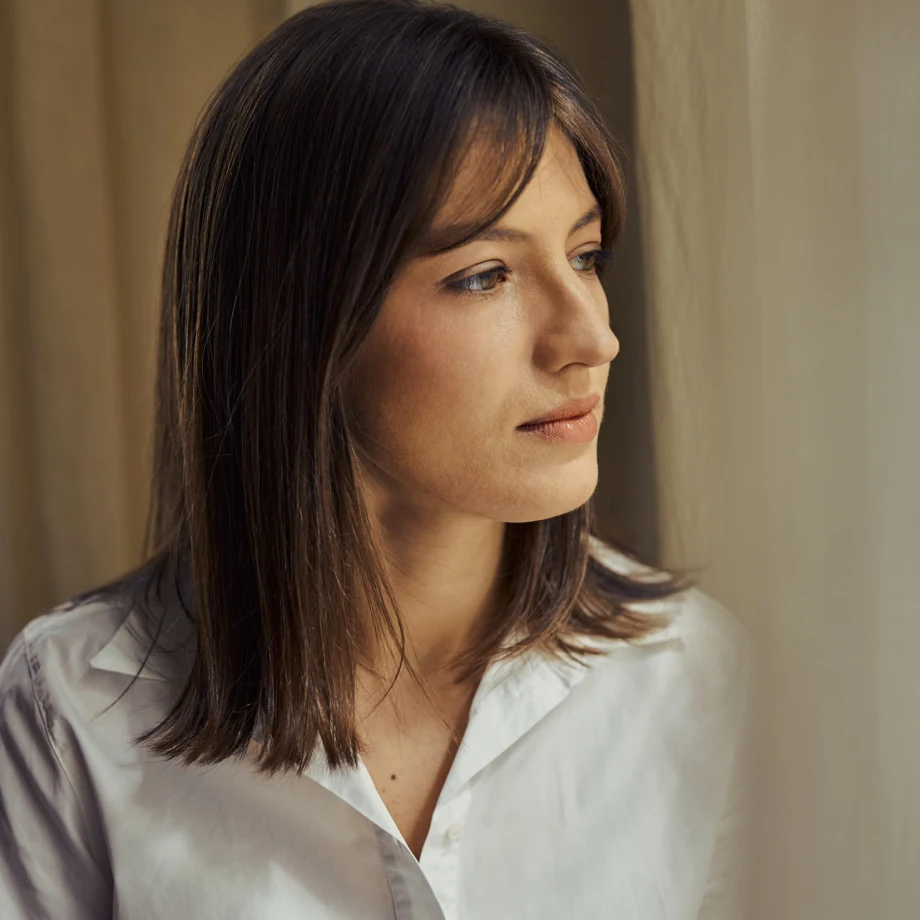
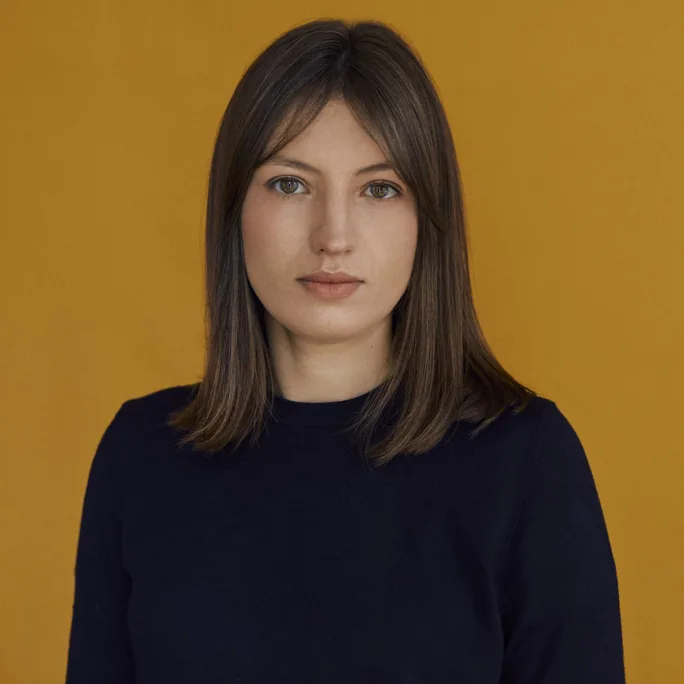
At a panel discussion hosted by L’Oréal Professionnel in Paris in early July, French Philosopher Sophie Galabru explored the cultural shift where women are increasingly choosing natural, personalized color results over traditional grey coverage. In an exclusive interview with SALON TODAY, Galabru and L’Oréal Professionnel Colorist Pierrick Beringer discuss this shift and how salons and colorists respond.
In early July, French Philosopher Sophie Galabru shared how women are moving away from traditional grey coverage in favor of more natural, personalized color results at a panel discussion hosted by L’Oréal Professionnel.
Credit:
L’Oréal Professionnel
5 min to read
Women are increasingly opting for natural, personalized color over traditional grey coverage, reflecting a cultural shift in beauty standards.
L’Oréal Professionnel introduced "French Blending," a color service that integrates grey hair for a subtle and low-maintenance look.
The discussion also highlighted the evolving perception of aging and how beauty rituals are becoming more personalized, moving away from prescriptive solutions.
*Summarized by AI
In early July, L’Oréal Professionnel hosted a press conference and exclusive panel discussion in Paris featuring acclaimed French Philosopher Sophie Galabru to explore a cultural shift that’s redefining one of the salon industry’s most important service categories: grey hair.
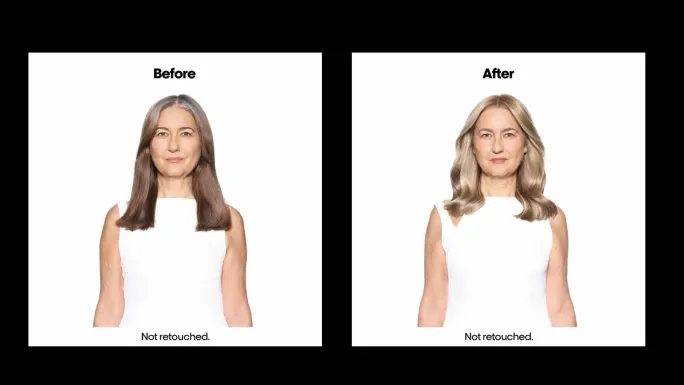
During the discussion, Galabru explored how women are increasingly moving away from traditional overall grey coverage in favor of more natural, personalized color results. In tandem, L’Oréal Professionnel officially French Blending; a new professional color service designed to seamlessly integrate grey hair for a multidimensional, low-maintenance result.
Ad Loading...
In the conversation, Galabru explored a number of topics, including:
The evolving perception of aging in modern society
Why women are redefining their relationship with grey hair
The shift from ‘covering’ to ‘blending’
How beauty rituals are becoming more personalized and less prescriptive
The emotional connection between identity, confidence, and hair color
And, what these changing attitudes mean for salons and colorists
Following the event, Galabru and L’Oréal Professionnel Colorist and Paris Global Artist Pierrick Beringer sat down with SALON TODAY to answer a few of our questions:
SALON TODAY: What cultural shift are you seeing today in the way women perceive their grey hair?
Galabru: “In Western countries, particularly across Europe and the United States, we are witnessing a significant shift in how women view their grey hair. For decades, grey hair was seen as a visible sign of aging that had to be concealed at all costs. Female beauty was closely associated with youth, making it difficult for women to feel attractive or confident while showing visible signs of aging.
Ad Loading...
“Today, grey hair is increasingly seen as a natural characteristic that women can choose to embrace, enhance, or reinterpret. The fundamental change is that the conversation is no longer about covering grey hair at any cost but about giving women the freedom to decide how much coverage they want and how they wish to express their personal style.
“Some women will continue coloring their hair to recreate the shade they had in their younger years. Others will choose to reveal their grey hair gradually, while many are embracing techniques such as grey blending, which create a softer, more natural-looking transition. This evolution reflects a broader vision of beauty, one that is more personal, individual, and centered on self-expression rather than conformity to a single beauty ideal.”
ST: What are the main drivers behind this shift?
Galabru: “Consumer expectations have evolved considerably. Women are increasingly looking for solutions that reflect not only their personality but also their lifestyle. Time has become a valuable resource, and many women are seeking beauty routines that are less demanding and easier to maintain. As a result, they are gravitating towards more natural, long-lasting, and lower-maintenance alternatives to traditional full-coverage color services that require frequent touch-ups.
“This shift has been accelerated by two major forces.
Ad Loading...
“First, social media has played a pivotal role in normalizing grey hair by giving visibility to women who choose to embrace it. Movements such as #GoingGrey have helped remove the stigma surrounding the transition to grey or white hair. Women openly share their journeys, explaining their desire to move away from constant coloring, artificial beauty standards, and the ongoing maintenance that comes with them. They find encouragement and support from other women who are making similar choices.
“These communities advocate for freedom from restrictive beauty expectations and encourage women to embrace authenticity, cultivate their own style, and adopt an appearance that genuinely reflects their life experience and personality.
“Second, celebrities and actresses who confidently wear their natural grey hair, whether in advertising campaigns, on red carpets, or during interviews, have further fueled this cultural shift. Their visibility creates both admiration and identification. Seeing well-known women confidently challenge traditional beauty standards and embrace this freedom empowers others to feel they can do the same.”
"Social media has played a pivotal role in normalizing grey hair by giving visibility to women who choose to embrace it," says Sophie Galabru.
Credit:
L’Oréal Professionnel
ST: As more women embrace their grey hair, how can this strengthen the relationship of trust between clients and their beauty professionals?
Galabru: “Beyond delivering a technical service, hair professionals and colorists in particular are increasingly becoming trusted beauty advisors who guide each client through a personalized beauty journey.
Ad Loading...
“When a hairdresser takes the time to understand a client's expectations, lifestyle, and personal preferences, they can recommend the solution that best suits her, whether that means maintaining her color, beginning the transition to grey, or enhancing her natural grey hair. This approach builds a relationship based on listening, expertise, and trust.
“Hair carries powerful emotional significance. It is deeply connected to femininity, beauty, identity, and self-expression. As a result, hairdressers play a role that goes far beyond technical expertise: they also provide emotional support and reassurance during what can be a highly personal transformation.
“This personalized approach strengthens long-term loyalty. Clients are no longer returning simply for a color service; they come back for tailored guidance, evolving professional advice, and the confidence that their stylist understands and supports their unique vision of beauty.”
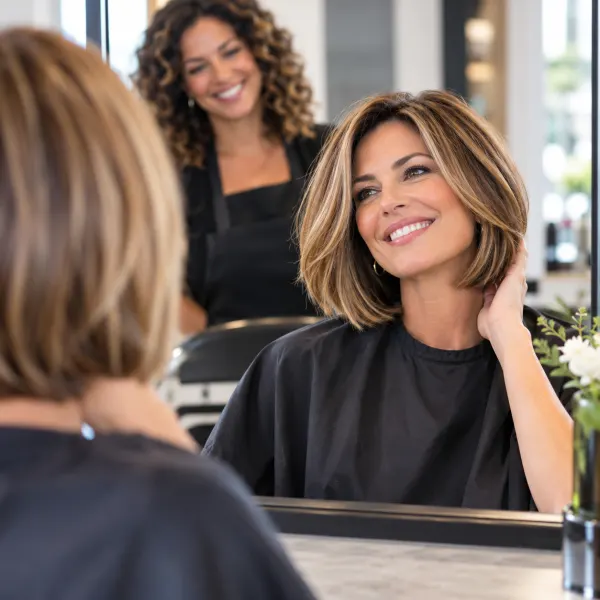
A before-and-after example of grey blending.
Credit:
L’Oréal Professionnel
SALON TODAY: Many salon professionals and owners might see their customers embracing grey as a loss of future revenue, but how can they respond to this shift through new service offerings and customization?
Beringer: “I don’t believe that embracing grey hair leads to a loss in revenue. Clients don't necessarily want to stop visiting the salon; they simply want a different way to manage and enhance their grey hair. This actually presents an opportunity to create new, more personalized services around grey blending, light, dimension, or neutralization. We are no longer systematically trying to cover up greys, but rather working with what is already there.”
Ad Loading...
ST: How are beauty rituals becoming more personalized? How does that help elevate the professionalism of the industry’s pros?
Beringer: “Today, clients are less and less interested in standardized solutions. Services and results must adapt to their hair, lifestyle, desires, and maintenance routine. This level of personalization puts the professional's expertise back at the center of the experience: their role is no longer just to apply a technique or a product, but to observe, understand, and build a truly tailor-made solution.”
ST: How can salons gain a market advantage by promoting their grey blending services?
Beringer: “French Blending can become a genuine signature service for a salon. It requires real expertise in diagnostics, color theory, and color placement. By communicating more about this expertise using real results and showing different approaches tailored to each client, salons can differentiate themselves and attract clients looking for a more modern, customized alternative to classic grey coverage.”
Quick Answers
L'Oréal Professionnel explored the cultural shift where women are increasingly choosing natural, personalized color results over traditional grey coverage.
The panel discussion featured acclaimed French Philosopher Sophie Galabru.
L'Oréal Professionnel introduced 'French Blending', a new professional color service designed to integrate grey hair for a multidimensional, low-maintenance result.
Beauty rituals are becoming more personalized and less prescriptive, allowing individuals to redefine their relationships with their hair.
Sophie Galabru discussed topics such as the evolving perception of aging in modern society and the shift from 'covering' to 'blending' grey hair, as well as the emotional connection between identity, confidence, and hair color.
All beauty professionals should know how to identify when a client may need some health guidance. Tracy Rado discusses some common questions that clients ask in the chair, how to advise them, and when to refer them to a specialist.
From managing air traffic on busy days to handling frustrated guests' complaints, your front desk team often serves as the salon's emotional shock absorber. From a customer service lesson from the DMV to a list of strategies for caring for your front line, our experts offer ideas for alleviating stress, celebrating wins, and setting goals.
According to the KIM Report, top-line salon revenue appears steady or slightly up, but that growth is driven primarily by service price increases. Beneath the surface, retail performance and client visit frequency (appointment drift) are under real pressure. In his latest blog, Alain Audet offers strategies for keeping your salon's retail sales strong.
Putting your family to work in the salon offers some real tax benefits, but you have you have to play by the rules of the tax code to claim them. Azarvand Tax Law's Leticia Skrabut, Esq., shows you how.
Discover how to create a true “WOW experience” for every client by first building a culture where your team feels engaged, empowered, and inspired. Drawing on Calvin Stovall’s Iconic Framework, this blog explores how salon, spa, and clinic leaders can strengthen culture, elevate customer experience, and build a business that stands out for the long term.
The wellness industry is growing fast, and salons and barbershops already are an important part of it. In her first blog, Tracy Rado shares where the wellness dollars are heading, and how salons can grow with this movement.
While salon sales are increasing, owners often feel they're working harder for the same or less profit. Leverage Q2 data from The KIM Report, Alain Audet reveals some of the structural changes that are dampening your growth and why your region and your salon size matters.
Weaknesses in your business are amplified during the Holiday Season. Spark Pro Global's Lucy Randall shows you five things to do now to have the strongest holiday season yet.
In Kati Whitledge's latest blog, she shares how salons have moved away from dress codes and embraced appearance standards. But by removing strict dress codes, some businesses may have unintentionally lowered their appearance standards. Whitledge helps you explain to your team why an appearance standard is important and how to smoothly implement a new appearance policy.
The Small Business Health Care Tax Credit is a non-refundable tax credit for for-profit businesses that provides a financial incentive for eligible employers who offer health insurance coverage to their employees. Leticia Skrabut, Esq., walks you through how to claim that credit.
Developing strong work habits early in one's career supports long-term success in the salon industry. Jesse Linares offers new stylists his top five tips.
Most salon owners have no idea what these numbers are.
You can hit record sales and still have a profit problem. The difference comes down to four numbers almost nobody was taught to track.
At Janet St. Paul Studio for Hair and Beauty, Director of Operations Natasha McMillen helps bring her wife Janet St. Paul's vision to life, elevating every system from education to operations.