






You Don't Own a Salon. You Own A Business.
In his latest blog, Leon Alexander Ph.D., challenges industry conventional thinking to help owners add more to their bottom lines.
 MENU
 SEARCH
Small shifts in management strategies can have a big impact on a salon’s culture. SALON TODAY is always on the lookout for new tips and best practices from salon owners who have improved their business structures and work environments. ...



Small shifts in management strategies can have a big impact on a salon’s culture. SALON TODAY is always on the lookout for new tips and best practices from salon owners who have improved their business structures and work environments. Latest on our reading list are a few articles from avedameansbusiness.com that offer methods for motivating staff and streamlining operations.
1. Set systemized benchmarks and offer perks for successful management of multiple locations.
Ensuring that your salon has one or more good managers who are well versed in the salon’s culture is essentials, says Kathy Thalman, owner of four salons and two Aveda Institutes in San Antonio and Corpus Cristi, Texas. In her salons, the role of a manager is to manage things, like challenges with the phone system, and lead the team.
The best way to lead stylists is by establishing a system of benchmarks that they can follow to track their own improvement and know that their positions are not arbitrary but are fairly based on performance. Thalman implemented Aveda’s benchmarking system to great success. She also creates a positive work environment by offering scheduling perks and flexibility. “Once team members reach senior status, they go to a four-day work week,” Thalman says. “Each week there’s a different rotation and every fifth week they get Saturday, Sunday and Monday off—a three-day weekend.” They can also switch days with other stylists if something comes up. Making sure they have the personal life balance they crave keeps the team happy and in harmony.
For more, read “Managing Multiple Locations: Thriving vs. Surviving” on avedameansbusiness.com.
2. Lead by example.
William Edge, owner of seven salons in New Braunfels, Texas; Arlington, Texas; Las Colinas, Texas; Nashville and Seattle, motivates his staff by setting an example that they can learn from. From how to behave around clients in the salon to being active and involved in the community, Edge knows that it is necessary to walk the walk if you want your staff to live up to certain standards.
“If you want the team to be more community minded, you have to show them, if you want them to be more gracious, you need to be more gracious, and so on,” Edge says.
When he set out to open a new salon in Nashville, he knew that he needed to establish his brand in the new city. “I’m really community driven in my own hometown and I kept hearing about the children’s hospital in Nashville, so I went and spent a few days there," Edge says.
Now, “every service serves a child” at Edge’s salons. They donate a dollar for every service to the children’s hospital. In addition, his stylists spend time at the hospital volunteering—cleaning toys, reading to kids or just being there. This involvement has a positive impact on the lives of the stylists and on the community—and it begins with the example set by a strong leader.
For more, read the Aveda Means Business article, "Living on the Edge: Inspiring Stylists for Long-Term Growth."
3. Motivate front desk staff and make them feel appreciated.
To prevent front desk staff from feeling left out of the perks that stylists enjoy, Executive Director of Guest Services Jana Rudolph and her team at Van Michael Salons in the Atlanta, Georgia, area, developed Royal Rewards for their guest service coordinators.
The program is based on points, which front desk and call center staff can earn by meeting sales goals or going above and beyond in other ways, such as dealing with a client challenge without involving a manager or running out to get a client lunch.
Once points are accumulated, they can be redeemed for merchandise or other, non-tangible incentives.The non-merchandise items are free or a nominal cost to the salon—a parking spot, hair services, leaving early, etc. The merchandise, which includes myriad items like iPads, cameras, luggage, purses, watches, Bose sound systems and more, is all acquired through the rewards Van Michael Salons earn from Aveda purchases on the company’s American Express card. The program motivates guest service staff to set and reach goals, and ensures that they feel appreciated for their role in the salon.
Learn more about motivating front desk staff by checking out the Aveda Means Business article "Motivate Your Front Desk Staff with Royal Rewards."
4. Improve consultations with a portfolio of images.
Since the inception of Van Michael salons 32 years ago, owner Van Council has used images to conduct his consultations and he insists his stylists do the same. Portfolios are binders of images that stylists cut out and collect to give clients ideas and show them examples of cuts, colors and styles they can have.
Gregg Colbert, Vanc Council new talents director helps every new stylist put together a beginner's portfolio with guidance choosing images that are strong so that they are working with the best tool possible. When they graduate from new talent to the Van Michael Salon floor, they upgrade their portfolio to a nicer binder and can showcase certificates from advanced education classes in the front.
Colbert says a good example of putting the portfolio to work is with a guest who always wants the same thing. “A stylist might say, ‘I was looking through my portfolio and came across a couple of pictures that reminded me of you. What if we did XYZ to highlight your cheekbones?’” While a guest may not make the change right at that moment, the conversation will make them think about it for a future visit and the stylist has demonstrated his or her interest and expertise.
Read "Picture-Perfect Consultation" on avedameansbusiness.com for more information on building portfolios.
5. Consider a call center to improve customer service.
The pitfalls of having a client wait too long on the phone to make an appointment are obvious. Van Michael salons ran into this issue and found that a call center was necessary to ensure quality customer service across multiple locations.
“We opened more salons and found there is a financial benefit of having a call center when you break it down by cost per call,” says Nicole “Princess” Prince, director of the communication center. “When you have a group in a centralized location, the overhead cost per call is much lower than a smaller group in each location.”
Benefits to the call center include an increased level of service for the client and, if your business is too big for a traditional front desk structure, you’ll see a financial benefit as well.
For more information on the challenges and solutions of opening a call center, read the Aveda Means Business article, "Is a Call Center Right for You?"
In his latest blog, Leon Alexander Ph.D., challenges industry conventional thinking to help owners add more to their bottom lines.

In her latest blog, Amy Pal helps you develop your own clear guidelines around complimentary free employee services.

From managing air traffic on busy days to handling frustrated guests' complaints, your front desk team often serves as the salon's emotional shock absorber. From a customer service lesson from the DMV to a list of strategies for caring for your front line, our experts offer ideas for alleviating stress, celebrating wins, and setting goals.

According to the KIM Report, top-line salon revenue appears steady or slightly up, but that growth is driven primarily by service price increases. Beneath the surface, retail performance and client visit frequency (appointment drift) are under real pressure. In his latest blog, Alain Audet offers strategies for keeping your salon's retail sales strong.

Putting your family to work in the salon offers some real tax benefits, but you have you have to play by the rules of the tax code to claim them. Azarvand Tax Law's Leticia Skrabut, Esq., shows you how.

Discover how to create a true “WOW experience” for every client by first building a culture where your team feels engaged, empowered, and inspired. Drawing on Calvin Stovall’s Iconic Framework, this blog explores how salon, spa, and clinic leaders can strengthen culture, elevate customer experience, and build a business that stands out for the long term.
Sponsored by Phorest Salon Software

The wellness industry is growing fast, and salons and barbershops already are an important part of it. In her first blog, Tracy Rado shares where the wellness dollars are heading, and how salons can grow with this movement.

While salon sales are increasing, owners often feel they're working harder for the same or less profit. Leverage Q2 data from The KIM Report, Alain Audet reveals some of the structural changes that are dampening your growth and why your region and your salon size matters.

Weaknesses in your business are amplified during the Holiday Season. Spark Pro Global's Lucy Randall shows you five things to do now to have the strongest holiday season yet.

In Kati Whitledge's latest blog, she shares how salons have moved away from dress codes and embraced appearance standards. But by removing strict dress codes, some businesses may have unintentionally lowered their appearance standards. Whitledge helps you explain to your team why an appearance standard is important and how to smoothly implement a new appearance policy.

The Small Business Health Care Tax Credit is a non-refundable tax credit for for-profit businesses that provides a financial incentive for eligible employers who offer health insurance coverage to their employees. Leticia Skrabut, Esq., walks you through how to claim that credit.

Developing strong work habits early in one's career supports long-term success in the salon industry. Jesse Linares offers new stylists his top five tips.

Most salon owners have no idea what these numbers are. You can hit record sales and still have a profit problem. The difference comes down to four numbers almost nobody was taught to track.
Sponsored by Strata Salon Systems™

A five-area audit every owner-dependent salon needs to run. You built something that looks successful. Now find out if it can survive without you.
Sponsored by Strata Salon Systems™

Every month you put off fixing the problem, it gets bigger, more expensive, and harder to solve.
Sponsored by Strata Salon Systems™
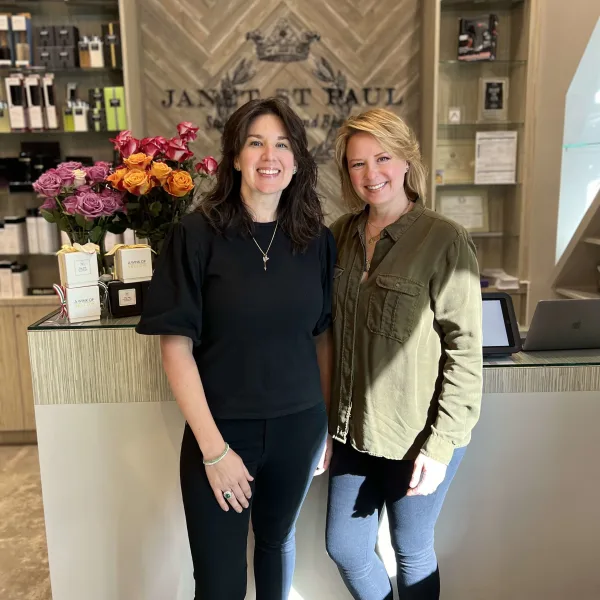
At Janet St. Paul Studio for Hair and Beauty, Director of Operations Natasha McMillen helps bring her wife Janet St. Paul's vision to life, elevating every system from education to operations.

Expand your color service menu with the Pinstripe technique. Brooks and Brooks' Marlon Hawkins walks you through the technique.