









You Don't Own a Salon. You Own A Business.
In his latest blog, Leon Alexander Ph.D., challenges industry conventional thinking to help owners add more to their bottom lines.
 MENU
MENU SEARCH
A common message in the beauty industry is that continuing education is essential to success. This is true, but the mantra falls short if a stylist leaves a supplemental course without any guidance on how to implement their newly learned skills in the salon. Aveda Means Business shares stories of salon owners who have raised revenue and built ambitious salon cultures by outlining ways for stylists to utilize skills and pass on valuable information to clients. Scroll through for five real-world examples of continuing education being applied in the salon.


A common message in the beauty industry is that continuing education is essential to success. This is true, but the mantra falls short if a stylist leaves a supplemental course without any guidance on how to implement the newly learned skills in the salon. Aveda Means Business shares stories of salon owners who have raised revenue and built ambitious salon cultures by outlining ways for stylists to utilize skills and pass on valuable information to clients. Scroll through for five real-world examples of continuing education being applied in the salon.
1. When it comes to retail, think education, not sales.
Charlie Martin started his career in beauty working as a stylist for an Aveda salon nearly 10 years ago, before leaving to open a rental salon, Salon One Six One, with the goal to someday become an independent salon owner. After five years in business, he realized his dream and Salon One Six One became a six-chair Aveda Concept Salon. One result of this transition was that Martin got rid of the several other product lines he carried and now exclusively has Aveda products.
Previously, Martin’s lack of enthusiasm for other product lines that were also being sold at drugstores showed in his retail sales. Now his salon is selling more home care per month than he used to in an entire year. Martin and his staff attended a course on the Aveda line when they brought it on and continue to get educated regularly, making it easy to pass the knowledge on to clients.
“I talk to them about why we are using a product in their hair and show them exactly how much and how to use it,” Martin says. “By the end of the appointment, they know what they want and ask me to buy it.”
“My stylists enjoy educating their guests rather than feeling like they have to sell something. It works. We hit our goal or go over it every month.”
2. Prioritize education for the whole staff.
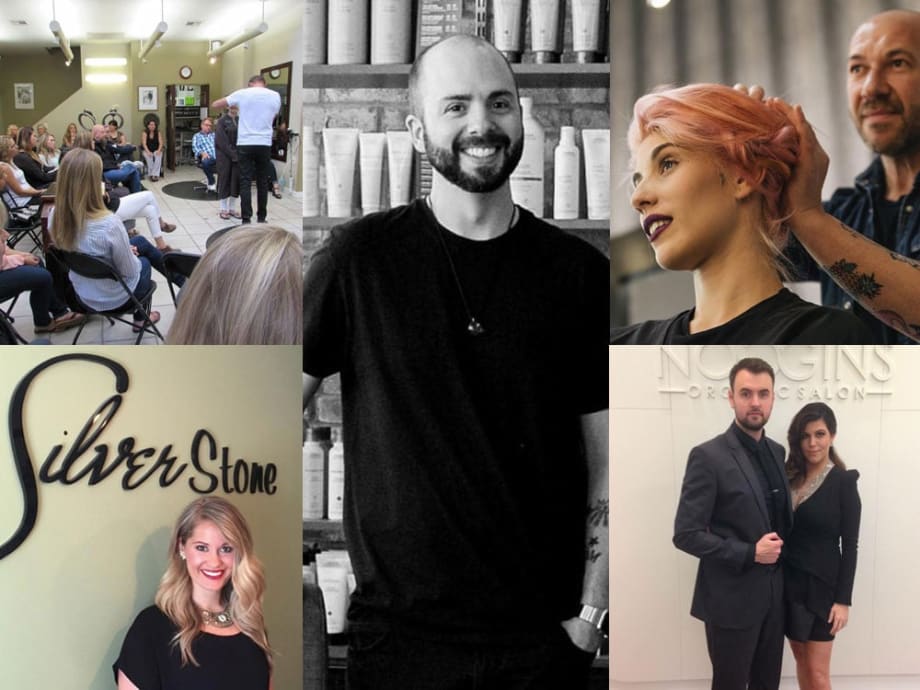
Kayla Byford attended the Aveda Institute in Birmingham, Alabama with the plan to open a salon in her small home town of Hartselle, Alabama, with a population of about 15,000 people. Five years ago she opened Silver Stone Salon and Spa, an Aveda Concept salon currently staffed by herself, two stylists, one esthetician, a nail tech, two massage therapists and a front desk person, making it a one stop shop for Hartselle citizens who used to have to drive far away to get to a salon.
Byford focuses on giving her clients a unique and enjoyable experience, and she ensure this happens by being dedicated to keeping her staff educated.
“We offer all services and stay up to date on all the latest trends from Aveda through education,” says Byford.
Plus, continuing education is something she prioritizes for herself, both as a stylist and a salon owner. “The Aveda Institute in Birmingham gave me great training and I continue to attend classes for technical and business skills.”
3. Teach customer service skills.
John DiJulius, author, speaker, educator and owner of John Robert’s Spas, with four locations in the Cleveland, Ohio-area, says a typical business is spending 98 percent of training time on technical skills, and when it comes to addressing customer service, they tell employees, “always exceed customer expectations,” without drilling down into what that really means.
“You must break it down for employees,” DiJulius says. “Teach them how to build relationships, create a bond, and how to recover when they drop the ball.”
In DiJulius’ newest educational offering, the Customer Experience Executive Academy, he does just that. The year-long course featuring quarterly two-day workshops is open to only 15 people and primarily targeted to those who are chief marketing officers in their companies.
“They don’t give degrees in customer service,” DiJulius says. “We teach customer experience executives how to create a training and certification for new employees in customer service. Just like we don’t put a hairdresser out without technical training or a front desk person trained in software, we shouldn’t be putting anyone with guests until they are trained in customer service.”
4. Encourage innovation and look for ways to inspire.
At James Griffith Salon in Venice, Florida, co-owner Christine Griffith (with husband James) owns the building next to the salon and has used it for many purposes over the years, including storage and renting it out to a yoga studio/holistic center.
About a year ago, the extra space was flooded and needed to be cleaned up and redesigned. The Griffiths chose to refurbish the building with business offices and a mock salon, which serves as a training facility for new stylists.
“This is great because we don’t have to take up floor space with training in any of our locations by having this separate training space,” says Griffith.
But there was still extra space to use and Griffith knew exactly what she wanted to do with it—create an on-site photo studio. As an amateur photographer herself, a studio is something Griffith had always dreamed of and finally had the right space to do it.
“It’s perfect because there are no windows in this area of the building. I’m going to use just photo lights,” she says. “I’m learning about lighting and the specific way to set it up for hair.”
Once it’s set up, Griffith plans to discern who has a good eye and train certain key members of the staff to use the camera and lighting.
Griffith has several goals for her photo studio: “We can post quality images on Facebook and other social media with a how-to,” she says.
“I would love to do a shoot once a quarter—that’d be great,” she says. “I’d like to send them to industry magazines,” she says. “We’ve also never entered NAHA—I’m thinking of entering the team category. We have some great stylists and this is something I’ve always wanted to do.”
For more details, read the Aveda Means Business article, “Ace Your Space.”
5. Create a culture of ambition and promote specialized education.
Kez and Gareth Broad became owners of Noggins Salon in Ridgeland, Mississippi and quickly set out to make it the premiere, high-quality salon in the area. Kez took over her position at Noggins after studying with Toni&Guy in London and determined and that a focus on education would be top priority in her new venture. She and Gareth created a program to set their stylists up for success.
“We taught them a formula,” says Kez. “It starts with marketability: how you talk, your facial expressions, what you’re wearing, etc. Next, we teach business sense: the consultation and the art of conversation. Finally, we talk about the medical side of hairdressing.”
This is where Noggins truly differentiates itself from the competition. Kez has a friend who is a holistic doctor and was able to introduce the Broads to solutions for shedding, dryness, damage, oiliness at the roots and hair that won’t hold a style.
This level of specialization requires dedication from the entire salon team. Noggins has seven stylists who do $100,000/year each.
“We can afford to pay them better to make sure they don’t head down the road,” says Kez. “You must be really, really driven to work here.”
In his latest blog, Leon Alexander Ph.D., challenges industry conventional thinking to help owners add more to their bottom lines.
In her latest blog, Amy Pal helps you develop your own clear guidelines around complimentary free employee services.
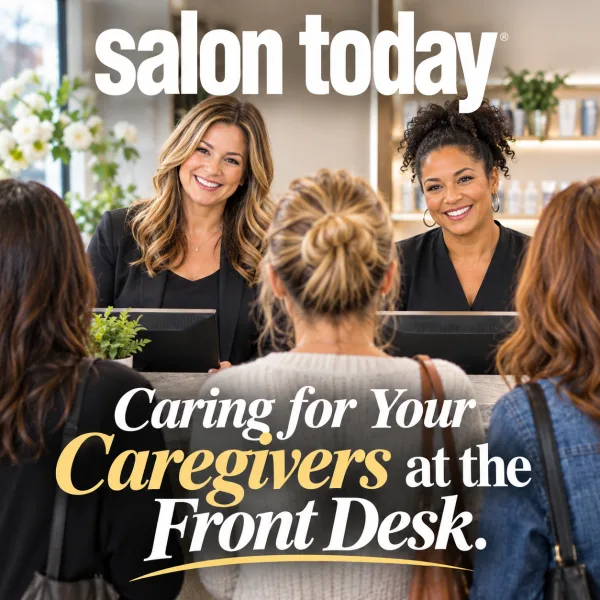
From managing air traffic on busy days to handling frustrated guests' complaints, your front desk team often serves as the salon's emotional shock absorber. From a customer service lesson from the DMV to a list of strategies for caring for your front line, our experts offer ideas for alleviating stress, celebrating wins, and setting goals.

According to the KIM Report, top-line salon revenue appears steady or slightly up, but that growth is driven primarily by service price increases. Beneath the surface, retail performance and client visit frequency (appointment drift) are under real pressure. In his latest blog, Alain Audet offers strategies for keeping your salon's retail sales strong.

Putting your family to work in the salon offers some real tax benefits, but you have you have to play by the rules of the tax code to claim them. Azarvand Tax Law's Leticia Skrabut, Esq., shows you how.

Discover how to create a true “WOW experience” for every client by first building a culture where your team feels engaged, empowered, and inspired. Drawing on Calvin Stovall’s Iconic Framework, this blog explores how salon, spa, and clinic leaders can strengthen culture, elevate customer experience, and build a business that stands out for the long term.
Sponsored by Phorest Salon Software

The wellness industry is growing fast, and salons and barbershops already are an important part of it. In her first blog, Tracy Rado shares where the wellness dollars are heading, and how salons can grow with this movement.

While salon sales are increasing, owners often feel they're working harder for the same or less profit. Leverage Q2 data from The KIM Report, Alain Audet reveals some of the structural changes that are dampening your growth and why your region and your salon size matters.

Weaknesses in your business are amplified during the Holiday Season. Spark Pro Global's Lucy Randall shows you five things to do now to have the strongest holiday season yet.

In Kati Whitledge's latest blog, she shares how salons have moved away from dress codes and embraced appearance standards. But by removing strict dress codes, some businesses may have unintentionally lowered their appearance standards. Whitledge helps you explain to your team why an appearance standard is important and how to smoothly implement a new appearance policy.

The Small Business Health Care Tax Credit is a non-refundable tax credit for for-profit businesses that provides a financial incentive for eligible employers who offer health insurance coverage to their employees. Leticia Skrabut, Esq., walks you through how to claim that credit.

Developing strong work habits early in one's career supports long-term success in the salon industry. Jesse Linares offers new stylists his top five tips.

Most salon owners have no idea what these numbers are. You can hit record sales and still have a profit problem. The difference comes down to four numbers almost nobody was taught to track.
Sponsored by Strata Salon Systems™

A five-area audit every owner-dependent salon needs to run. You built something that looks successful. Now find out if it can survive without you.
Sponsored by Strata Salon Systems™

Every month you put off fixing the problem, it gets bigger, more expensive, and harder to solve.
Sponsored by Strata Salon Systems™
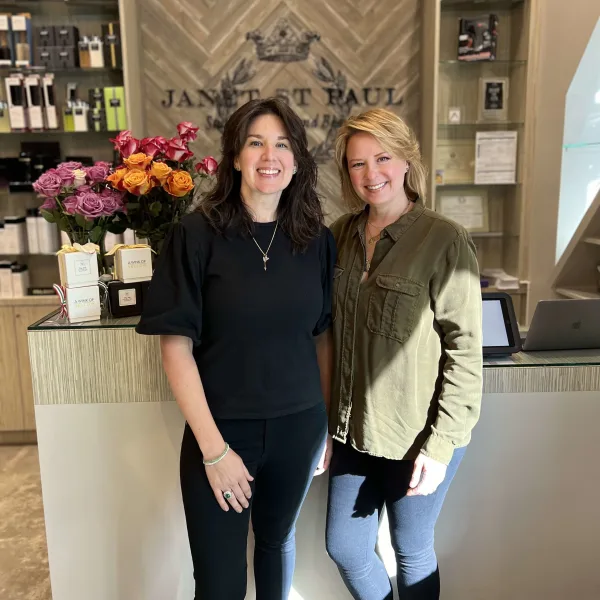
At Janet St. Paul Studio for Hair and Beauty, Director of Operations Natasha McMillen helps bring her wife Janet St. Paul's vision to life, elevating every system from education to operations.

Expand your color service menu with the Pinstripe technique. Brooks and Brooks' Marlon Hawkins walks you through the technique.