It makes sense that everyone who works at a salon would love the salon industry, and stylists tend to follow this logic and enjoy what they do. But support staff can accept a position at a salon for any number of reasons—a short commute, a friend works there, or it was just the first “help wanted” sign they saw the day they were looking for a job. At Mango Salon in Richmond, VA, owners Pat and Bobbi Heaney thought maybe that wasn’t good enough.
When the Heaneys launched their salon in 2003, they named it after the mango fruit—freshness to signal a fresh start for them in a new venture. They didn’t know how fitting the name would be 17 years later when a pandemic shutdown would force them to rethink a lot of management policies and come up with fresh ideas once again. And by then, Mango had grown to three locations.
Ad Loading...
Cross-training for Coverage and Confidence
“When we reopened, we couldn’t cross-pollinate,” says Cari Shannon, director of marketing and daughter of the founders. “The state set the restrictions, and we couldn’t move someone from one location to another in a pinch. So each location had to become efficient and rely on its own team. That made us look at things differently.”
The first step was to cross-train employees so they’d have expertise in more than one role.
“We thought the apprentices should know how to book appointments and perform other front desk duties,” Shannon says. “Understanding all that work will serve them well when they become stylists, and at the time it helped whenever someone was out sick. Cross-training gave people confidence that they could do everything.”
Hiring Credential: Love for the Industry
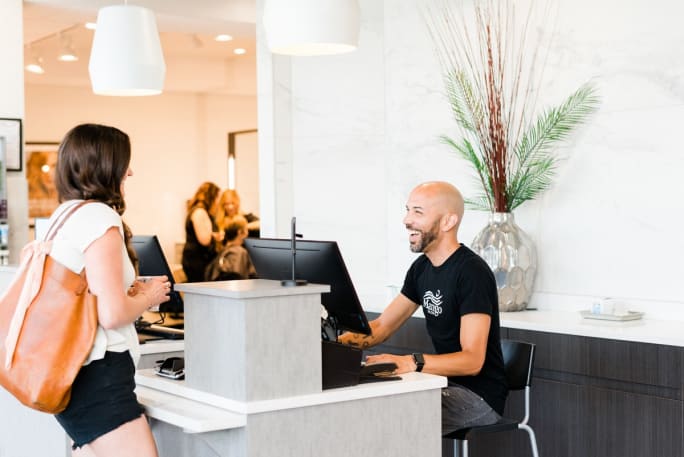
When Shannon and the Heaneys looked at the guest services team, they saw that it was bottom-heavy with entry-level positions responsible mostly for just guest check-in and checkout. The career path could take them to leadership and management roles. When the pandemic caused the labor market to tighten, the salon eliminated the lower guest services role altogether and offered only leadership jobs that also covered checking guests in and out.
“These leaders multitask, take on more responsibility, and have a higher-paying, more dynamic career path from an early phase of joining our team,” Shannon explains. “They attend Zoom leadership development classes with one of the owners, and our central office team stays in close communication with them.”
Ad Loading...
Hiring the right people for these leadership roles meant reviewing the recruiting process. That’s when it struck Shannon and her parents that only some of the support staff people were drawn to the salon by their interest in the business, and most of the turnover occurred with the less passionate staffers. So why not make love for salon work a required credential?
“When we used to post a desk services job, we wouldn’t get many applications because Mango was increasingly competing with larger companies like Target, Amazon, etc., during the pandemic as people started leaving the labor force and those companies increased wages and benefits,” Shannon recalls. “Now, we target people who are interested in the salon industry, and we show them a career path. We’ve been really lucky with that strategy and have been able to attract high-quality leaders and managers.”
Leadership Specialties
Cross-training has had an unanticipated benefit: when a lot of people try their hand at a lot of new things, some are likely to discover or develop an affinity for one of them. That’s exactly what happened when everyone was educated about inventory.
“We saw that one person was so strong in inventory—getting our backbar percentage down, reducing waste, and working closely with our vendors,” Shannon reports. “We decided to put her into a dedicated inventory position, and now she has the time to focus on that while helping us to get the salon managers engaged in the inventory process. Her support frees up the managers to work more on coaching the hair designers.”
Before the pandemic, Mango Salon held weekly classes attended by stylists at all three locations. When workers were restricted to working only within one group, the three teams could no longer mingle; neither could an educator travel back and forth between salons. This meant that the company needed three educators instead of one, a costly solution.
Ad Loading...
Eventually the state lifted restrictions, and by summer 2021 Mango was back to full stability. Having worked with the esteemed Aveda educator Hauns Korpela in the past, the Mango team invited him to join them. Shannon says a strong director of education has been a great benefit to the salon, which now can conduct an ongoing educational curriculum rather than holding singular weekly classes.
“We knew we’d lose some designers during COVID and that education was our best bet in keeping as many as possible,” Shannon says. “When Hauns came on, he redesigned our education program. Everyone wants to learn hair color! It’s a high-ticket item, there’s so much color education available on Instagram and YouTube, and once you learn color you can get good pretty quickly. But haircutting is what sustains you, giving you a service to fill your book in those 30- to 45-minute increments. Cutting is harder to learn in a way, because it requires repetition and practice. Hauns makes cut and color go hand-in-hand. Here’s the haircut, and here’s how you do the highlight to go with it.”
Korpela established systems such as a Google education calendar and Google Docs for feedback from the employees taking the classes. That feedback fits into the culture.
“This is the tale of Mango Salon,” Shannon observes. “There’s not a huge hierarchy at the top. We all collaborate, and anybody can come up with good ideas.”
Discover how to create a true “WOW experience” for every client by first building a culture where your team feels engaged, empowered, and inspired. Drawing on Calvin Stovall’s Iconic Framework, this blog explores how salon, spa, and clinic leaders can strengthen culture, elevate customer experience, and build a business that stands out for the long term.
The wellness industry is growing fast, and salons and barbershops already are an important part of it. In her first blog, Tracy Rado shares where the wellness dollars are heading, and how salon's can grow with this movement.
While salon sales are increasing, owners often feel they're working harder for the same or less profit. Leverage Q2 data from The KIM Report, Alain Audet reveals some of the structural changes that are dampening your growth and why your region and your salon size matters.
Weaknesses in your business are amplified during the Holiday Season. Spark Pro Global's Lucy Randall shows you five things to do now to have the strongest holiday season yet.
In Kati Whitledge's latest blog, she shares how salons have moved away from dress codes and embraced appearance standards. But by removing strict dress codes, some businesses may have unintentionally lowered their appearance standards. Whitledge helps you explain to your team why an appearance standard is important and how to smoothly implement a new appearance policy.
The Small Business Health Care Tax Credit is a non-refundable tax credit for for-profit businesses that provides a financial incentive for eligible employers who offer health insurance coverage to their employees. Leticia Skrabut, Esq., walks you through how to claim that credit.
Developing strong work habits early in one's career supports long-term success in the salon industry. Jesse Linares offers new stylists his top five tips.
Most salon owners have no idea what these numbers are.
You can hit record sales and still have a profit problem. The difference comes down to four numbers almost nobody was taught to track.
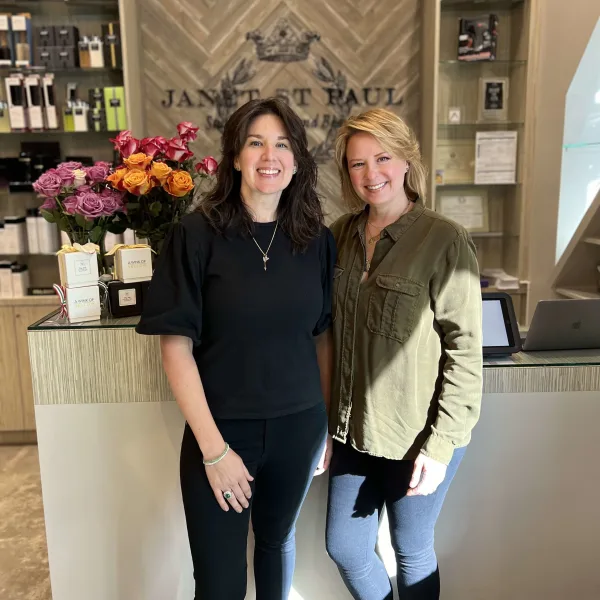
At Janet St. Paul Studio for Hair and Beauty, Director of Operations Natasha McMillen helps bring her wife Janet St. Paul's vision to life, elevating every system from education to operations.
The strongest salons, spas, and med spas know which numbers tell the real story of their business. In this practical guide, Phorest breaks down the five essential KPIs every business should track to improve retention, boost revenue, and make smarter decisions with confidence.
At Bella Style Salon in Slidell, Louisiana, Director of Operations Angela Meyer tackles inventory, team management, and guest relations. Read all about her in our latest Meet the Manager.
Starting at Impressions front desk in 2006 when he was 19 years old, General Manager Paul Petrowsky is a seasoned professional who owner Sarah Taylor says is responsible for much of her own success.
Planning is in full swing for the most anticipated events and promotions for the 2026 holidays. As owners share their favorite ways to celebrate, they prove that a carefully planned event can also build culture, increase client loyalty, boost sales, and set a business up for a successful 2027.
When things run amok at Mane Attraction Salon, Owners Chris and Jenny Knudsen say General Manager Sami Hernandez is their go-to resource and ultimate sounding board. Meet Sami in this installment of Meet the Manager.