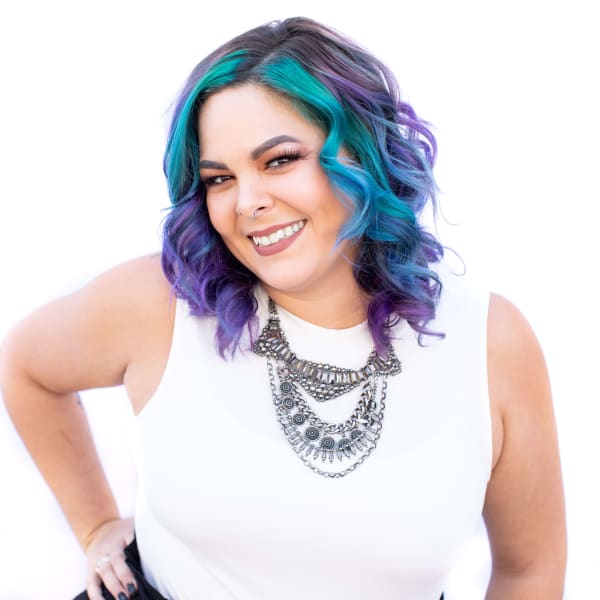
Continuing our series on how to build a more sustainable business while looking out for the planet through the 3Rs of the Environment, Valorie Tate from Sustain Beauty looks at RECYCLE.
by Valorie Tate
March 31, 2022
4 min to read
The final ‘R’ in getting started on your journey to an eco-friendly business recognizes that, while we are REDUCING our dependence on plastic and working hard to REUSE what we have, it’s impossible to operate efficiently without some disposable items. From essential tools to retail products, plastic, aluminum, glass, paper and more are crucial components that still make sense in some ways.
So, we RECYCLE. But while the recycling industry has assuaged our guilt, it is frightening to realize that 91% of the plastic used in America still ends up in landfill, as well as almost all dirty aluminum foils. If we are to embrace the final ‘R’ of environmental awareness we need to stop ‘wishcycling’ and face the dirty facts about how to properly RECYCLE our waste.
Ad Loading...
Begin with education
Will Simpson, lead educator with Green Circle Salons, who along with Sustain Beauty Co is focused on helping salons improve their sustainability, believes it must start with education. "If you are putting non-recyclable or dirty plastic into your recycling, it will contaminate the entire batch and it will all be sent to landfill," he says. "Ignorance is one of the biggest obstacles to successful recycling."
Good intentions will not save the planet and every area in the country is also different in what they are equipped to handle, so Will always advises checking with your local municipality to find out what they can and will RECYCLE.
No matter how green your city, there will be some aspects that only an industry specific agency, like Green Circle Salons, can handle. That includes all hair clippings, foils, waste color and more will be taken away by them and repurposed or RECYCLED.
Check labels and know your stuff
Getting to know your plastics is the next step – you can do this by checking the imprint on any plastic containers. There are seven types. If it is marked PET* or HDPE, it can be RECYCLED. PP can be RECYCLED but only 3% is, often because it isn’t clean. LDPE can be RECYCLED but it can be difficult to find a recycling company that will take it. PVC is downright dangerous to RECYCLE while polystyrene or Styrofoam is so fragile it breaks up easily and goes into the environment, and has been found in the stomachs of many marine creatures. It is also dangerous when heated. Finally, if there is #7 plastic, which covers all other unspecified plastic waste, it most likely will not be RECYCLED.
Get it sorted
Separating waste into various streams increases the chances of it being properly processed. The alternative – multi-stream collection in the same bin – is near to useless for the collectors and even dangerous. Some plastics become toxic when heated while others are combustible. Meanwhile, glass, paper and cardboard go through completely different processes.
Ad Loading...
Give it a wash
Many of the recycling processes involve heat, so foils will end up with baked-on color, cartons with boiled milk or glass jars with the dregs of roasted coffee at the bottom and so risk contaminating not just your recycling, but the whole batch collected together, rendering it fit for landfill only. So clean it before binning it.
Check your source
The last step to limiting ‘wishcycling’ is to source thoughtfully. Cut out single-use plastic, introduce tech like Vish or Salon Scale at your color bar to reduce color waste, use only what you need when you foil or convert altogether to Paper Not Foil to limit aluminum waste, avoid waxed cardboard that can’t be RECYCLED, check the imprint on any plastic so you don’t buy non-recyclable versions and stop buying bottled water or offering refreshments in disposable cups.
About SBCo: Sustain Beauty Co was born with the mission to help identify authentic, credible and environmentally responsible brands that put stylists at the forefront of their purpose. All Sustain Beauty Co products must: 1) Reduce the footprint of consumables in our industry. 2) Empower artists to create beauty responsibly. 3) Protect the stylist and the environment equally. 4) Come from ethical sources and responsible manufacturing facilities. Going ‘green’ shouldn’t sacrifice quality, and the professional beauty industry should have more options to be sustainably beautiful.
Discover how to create a true “WOW experience” for every client by first building a culture where your team feels engaged, empowered, and inspired. Drawing on Calvin Stovall’s Iconic Framework, this blog explores how salon, spa, and clinic leaders can strengthen culture, elevate customer experience, and build a business that stands out for the long term.
The wellness industry is growing fast, and salons and barbershops already are an important part of it. In her first blog, Tracy Rado shares where the wellness dollars are heading, and how salon's can grow with this movement.
While salon sales are increasing, owners often feel they're working harder for the same or less profit. Leverage Q2 data from The KIM Report, Alain Audet reveals some of the structural changes that are dampening your growth and why your region and your salon size matters.
Weaknesses in your business are amplified during the Holiday Season. Spark Pro Global's Lucy Randall shows you five things to do now to have the strongest holiday season yet.
In Kati Whitledge's latest blog, she shares how salons have moved away from dress codes and embraced appearance standards. But by removing strict dress codes, some businesses may have unintentionally lowered their appearance standards. Whitledge helps you explain to your team why an appearance standard is important and how to smoothly implement a new appearance policy.
The Small Business Health Care Tax Credit is a non-refundable tax credit for for-profit businesses that provides a financial incentive for eligible employers who offer health insurance coverage to their employees. Leticia Skrabut, Esq., walks you through how to claim that credit.
Developing strong work habits early in one's career supports long-term success in the salon industry. Jesse Linares offers new stylists his top five tips.
Most salon owners have no idea what these numbers are.
You can hit record sales and still have a profit problem. The difference comes down to four numbers almost nobody was taught to track.
At Janet St. Paul Studio for Hair and Beauty, Director of Operations Natasha McMillen helps bring her wife Janet St. Paul's vision to life, elevating every system from education to operations.
The strongest salons, spas, and med spas know which numbers tell the real story of their business. In this practical guide, Phorest breaks down the five essential KPIs every business should track to improve retention, boost revenue, and make smarter decisions with confidence.
At Bella Style Salon in Slidell, Louisiana, Director of Operations Angela Meyer tackles inventory, team management, and guest relations. Read all about her in our latest Meet the Manager.
Starting at Impressions front desk in 2006 when he was 19 years old, General Manager Paul Petrowsky is a seasoned professional who owner Sarah Taylor says is responsible for much of her own success.
Planning is in full swing for the most anticipated events and promotions for the 2026 holidays. As owners share their favorite ways to celebrate, they prove that a carefully planned event can also build culture, increase client loyalty, boost sales, and set a business up for a successful 2027.
When things run amok at Mane Attraction Salon, Owners Chris and Jenny Knudsen say General Manager Sami Hernandez is their go-to resource and ultimate sounding board. Meet Sami in this installment of Meet the Manager.