At Van Michael salons, a professional portfolio is non-negotiable for team members. New Talents Director Gregg Colbert explains why, and shows how he helps stylists build successful ones.
Every good stylist knows a thorough consultation requires good listening skills, the ability to ask the right questions and a complete understanding of what the client wants.
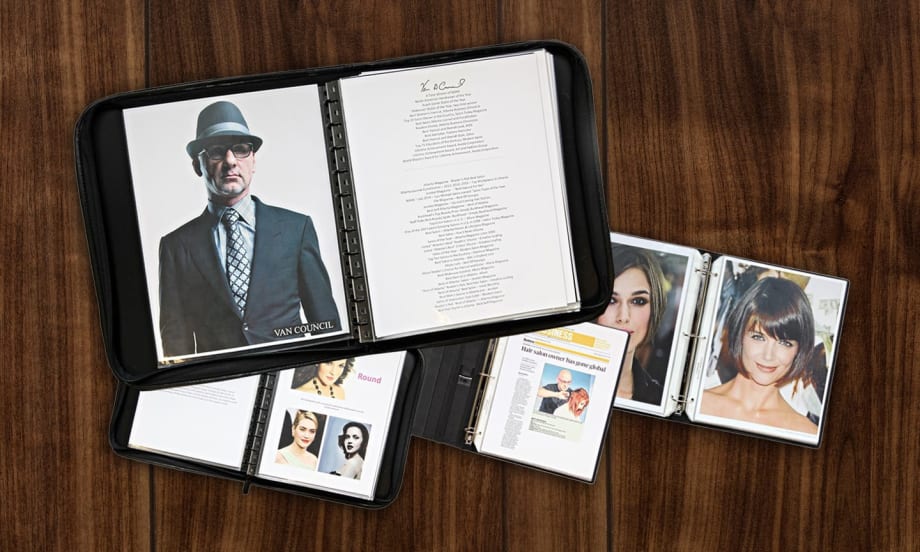
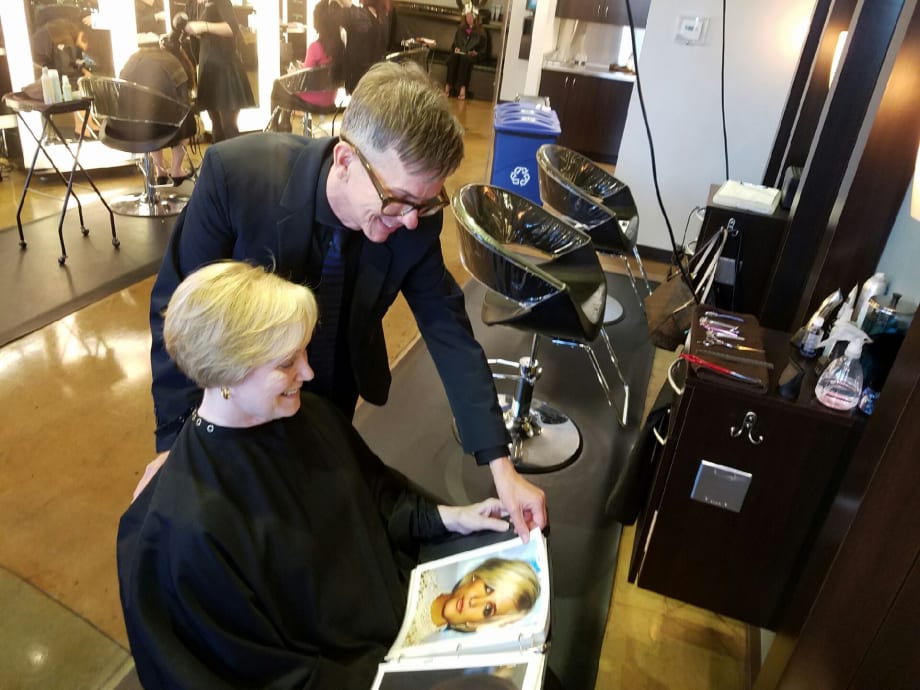
And at Van Michael salons, it also involves a whole portfolio of photos. Since the salon’s inception 32 years ago, owner Van Council has used images to conduct his consultations and he insists his stylists at all seven of the salon’s locations throughout Atlanta do the same---for every guest, on each visit.
“Next to the Van Michael Salon education program, the portfolio consultation is the cornerstone of our brand,” Gregg Colbert, New Talents director and stylist, says.
CREATING A PORTFOLIO
Colbert, who has been with Van Michael 16 years, has been pulling out his portfolio to help guide clients to the right style since the day he started.
“We’ve always done it, but over the last 12 years, it has become a major focus and is enforced by management,” he says.
In his role as New Talents director, Colbert helps new stylists put together a beginner’s portfolio when they are finished with their education. He provides the binder, page protectors and images to get them started.
“When they graduate to the Van Michael salon floor, I let them know they need to get a nicer binder—we recommend leather—and update their portfolio,” Colbert says. “We also show them examples of what a good image looks like so their portfolio is the best tool possible.”
The salon also allows iPad portfolios, since many stylists prefer to work digitally, but Colbert stresses the importance of using a hard-back version as well.
“The iPad is a glossy, shiny, surface,” he says. “It may not show an accurate representation of the hair. But, we don’t want to squelch any enthusiasm from the people who are really into technology, either.”
The salon does caution against using cell phones for images though, as they are simply too small. And if a guest pulls up a photo on her phone, stylists grab their iPads or portfolios to find other images to support the cell phone photo.
Ultimately though, Colbert says the binder is the tool they want all stylists to use. “It really shows the guest there was effort put into finding images, cutting them out and maintaining the tool,” he says. “Stylists also keep any certificates from advanced education classes at the front of the portfolio that guests can see.”
Once a stylist has his or her portfolio complete, it’s updated twice a year for spring/summer and fall/winter.
“It’s an important tool to make sure the stylist and guest are on the same page,” Colbert says. “We want stylists to use it 100 percent of the time, because it shows guests the Van Michael difference and it’s not just for communication—it’s also for inspiration.”
Colbert says a good example of putting the portfolio to work is with a guest who always wants the same thing. “A stylist might say, ‘I was looking through my portfolio and came across a couple of pictures that reminded me of you. What if we did XYZ to highlight your cheekbones?’”
While a guest may not make the change right at that moment, the conversation will make them think about it for a future visit. “The guest thinks, ‘Wow, my stylist was thinking about me before I ever even entered the salon—I must be special to her,’” Colbert says.
And for stylists who are trying to achieve better numbers in their benchmarks like retail, add-on services or pre-booking, Colbert encourages them to use their portfolio as a tool for growth.
CLIENT AND STYLIST FEEDBACK
Of course, not all stylists embrace the portfolio consultation concept with open arms at first, but Colbert says the ones who put in the extra effort see results. “You can spot the ones who understand the concept and benefits a mile away,” he says. “Their numbers speak to the process.”
As for the stylists who would rather rely on the iPad for their images, Colbert acknowledges sometimes it is a great tool.
“There are instances where the iPad is useful,” he says. “Your portfolio may become heavily laden with photos of models/celebrities the same age as your clientele, and then one day you get someone in your chair who’s younger, so you pull out the iPad and find images more appropriate for that client.”
Colbert used both hard-back and iPad portfolios to remain as versatile as possible.
“If a guest sits in my chair and says, ‘I just saw Judi Dench on the red carpet and love her hair cut,’ I need to use whatever tool I can to get the process going quickly,’” he says.
Colbert says using the portfolio can also give the stylist results at the end of the service. “Anything like retail or add-on services you want to incorporate in the service starts with a picture,” he says. “Say the client only wants to get their hair cut every six months. If they like a photo and want to emulate it, the stylist can say, ‘This style has to be taken care of every eight weeks.’”
The result? Clients have a clear understanding of the style they are signing up for and the stylist can pre-book the next appointment in eight weeks.
“Our clients have come to expect the portfolio consultation,” Colbert says. “So consistency is key. And if the stylist can come from a place of changing the hair cut or color to make it more flattering or detract from any issues, the client is more open to change.”
Doing a portfolio consultation 100 percent of the time is not an easy task for every stylist. So for those struggling, Colbert advises they look to the stylists who are accomplishing what they want to accomplish.
“I also tell them to find a compilation of pictures that speaks to the kind of work they do,” he says. “Then just open up your book and start the conversation with the client.”
During the conversation, he says stylists must think about what they want to happen—rebook more clients? Sell more retail? Add on a conditioning service? All of these things are more easily accomplished with a photo.
“Van always takes the time to talk to stylists about portfolio consultations,” Colbert says. “He encourages them to build a portfolio of the cuts they specialize in and always have it with them to show their guests during the consultation.”
The result at Van Michael salons? Happier clients and more profitable stylists.
This feature originally ran on avedameansbusiness.com, a website where top salons nationwide share their stories and solutions to help you grow—faster. Learn more at avedameansbusiness.com.