Keeping Retail Sales in the Professional Beauty Industry
The past decade has been a wild ride for professional beauty brands as big box stores, e-commerce, and drug and grocery stores have joined the mix. But now, SalonInteractive is re-routing professional products back to salons and beauty professionals.
A visual representation of the Digital Supply Chain.
Each year, the results of SALON TODAY’s annual SALON TODAY 200 competition confirm that salons with strong retail sales are also the most successful. Not only is retail the easiest part of the salon business to scale, it also offers owners the most profit potential. In addition, when a client purchases retail, it increases the chances you’ll see her in the salon or spa again.
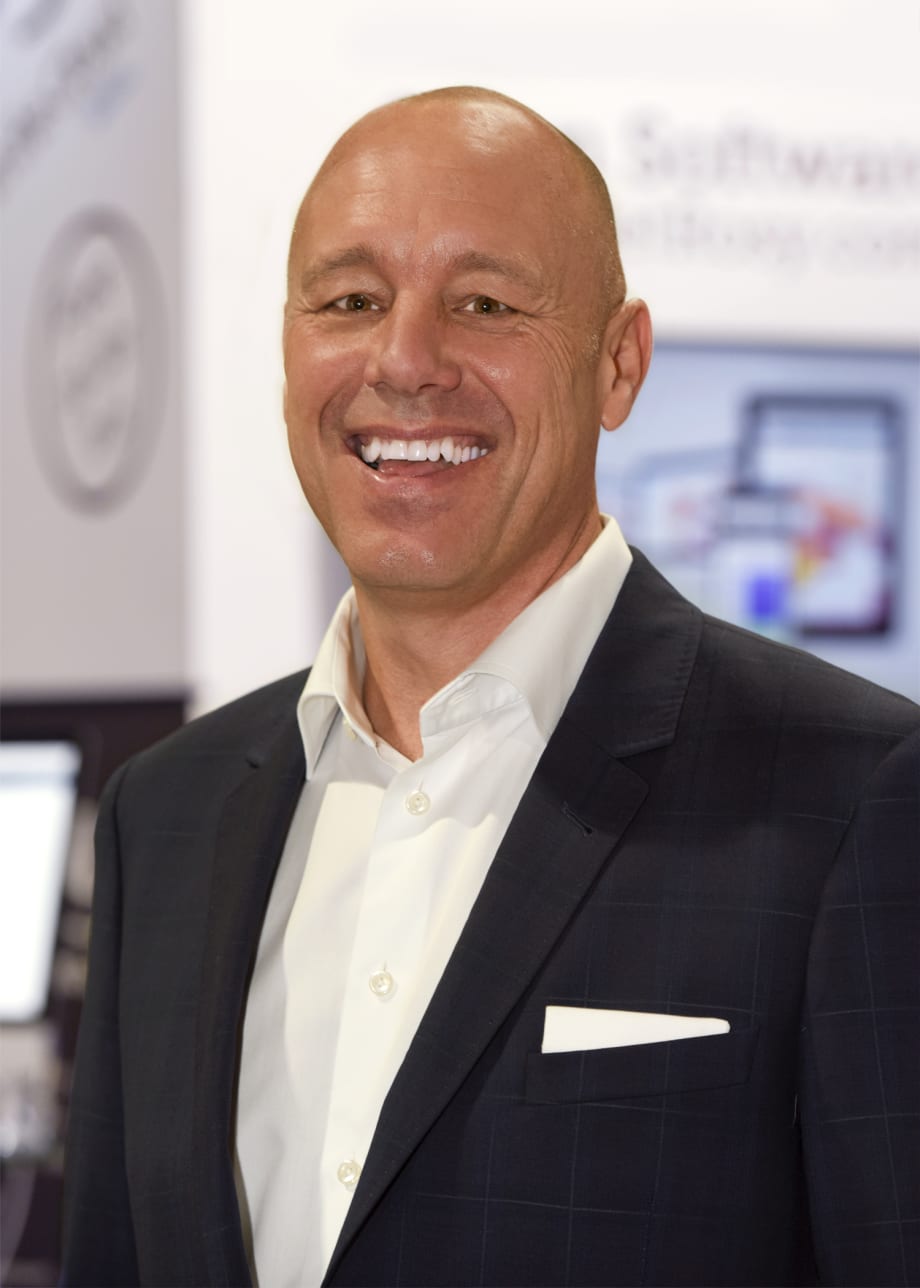
According to Jim Bower, founder and CEO of SalonInteractive, data from software tells us that retail completes the service and drives client satisfaction.
Ad Loading...
“With a retail sale, retention rates go up, productivity goes up and clients are three times more likely to return. All KPIs circle back to retail,” he says.
As important as retail is to the bottom line, the retail game has become more challenging. Today’s clients can find products in the grocery store, in the drug store and on e-commerce sites like Amazon. Even the best retailing salons and spas have felt the impact to their bottom line, leaving them scrambling to find a way to leverage the power of their professionalism as well as their focused time and relationship with each client to make a retail connection.
The e-commerce platform SalonInteractive is helping salons rise to that challenge by connecting all segments of professional beauty industry and elevating the integrity of the professional beauty products. This easy-to-use program routes the products to clients through their salons and spas, via customized e-commerce websites fulfilled by the salon’s distributors.
By the Industry, For the Industry
Bower, a former hairstylist, salon owner, and now a successful tech entrepreneur, specifically created SalonInteractive for the salon industry to support the stylists, salon owners, distributors, manufacturers and technology platforms struggling to compete in a changing environment. Bower has successfully created the first digital supply chain for the professional beauty industry that increases the trust and authority of the service provider with their client, while building in territory restriction and support for distributors, brands and manufacturers.
Ad Loading...
SalonInteractive connects thousands of salons and spas and many leading distributors with key software companies also being integrated into its system. At the core is a database of unique SKUs and a master list with semantic data (product identifying information for the internet) on hundreds of professional products.
What does this mean for the professional beauty industry? The industry now has more knowledge about the customers it serves in the salon. Before SalonInteractive, product SKUs varied, with individual products being numbered differently by different manufacturers and distributor databases, leaving salons, distributors and manufacturers unable to track sell-through down to the client level, and preventing the industry from understanding customer behaviors and preferences. Semantic data provides the opportunity for the industry to work together to enhance the customer experience with our services and products.
“We give each product a unique SKU, and have a master list with semantic data on every product,” Bower says. “This will allow distributors and manufacturers to track important data as the product travels from distributor to salon to client.”
With the ultimate goal of complete integration between salons and their software, distributor and brand partners, SalonInteractive is quickly gaining traction as the industry’s preferred retail solution. It links directly from a salon or spa’s website to distributor fulfillment—allowing a client to get her stylist’s recommendation, go to the salon or spa’s website and place an order.
“Amazon is successful because of logistics,” Bower says. “Their ability to deliver items free and fast has made it convenient to buy things. At SalonInteractive, we’ve leveraged the professional beauty distribution network in North America to do the same thing.”
Ad Loading...
So when a client runs out of her favorite shampoo between appointments, she can go to her salon’s website or use the salon’s app to purchase the shampoo, and it will be delivered to her by the salon’s local distributor.
The salon will receive a commission on online sales of 25%, and can then designate what percentage to give to the recommending stylist.
“In 80% of our market, we have next-day delivery because the products aren’t going far. If an order comes in by 2 p.m., the client will have it the next morning,” Bower says.
And for smaller brands that don’t use distributors, SalonInteractive has a structure in place.
“In some ways, we can be a virtual DSC (distributor sales consultant),” Bower says. “SalonInteractive can communicate with salons, helping them understand schedules, promotions, product launches, education and more.
Ad Loading...
SalonInteractive automates the order process, freeing up DSCs to focus on giving more personal attention to the salons they service. For stylists or booth renters, SalonInteractive can ping their phone and let them know when a new product comes out. Everyone is connected, and the possibilities are endless.
An E-commerce Solution for Clients
According to last year’s research on salon retail conducted by ISBN and MODERN SALON, salon clients—especially millennials who’ve grown up with selfies and social media—are more beauty-obsessed than ever and willing to spend a larger percentage of their income on beauty-related products and services. But they also expect products to be available how, when and where they want.
Craig Michaud, VP of marketing/partner at Evolve Salon Systems, an east coast distributor, says, “There is no retail business in today’s world without an online channel. You must have a digital presence, and SalonInteractive is giving the beauty industry a chance to compete.”
Before SalonInteractive, manufacturers were forced to sell through their own sites or turn to Amazon. But after years of fighting diversion, selling products on Amazon is an unattractive alternative.
Ad Loading...
“By selling through SalonInteractive, nobody loses,” Michaud says. “In the SalonInteractive chain, the product moves from the manufacturer to the distributor to the salon through the stylist to the consumer—everyone gets to play.
“But with Amazon, only Amazon wins—the distributor, salon and stylist don’t see a piece of that pie, and Amazon collects consumer information, hijacking the customer relationship for future sales.”
Patty Schmucker, president of SalonInteractive adds, “The beauty of SalonInteractive is we have the environment to create a compelling beauty experience that includes the salon professional, who creates the stickiest sale with the consumer.
“A sale made through a salon professional is three times more likely to be a repeat sale. SalonInteractive also provides everything a consumer gets from Amazon: convenience, variety and pricing, with the added benefit of the salon professional’s recommendation.”
Clients want advice from their stylists, and that includes what to buy. But they also want to buy online and appreciate an avenue suggested by their salon professional.
Ad Loading...
How the Salon Industry Works Together
Tens of thousands of salons and spas are now using SalonInteractive. Clients click on the e-commerce portion of their salon’s website or use a client app to order products directly from the salon after their stylists have made a professional recommendation.
Through SalonInteractive, salon owners access marketing materials, including how-to videos of products, special deals, product benefits and much more. These marketing messages are customized to their salons and delivered to their clients via email or text.
When a client makes a purchase, the manufacturer can access the product data, using it to predict future retail trends. Meanwhile, service providers are watching all their KPIs go up as they sell more retail—retention, client loyalty, frequency.
“This goes for independent contractors as well,” Bower says. “They can’t always afford to put $10K worth of retail on their shelves. But they can sell online and carry a few key products in their business.”
Ad Loading...
Here’s a closer look at how each segment of the industry benefits:
Salon Owners and Stylists: SalonInteractive provides an e-commerce and marketing platform for salons and spas that transforms the way they handle retail.
Integrating with the salon’s software and distributor, set-up takes less than 20 minutes through a point-and-click system that lets the salon create their own online store, add the products they want to sell (including new items), and actively market their products and services to their clients, 24/7.
There is no additional work as the distributor handles the inventory and fulfillment, including delivering the product in a box with your label, allowing your clients to take advantage of their stylist’s recommendation and get those products delivered to their home.
“Expecting a stylist to make a product recommendation every time is unrealistic,” Bower says. “But we have recommendations built into our software so stylists can email clients their recommended products at the end of the day.”
Ad Loading...
Stylists simply choose the products from a drop-down menu and hit send. So if a client chose not to buy the product in the salon, or the stylist forgot to recommend, the guest has another opportunity to buy post-appointment. The system tracks clients’ habits and can use that data to recommend reordering products that might be running low or recommend a product that complements a service they just experienced.
Salons also can recommend and sell products they may not have room for in their inventory, whether that’s an additional line, skin care, body care, makeup or styling tools.
Salons not only benefit financially by keeping the commission on those e-commerce sales, data is also showing that offering clients an e-commerce option helps grow overall retail sales.
“In the past year and a half, we’ve seen retail sales grow steadily at 20% per month in our salons that use the online platform,” Bower says. “It completes the service—you’re doing your client a disservice if you don’t sell them retail.”
Distributors: SalonInteractive allows the distributor to be an integral part of the salon’s e-commerce solution. The standardized product database makes adding and updating products easy, and helps automate the order process, supporting DSCs and letting them focus more on giving personal attention to clients, including sharing the most current information on schedules, promotions, product launches and education.
Ad Loading...
SalonInteractive provides distributors with a cost-effective online solution. If a distributor were to set up a platform to do e-commerce sales on their own, it would be a minimum of $3,000-$10,000 set up with $1,000 in monthly maintenance.
Manufacturers: SalonInteractive tracks the life cycle of a product, providing brands with a path to stay ahead of trends.
“For the first time in the beauty industry, we can see all the way down the supply chain,” Schmucker says. “We know when consumers purchase products at the salon level and can aggregate that information over the entire country.”
Brands can also have more control over their identity. In the past, manufacturers have created a brand book and hoped distributors and salons would follow the guidelines on font size, images, artwork, etc. Through SalonInteractive, brands can feed directly to salons whenever they want.
“As soon as the information (new product info, imagery, etc.) is uploaded, it instantly goes out to every distributor and salon so everyone has the most up-to-date information immediately,” Schmucker says. “The brand is in complete control of their identity within the market place—that’s a big game changer.”
Ad Loading...
And every brand that works with SalonInteractive can choose the parameters they want to put on the salons they work with (for example—requirements on using products at stations or backbar).
Software Companies: Technology is at the center of the SalonInteractive solution. Once a salon owner integrates their software with SalonInteractive, adding and updating products in the system is automatic, and it’s easier for new salon customers to onboard. The salon’s online store and app will then work hand-in-hand, highlighting the salon’s capabilities in the marketplace and va
Discover how to create a true “WOW experience” for every client by first building a culture where your team feels engaged, empowered, and inspired. Drawing on Calvin Stovall’s Iconic Framework, this blog explores how salon, spa, and clinic leaders can strengthen culture, elevate customer experience, and build a business that stands out for the long term.
The wellness industry is growing fast, and salons and barbershops already are an important part of it. In her first blog, Tracy Rado shares where the wellness dollars are heading, and how salon's can grow with this movement.
While salon sales are increasing, owners often feel they're working harder for the same or less profit. Leverage Q2 data from The KIM Report, Alain Audet reveals some of the structural changes that are dampening your growth and why your region and your salon size matters.
Weaknesses in your business are amplified during the Holiday Season. Spark Pro Global's Lucy Randall shows you five things to do now to have the strongest holiday season yet.
In Kati Whitledge's latest blog, she shares how salons have moved away from dress codes and embraced appearance standards. But by removing strict dress codes, some businesses may have unintentionally lowered their appearance standards. Whitledge helps you explain to your team why an appearance standard is important and how to smoothly implement a new appearance policy.
The Small Business Health Care Tax Credit is a non-refundable tax credit for for-profit businesses that provides a financial incentive for eligible employers who offer health insurance coverage to their employees. Leticia Skrabut, Esq., walks you through how to claim that credit.
Developing strong work habits early in one's career supports long-term success in the salon industry. Jesse Linares offers new stylists his top five tips.
Most salon owners have no idea what these numbers are.
You can hit record sales and still have a profit problem. The difference comes down to four numbers almost nobody was taught to track.
At Janet St. Paul Studio for Hair and Beauty, Director of Operations Natasha McMillen helps bring her wife Janet St. Paul's vision to life, elevating every system from education to operations.
The strongest salons, spas, and med spas know which numbers tell the real story of their business. In this practical guide, Phorest breaks down the five essential KPIs every business should track to improve retention, boost revenue, and make smarter decisions with confidence.
At Bella Style Salon in Slidell, Louisiana, Director of Operations Angela Meyer tackles inventory, team management, and guest relations. Read all about her in our latest Meet the Manager.
Starting at Impressions front desk in 2006 when he was 19 years old, General Manager Paul Petrowsky is a seasoned professional who owner Sarah Taylor says is responsible for much of her own success.
Planning is in full swing for the most anticipated events and promotions for the 2026 holidays. As owners share their favorite ways to celebrate, they prove that a carefully planned event can also build culture, increase client loyalty, boost sales, and set a business up for a successful 2027.
When things run amok at Mane Attraction Salon, Owners Chris and Jenny Knudsen say General Manager Sami Hernandez is their go-to resource and ultimate sounding board. Meet Sami in this installment of Meet the Manager.