Despite the challenging year we've just experienced, it's vital that today's salon leaders stay positive in order to guide their businesses, teams and guests through this new reality. Eurisko's Leon Alexander offers some strategies to stay strong and focused on the good.
If you told me a year ago, I’d be writing an article entitled “How to Stay Positive During the Pandemic,” I’d probably laugh it off as a hyperbolic framework to talk about positivity. Who knew this is where we’d be?
Our lives have been turned upside down by the outbreak. Work is different. Any social life has virtually ground to a halt. “Social Distancing” is suddenly a phrase we know and hear daily. Fear and uncertainty are rampant.
Ad Loading...
Anxiety thrives on the unknown. By and large, despite all the ups and downs geopolitically, we’ve all become accustomed to relative stability and predictability. Now, however, our changing world all but ensures waking up to a new set of rules, limitations, and changes.
Nobody knows when our industry will return to a sense of new normality. It has already had a devastating effect on a number of salons closing their businesses for good. Other salon owners have accumulated large amounts of debt. As I write, many salons are currently on shutdown.
The hair community hurts when we hear of a salon going out of business. The media, manufacturers, consultants, service providers and salon owners are all in this together. Estimates vary depending on which report you believe, but the latest prediction is about 30% of salons will not survive. It’s even higher for brick-and-mortar retailers.
Prepared to be busy.
When this is all over, consumers will again venture out to salons and retail locations in increased numbers, and 100% of consumers will be visiting about 70% of the remaining salons. The diligence and planning of salon businesses today, will absolutely bear fruit in the future.
It has become noticeable how some salon business models have failed to react, while others have not only adapted but some have even been able to grow. The latter with an integrated holistic approach where digital & physical were not separate aspects, but the common denominator of an omni-channel customer experience, and have become the new business model in the industry.
Ad Loading...
At the expense of our personal lives and the economic uncertainties the lockdown has created, the positive impact has been precisely to clarify unquestionably in which direction the future of our industry is going.
Salons are now forced to think outside the box – the disruption of service was already going on, but now every salon understands the risk of the crisis. Therefore, everyone is spurred on to think about new concepts and new ways to interact with customers, such as Instagram stories to show new collections, retail by delivery or online and proactively get in direct contact with customers via social media. It’s far from being revolutionary, but it shows what kind of service level salons will have to offer in the future.
The switch to e-commerce by mature customers is an example of the growing digitalization of the silver generation and represents an opportunity for those salons with established online presence to reach new customers that used to shop in a traditional way.
What’s certain as we exit the pandemic, we will see a savvier consumer, and the businesses that are consumer centric will flourish in the new world order.
How to stay positive
Two important actions are required to remain positive. Close your day, every day, with a positive acknowledgement of something you’ve accomplished, learned or are grateful for. It will help dilute some of the negativity you’ve absorbed from social media or the news and will remind you, not everything that’s happening right now is bad. At least an hour before you close your eyes, disconnect from all electrical platforms.
Ad Loading...
Invest in the uplifting
Secondly, surround yourself with uplifting media, people, activities, and thoughts that can help encourage a more optimistic outlook and mindset, even in the face of stress and loss. The more you immerse yourself in activities that involve peace, happiness and positivity, the more it can influence your mood and outlook.
In these challenging times, it may help to look at the words of Francis of Assisi.
“Start by doing what’s necessary; then do what is possible; and suddenly you are doing the impossible.”
All the darkness in the world cannot extinguish the light of a single candle.
Looking outside our industry to the greater good
One positive aspect of COVID-19 is the effect on the environment. Carbon emissions are down globally and with manufacturing and air travel greatly reduced, the planet has had a chance to restore.
Another outcome is a rejuvenated sense of community and social cohesion. Self-isolation challenges us as social animals who desire relationships, contact and interaction with other humans.
Ad Loading...
However, people all around the world are finding new ways to address the need for interconnectedness. In Italy, one of the worst-hit countries, people are joining their instruments and voices to create music from balconies. Some people are leading street dance parties while maintaining social distancing.
Coronavirus is driving a new wave of corporate social responsibility. The pandemic has become a litmus test for how seriously companies are caring about the community, employees, consumers and the environment. Businesses thrive by following a strong moral compass.
A period of change
They say necessity is the mother of invention, and so far, we’ve seen incredible strides being made across a myriad of sectors. Additionally, the time in which it’s taken for organizations to transform their operations to fit with our new way of life is staggering.
I’m not denying tough times still lie ahead, but we’ve seen what can truly be achieved when distractions are taken away and transformation programs are prioritized. This pandemic has caused a watershed moment for many and pushed through changes that may not have come to fruition for years to come.
Change we previously thought would take 2-3 years minimum to implement has been achieved in just one week. Take the higher education sector for instance, solely online courses were previously seen as something that would take years to pull off. Yet out of necessity in just three weeks several universities across the globe have made all of their courses accessible online.
Ad Loading...
Conclusion
The gift COVID-19 is giving us is a new sense of appreciation and gratefulness. It has offered us a new perspective on everything we have taken for granted for so long – our freedoms, leisure, connections, work, family and friends. We have never questioned how life as we know it could be suddenly taken away from us.
Hopefully, when this crisis is over, we will exhibit new levels of gratitude. We have also learned to value and thank health workers who are at the frontline of this crisis, risking their lives everyday by just showing up to their vital work. This sense of gratefulness can also help us develop our resilience and overcome the crisis in the long-term.
All of these positive aspects come at a great price. As heartbreaking and frightening as this crisis is, it’s positive outcomes can be gifts we should not overlook. If we ignore them, all of this becomes meaningless.
It will be up to us to change ourselves and our business to continue with the positive environmental impact, peace, connectedness, innovation, corporate responsibility, reimagined education and gratitude. This crisis will end and when we meet again, we can do so as better human beings.
We all know hope is not a strategy, but we can use the acronym of the word HOPE to look to the future with optimism.
We will HEAL, we will have OPPORTUNITIES, we will be POSITIVE and we will EMERGE!
Discover how to create a true “WOW experience” for every client by first building a culture where your team feels engaged, empowered, and inspired. Drawing on Calvin Stovall’s Iconic Framework, this blog explores how salon, spa, and clinic leaders can strengthen culture, elevate customer experience, and build a business that stands out for the long term.
The wellness industry is growing fast, and salons and barbershops already are an important part of it. In her first blog, Tracy Rado shares where the wellness dollars are heading, and how salon's can grow with this movement.
While salon sales are increasing, owners often feel they're working harder for the same or less profit. Leverage Q2 data from The KIM Report, Alain Audet reveals some of the structural changes that are dampening your growth and why your region and your salon size matters.
Weaknesses in your business are amplified during the Holiday Season. Spark Pro Global's Lucy Randall shows you five things to do now to have the strongest holiday season yet.
In Kati Whitledge's latest blog, she shares how salons have moved away from dress codes and embraced appearance standards. But by removing strict dress codes, some businesses may have unintentionally lowered their appearance standards. Whitledge helps you explain to your team why an appearance standard is important and how to smoothly implement a new appearance policy.
The Small Business Health Care Tax Credit is a non-refundable tax credit for for-profit businesses that provides a financial incentive for eligible employers who offer health insurance coverage to their employees. Leticia Skrabut, Esq., walks you through how to claim that credit.
Developing strong work habits early in one's career supports long-term success in the salon industry. Jesse Linares offers new stylists his top five tips.
Most salon owners have no idea what these numbers are.
You can hit record sales and still have a profit problem. The difference comes down to four numbers almost nobody was taught to track.
At Janet St. Paul Studio for Hair and Beauty, Director of Operations Natasha McMillen helps bring her wife Janet St. Paul's vision to life, elevating every system from education to operations.
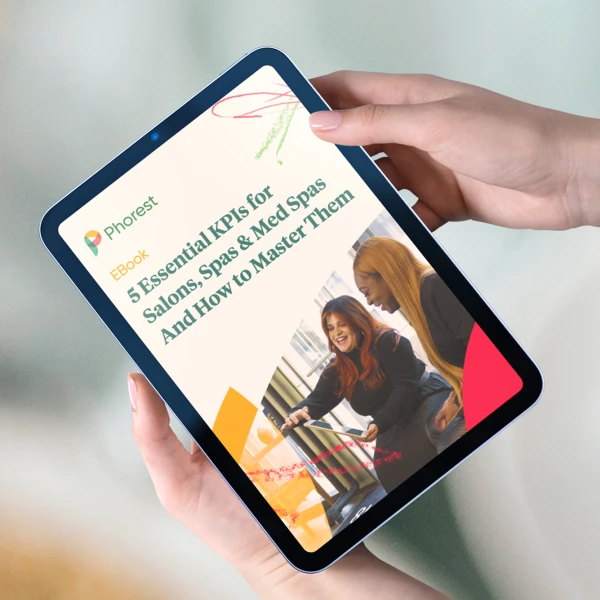
The strongest salons, spas, and med spas know which numbers tell the real story of their business. In this practical guide, Phorest breaks down the five essential KPIs every business should track to improve retention, boost revenue, and make smarter decisions with confidence.
At Bella Style Salon in Slidell, Louisiana, Director of Operations Angela Meyer tackles inventory, team management, and guest relations. Read all about her in our latest Meet the Manager.
Starting at Impressions front desk in 2006 when he was 19 years old, General Manager Paul Petrowsky is a seasoned professional who owner Sarah Taylor says is responsible for much of her own success.
Planning is in full swing for the most anticipated events and promotions for the 2026 holidays. As owners share their favorite ways to celebrate, they prove that a carefully planned event can also build culture, increase client loyalty, boost sales, and set a business up for a successful 2027.
When things run amok at Mane Attraction Salon, Owners Chris and Jenny Knudsen say General Manager Sami Hernandez is their go-to resource and ultimate sounding board. Meet Sami in this installment of Meet the Manager.