Let's face it, some clients are toxic. Sometimes, saying goodbye to a client is the best thing you can do for your team, your culture and your fellow guests. Owners Daniel Mason-Jones and Eric Fisher share their own experiences, common reasons for letting a client go, and how to do it.
As a salon leader, you occasionally have to say adieu to a client because their behavior is impacting your team, your culture, or your fellow guests. For one of the first episodes of our streaming showSalon Insider, I interviewed Daniel Mason-Jones, owner of Muse Salon and Spa, and Eric Fisher, owner of Eric Fisher Salons, Eric Fisher Academy, and Prosper U, about why and how they've had to let a client go.
Together, they shared three key reasons they've fired a client:
Ad Loading...
That client is abusive or threatening to you or one of your employees.
No matter what you do, you can never, ever make that client happy, and she's constantly asking for a redo or a refund.
The client is almost always late or no shows, despite repeated warnings.
Daniel Mason-Jones roleplays salon owner scenarios at Phorest Salon Summit in January 2025.
Both Mason-Jones and Fisher shared examples of when they've let a client go:
Mason-Jones: “We had a guest that I had taken care of for 20+ years, and I had hired a new associate who had quite a thick accent. On that particular day, my associate asked the guest if she would like a beverage, and the guest quickly turned toward her and said something very terrible about where she's from and how she ended up at our salon. I didn't hear it at the moment, but another stylist told me what she had overheard. I walked over and said I understood she had had words with one of my stylists, and what she said was inappropriate. She repeated what she had said very proudly, and I told her I was unable to provide her services that day or ever again. I thanked her for the 20+ years of business together and helped her get back to the changing room to get her clothes back on so that she could leave our salon and not come back."
Fisher: "A few months ago, I had a client who said, 'I've been coming here for 10 years, and I've never had a service I've liked. And I wanted to say, well, if you went to a restaurant and you continually go and order the same meal, you don't like it, well, shame on you. Some people you just can't satisfy."
Before you make that final decision to fire a client, do some due diligence:
Ad Loading...
Make sure you've exhausted other options: If the client isn’t abusive, but she’s never pleased, is she a poor match for you or one of your service providers? Is there another stylist at the salon who could be better fit?”
Do a little sleuthing: From the front desk to the shampoo bowl, talk with everyone who interacted with that guest and keep a detailed record. Compile a list of the client’s complaints and how each person in the service chain responded.
Conduct Some Cost-Benefit Analysis: How much in service and product revenue does that client bring in? How much is she costing the salon in refunds? What is the long-term health impact to the service providers who serve her?
Pick a time and a place for the breakup: It needs to be done face-to-face, in private and professionally.
Lead with empathy, but use a level of firmness and energy that matches the circumstances: Tailor your approach to the situation, stay calm and be transparent.
Ad Loading...
At the Phorest Salon Owner Summit in Dublin, Ireland last January, Daniel Mason-Jones was a keynote and he role-played with audience members several different scenarios that owners have to face. So I asked Daniel to walk us through how he fires a client.
"I always handle it face-to-face because emails and texts can be mistranslated, and I always come from a place of this just isn't working. I also sit down opposite of that person, rather than look at them through the mirror. It should be done in a way that is professional, that reflects your brand," says Mason-Jones. "Understand that this person may have a really negative reaction and there may be a consequence. However, standing up for your business is always the right thing. Throughout the conversation I would remain calm, because that's what leaders do, and I'd use a lot of phrases that start with I feel, I see or I understand."
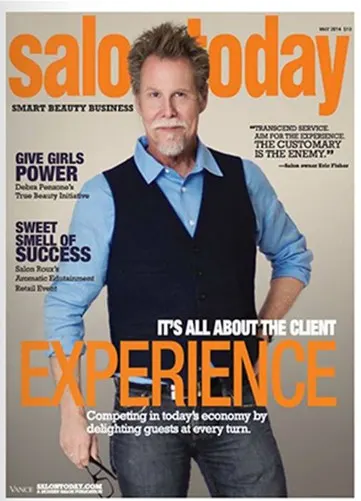
Eric Fisher graces the cover of SALON TODAY in May 2014.
Many years ago, I interviewed Eric Fisher for a cover story for SALON TODAY on the client experience, and he shared a genius anecdote about firing a client that I've shared with owners ever since.
"In this case, we just couldn't satisfy this client. I met with her, and I said that I was sorry, but we just weren't a good fit. I told her I had looked back at her history and that we had refunded her money nine times over the last year," says Fisher. "Then I told her we had gotten her a little present and I handed her a gift card to another salon."
Keep in mind, there are some benefits to letting a client go. When you do so as your salon's leader, you're preserving your culture. You're sending a message to your team that you have their back and you support them. In addition, when you let a toxic client go, you free up space on your schedule to accept someone new, who just may end up being a loyal and appreciative client for years to come.
Discover how to create a true “WOW experience” for every client by first building a culture where your team feels engaged, empowered, and inspired. Drawing on Calvin Stovall’s Iconic Framework, this blog explores how salon, spa, and clinic leaders can strengthen culture, elevate customer experience, and build a business that stands out for the long term.
The wellness industry is growing fast, and salons and barbershops already are an important part of it. In her first blog, Tracy Rado shares where the wellness dollars are heading, and how salon's can grow with this movement.
While salon sales are increasing, owners often feel they're working harder for the same or less profit. Leverage Q2 data from The KIM Report, Alain Audet reveals some of the structural changes that are dampening your growth and why your region and your salon size matters.
Weaknesses in your business are amplified during the Holiday Season. Spark Pro Global's Lucy Randall shows you five things to do now to have the strongest holiday season yet.
In Kati Whitledge's latest blog, she shares how salons have moved away from dress codes and embraced appearance standards. But by removing strict dress codes, some businesses may have unintentionally lowered their appearance standards. Whitledge helps you explain to your team why an appearance standard is important and how to smoothly implement a new appearance policy.
The Small Business Health Care Tax Credit is a non-refundable tax credit for for-profit businesses that provides a financial incentive for eligible employers who offer health insurance coverage to their employees. Leticia Skrabut, Esq., walks you through how to claim that credit.
Developing strong work habits early in one's career supports long-term success in the salon industry. Jesse Linares offers new stylists his top five tips.
Most salon owners have no idea what these numbers are.
You can hit record sales and still have a profit problem. The difference comes down to four numbers almost nobody was taught to track.
At Janet St. Paul Studio for Hair and Beauty, Director of Operations Natasha McMillen helps bring her wife Janet St. Paul's vision to life, elevating every system from education to operations.
The strongest salons, spas, and med spas know which numbers tell the real story of their business. In this practical guide, Phorest breaks down the five essential KPIs every business should track to improve retention, boost revenue, and make smarter decisions with confidence.
At Bella Style Salon in Slidell, Louisiana, Director of Operations Angela Meyer tackles inventory, team management, and guest relations. Read all about her in our latest Meet the Manager.
Starting at Impressions front desk in 2006 when he was 19 years old, General Manager Paul Petrowsky is a seasoned professional who owner Sarah Taylor says is responsible for much of her own success.
Planning is in full swing for the most anticipated events and promotions for the 2026 holidays. As owners share their favorite ways to celebrate, they prove that a carefully planned event can also build culture, increase client loyalty, boost sales, and set a business up for a successful 2027.
When things run amok at Mane Attraction Salon, Owners Chris and Jenny Knudsen say General Manager Sami Hernandez is their go-to resource and ultimate sounding board. Meet Sami in this installment of Meet the Manager.