Addressing a void in the market, Ron Love and Scott Griffiths launched 18|8 fine men's salons in 2002--Today, the franchise has 90 locations. See how they've used motivation to grow the chain.
Ron Love, founder of 18|8 fine men's salons shares the story of how motivation have helped them grow to 90 locations.
4 min to read
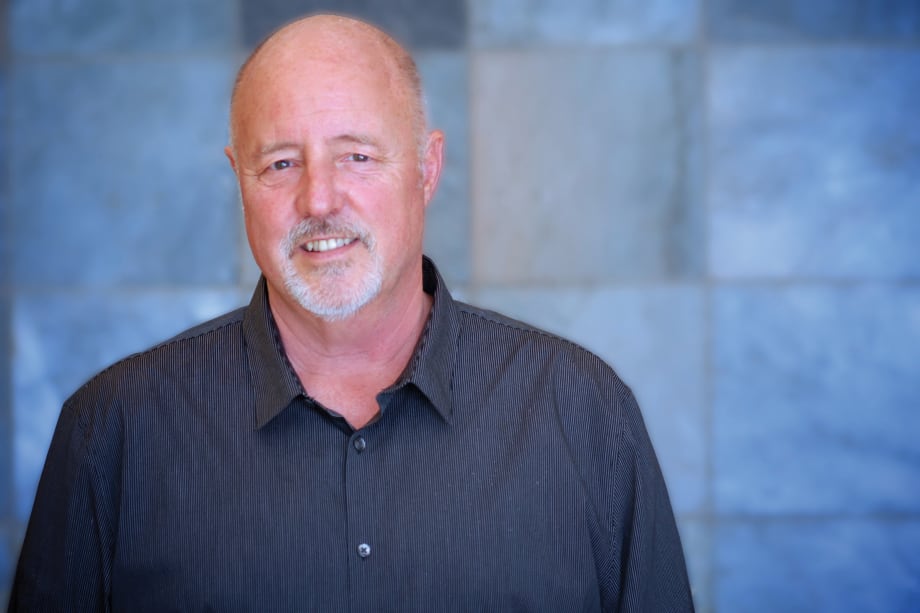
When Ron Love opened the first 18|8 salon in 2002, he didn’t set out to build a franchise.
After decades as a hairdresser and salon owner, in 2000, he noticed something about his clientele—37 percent of them were men. He began to wonder why they were visiting his salon and paying the same amount for a hair cut as his female clients.
Ad Loading...
After doing some research, he realized the options were few for men. If they went to a value salon, they would not get the same experience. And in the traditional salon, they were paying a lot for a service they received every four to six weeks.
“There was a huge void in the market,” he says.
So Love partnered up with Scott Griffiths, who had spent his career building companies and directing successful brands, and they started doing research.
Love and Griffiths spent 18 months in ideation and figuring out what would be their salon’s big differentiators to make their target client happy. They formed the company in 2000, opened their first location in 2003, and by 2008 had four locations in California.
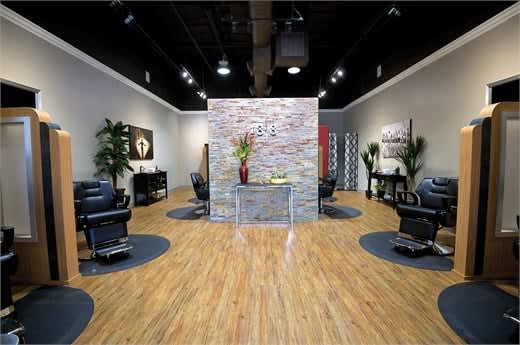
“Our salons are a sanctuary for men,” Love says. “Each station is semi private with a shampoo bowl at the chair.
Ad Loading...
“Clients get consistency of service and results. They also enjoy extras like a hot towel finish and nice shampoo,” he adds. “It’s a fine men’s salon.”
Another bonus for clients and the hairdressers who work at 18|8 is a menu that features multiple services.
“We wanted to attract hairdressers, so we took the multi-service model of a traditional salon and applied it to a men’s salon,” Love says. “The grooming services make it more than just a cut-and-shave barbershop, and they make the salon more interesting for the stylist—not to mention a multi-level opportunity in new income.”
The business model was such a success, that Love and Griffiths decided to franchise the brand, with the goal of opening 20 salons. In 2012, the two opened their first franchise in Albuquerque, New Mexico.
“We look for a pocket of demographics to support our salons,” Love says of finding franchise locations. “We know how many clients we need to be successful, and have to get the location right.”
Ad Loading...
Motivating the Masses
Currently, there are 90 18|8 locations across the country. Love, Griffiths and their corporate team have developed systems and handbooks for their franchise owners so there is continuity across locations.
Most of the 18|8 franchise owners have no experience in the beauty industry—but they love the concept.
“Franchisees have a level of enthusiasm for the brand,” Love says. “It’s not just an investment for these guys—they are enamored with the concept and its uniqueness.”
In the beginning, the new franchise owner is immersed in the culture, spending five days in Irvine at 18|8’s “university.”
Ad Loading...
“We have a large classroom set up for the owners and an advanced training academy for stylists,” Love explains. “It’s pretty intensive for the owners—we expose them to everything about the running of the business and help them understand how to build the management structure, too.”
But it’s not just business. New franchise owners are also treated to some aspirational seminars during their five days and guided through the process of looking for a location and negotiating a lease.
After leaving university, project managers and lawyers continue to ensure all runs smoothly for the new owner.
Then, a month before opening a new location, 18|8’s “Steel Team,” made up of six people, comes in to help recruit.
“Our guys help them hire their first team—usually around eight to 10 stylists,” Love explains. “We evaluate stylists and look for the right personality. We don’t hire a lot of stylists right out of school because we don’t want our franchisees to have to do that level of training—usually we’re looking for people with two or more years’ experience.”
Ad Loading...
Next comes the front desk. Or as they are known at 18|8, Directors of First Impressions (DOFIs).
“We have DOFIs who go in and train new DOFIs for five days, with an overlap so the whole process goes smoothly,” Love says. “It’s simple, but effective.”
Smooth Sailing
The 18|8 business model is designed to have the franchise owner involved in the beginning of the process, but then have the ability to step back.
“We develop a management structure for them so day-to-day issues are off their plate,” Love says. “Some of them deal with daily issues because they want to, but we encourage them not to. They are buying a business plan, and as long as they stick to it, it works superbly.”
Ad Loading...
In addition to providing support to their franchise owners, Love and Griffiths have also found a way to keep every 18|8 team motivated and supported.
A hotline is available to managers, stylists and DOFIs to call whenever an issue arises.
They don’t need to bother their owner with it—there’s a hotline to call instead.
“We’re known in the franchise industry as being more supportive than any other franchiser,” Love says. “They are our customers and we want to give a high level of service since that’s what we expect from them—it must come from the top and trickle down.”
Discover how to create a true “WOW experience” for every client by first building a culture where your team feels engaged, empowered, and inspired. Drawing on Calvin Stovall’s Iconic Framework, this blog explores how salon, spa, and clinic leaders can strengthen culture, elevate customer experience, and build a business that stands out for the long term.
The wellness industry is growing fast, and salons and barbershops already are an important part of it. In her first blog, Tracy Rado shares where the wellness dollars are heading, and how salon's can grow with this movement.
While salon sales are increasing, owners often feel they're working harder for the same or less profit. Leverage Q2 data from The KIM Report, Alain Audet reveals some of the structural changes that are dampening your growth and why your region and your salon size matters.
Weaknesses in your business are amplified during the Holiday Season. Spark Pro Global's Lucy Randall shows you five things to do now to have the strongest holiday season yet.
In Kati Whitledge's latest blog, she shares how salons have moved away from dress codes and embraced appearance standards. But by removing strict dress codes, some businesses may have unintentionally lowered their appearance standards. Whitledge helps you explain to your team why an appearance standard is important and how to smoothly implement a new appearance policy.
The Small Business Health Care Tax Credit is a non-refundable tax credit for for-profit businesses that provides a financial incentive for eligible employers who offer health insurance coverage to their employees. Leticia Skrabut, Esq., walks you through how to claim that credit.
Developing strong work habits early in one's career supports long-term success in the salon industry. Jesse Linares offers new stylists his top five tips.
Most salon owners have no idea what these numbers are.
You can hit record sales and still have a profit problem. The difference comes down to four numbers almost nobody was taught to track.
At Janet St. Paul Studio for Hair and Beauty, Director of Operations Natasha McMillen helps bring her wife Janet St. Paul's vision to life, elevating every system from education to operations.
The strongest salons, spas, and med spas know which numbers tell the real story of their business. In this practical guide, Phorest breaks down the five essential KPIs every business should track to improve retention, boost revenue, and make smarter decisions with confidence.
At Bella Style Salon in Slidell, Louisiana, Director of Operations Angela Meyer tackles inventory, team management, and guest relations. Read all about her in our latest Meet the Manager.
Starting at Impressions front desk in 2006 when he was 19 years old, General Manager Paul Petrowsky is a seasoned professional who owner Sarah Taylor says is responsible for much of her own success.
Planning is in full swing for the most anticipated events and promotions for the 2026 holidays. As owners share their favorite ways to celebrate, they prove that a carefully planned event can also build culture, increase client loyalty, boost sales, and set a business up for a successful 2027.
When things run amok at Mane Attraction Salon, Owners Chris and Jenny Knudsen say General Manager Sami Hernandez is their go-to resource and ultimate sounding board. Meet Sami in this installment of Meet the Manager.