The shift towards a consumer-centric salon model represents a significant evolution in how salons engage with their customers and art can be the catalyst. When you can make the customer's journey immersive and personalized, you differentiate your business and create a profit-centric business model.
It’s time for the salon industry to balance technology solutions with a deeper understanding of art.
Over the past few years, technology has transformed salon retail. Mobile phones have become essential conduits for communication, entertainment and commerce. Technologies like augmented reality, once a novelty, have become commonplace digital merchandising and selling tools. E-commerce has become table stakes for any business wishing to survive.
Ad Loading...
Today, we sit on the edge of a technology revolution in retail. Yet despite all the progress, too many salons today struggle to stay afloat, grinding it out each day, one promotion at a time. Because while technology has advanced, it’s also opened the door to something else: a historic explosion in new competitors to salon retailing — from third-party marketplaces and direct selling manufacturers to social media influencers — all of which are now battling it out for finite, fleeting and increasingly fragmented slivers of consumer attention.
Indeed, the existential challenge facing most salons today is how to command disproportionate levels of attention. And how to do this when superior selection, convenience and price have largely become the domain of large marketplaces like Amazon and retail mega-chains.
The answer lies less in deploying new technology and more in something almost never discussed in salon circles: Art. Because, as it turns out, attracting attention and promoting recall are what art does best. Art, regardless of form, has a uniquely stimulating effect on our minds. Listening to a favorite song or a familiar style of music lights up almost every region of our brain, including areas linked to memory.
Consumers are looking to retail to play a more artistic role in their lives. They refer to retail not as commerce or shopping, but as ‘entertainment.’ For young consumers in particular, shopping and entertainment are merging and if salons want to generate disproportionate levels of attention, while giving consumers the entertainment they want, they need to begin thinking less like salons and more like artists.
It all Starts with a Story
What is it about art our brains love so much and how can salons tap into it to garner outsized levels of attention? First, we need to understand art is a vehicle for storytelling.
Ad Loading...
Stories have played a vital role in human development since the dawn of civilization. They are an intrinsically human vehicle for communication, socialization and learning. In fact, when dry factual data is expressed through a story, consumers are likely to remember considerably more than if the same set of facts were simply listed.
Art can push the boundaries of design, birthing new aesthetics and unique functionality. Done properly, salon retail can serve the same important human needs as successful businesses outside our industry.
When consumers buy from salons with a story, they are not just buying a product or a service, they are also buying into their story and culture. Salons can successfully compete and offer strong, own-able footholds in— entertainment, expertise and design. The key is to ensure the business has a sustainable competitive advantage and your thinking is unique. In other words, don’t take refuge in the false security of consensus.
Blog Author Dr. Leon Alexander is the founder of Eurisko.
Don’t Think Products Think Productions
But a salon brand story cannot simply be a platitude or vague idea buried somewhere in the salon's mission statement. It must, like a production, come to life for consumers across their experience. By elevating retail into the realm of art, it appeals to the consumers's powerful human need for beauty and status.
Regrettably, most salons tend to focus almost exclusively on the visual elements of their customer experience, all but ignoring the other, arguably more powerful sensory inputs. To remedy this, salon owners would be wise to ask themselves what a blindfolded customer would take away from the experience in their salons. What, if anything would they hear, smell, feel and taste? And how each of these sensory inputs should support the brand story.
Ad Loading...
Salon owners would be astute to consider prioritizing technologies that help to tell their unique story more clearly, impact-fully and sensorially. In a world rife with competition and consumers in search of meaningful experiences, a return to the art of retail may be just what the salon industry needs.
Impossible is where logical thinking ends, and creative thinking begins.
This is an ideal time to reinvent the salon business model to evolve from a service industry to being consumer-centric. Salons should explore and focus on the endless possibilities and opportunities the future has for their business.
Embracing a Consumer-Centric Model
In today's ever-evolving beauty industry, salons are recognizing the pivotal role consumers play in shaping the success and sustainability of their business. Traditionally, salons have operated under a service-centric model. However, a paradigm shift is underway, with a burgeoning emphasis on consumer-centric salon models that prioritize the needs, preferences, and experiences of the customer above all else.
In this new era of consumer-centric salons, the emphasis extends beyond merely delivering services, to creating immersive and personalized experiences that resonate with consumers on a deeper level. This innovative approach revolutionizes every aspect of the salon business, from customer engagement to service delivery and beyond. So what defines a consumer-centric business model, and how does it differ from traditional approaches?
Ad Loading...
Understanding the Unique Consumer Journey
Central to the consumer-centric salon model is a comprehensive understanding of the customer journey. Salons are increasingly investing in gathering insights into clients preferences, lifestyles, and aspirations, allowing for a more holistic approach to service provision. One of the pillars and defining features of the consumer-centric salon model is personalization. By leveraging data analytics and client feedback, salons can tailor their offerings and experiences to meet the diverse and evolving needs of their customers and empowering salons to tailor offerings and experiences that resonate with their demographic target audience.
Listening and Adapting
An integral aspect of a consumer-centric model is the ability to listen actively and adapt swiftly. Salons that prioritize customer feedback, actively seek input, respond promptly to concerns, and demonstrate their commitment to customer satisfaction. This agility allows for continuous improvement, enabling salons to stay relevant in an ever-changing consumer landscape. So what stops us from achieving this new vision?
Fear stops us from reaching our potential
I am often asked by salon owners, “I understand I need to evolve because the consumer has evolved, but I am cautious and nervous about making changes.”
If you are a salon leader, you might on occasion be afraid, and that then becomes a habit. Because of this, we don’t decide our future, we decide our habits and the habits decide our future. Our salon business achievements are shaped by the strength of the foundations we set. We must be true to our beliefs, dare to be ethical and strive to be honorable. Integrity is the highest ground to which we can aspire. The way we take dreams and make them real, is we push through everything others give up. Whatever you are fed gets bigger and stronger. So, you have to feed the best part of yourself every day. You have to demand the best part of you. You have to not settle for less than you can be or do. You have to not tolerate the stuff you used to tolerate.
Ad Loading...
If you keep moving forward, you can achieve whatever you dream. But you have to keep moving. Most will miss that incredible nectar of growth, expansion, contribution, meaning, impact and achievement, because they let their fear dominate them. There is a part of you that is immutable. There is a part of you that is bigger than any fear. When that part of you is activated, there is a different level of emotion, and emotion is the fuel that drives us.
Progress is what makes us feel alive in the game of business and life. But it requires a new standard within yourself. The question is what will you become? What will your legacy be?
We all have brakes and accelerators. Fear is the break. It’s the difference between a manager of circumstances and the creator of an extraordinary life. You get to decide.
The quality of your business and life is in direct proportion to the amount of risk and uncertainty you can comfortably live with.
Conclusion
The shift towards a consumer-centric salon model represents a significant evolution in the beauty industry in how salons engage with their customers and art can be the catalyst. By embracing a strategy that prioritizes the consumer at every step, salons not only enhance customer satisfaction and loyalty but also position themselves for sustainable growth and success. In the pursuit of profitability, salons must recognize that fostering genuine connections and adding meaningful value to consumers lives lie at the heart of enduring success.
Ad Loading...
By reinventing the salon experience as a personalized and immersive journey, we will differentiate our business and the customers experience, make it remarkable, and create a profit-centric new model. The time is now! The most important moments of your life are not decided by what you know, but how you think and then act.
In the annals of salon history, we are experiencing a mile marker that points to this unprecedented time. The period where our industry shifted of its traditional axis. Remember there’s no such thing as being fashionably late for your salon’s future!
Discover how to create a true “WOW experience” for every client by first building a culture where your team feels engaged, empowered, and inspired. Drawing on Calvin Stovall’s Iconic Framework, this blog explores how salon, spa, and clinic leaders can strengthen culture, elevate customer experience, and build a business that stands out for the long term.
The wellness industry is growing fast, and salons and barbershops already are an important part of it. In her first blog, Tracy Rado shares where the wellness dollars are heading, and how salon's can grow with this movement.
While salon sales are increasing, owners often feel they're working harder for the same or less profit. Leverage Q2 data from The KIM Report, Alain Audet reveals some of the structural changes that are dampening your growth and why your region and your salon size matters.
Weaknesses in your business are amplified during the Holiday Season. Spark Pro Global's Lucy Randall shows you five things to do now to have the strongest holiday season yet.
In Kati Whitledge's latest blog, she shares how salons have moved away from dress codes and embraced appearance standards. But by removing strict dress codes, some businesses may have unintentionally lowered their appearance standards. Whitledge helps you explain to your team why an appearance standard is important and how to smoothly implement a new appearance policy.
The Small Business Health Care Tax Credit is a non-refundable tax credit for for-profit businesses that provides a financial incentive for eligible employers who offer health insurance coverage to their employees. Leticia Skrabut, Esq., walks you through how to claim that credit.
Developing strong work habits early in one's career supports long-term success in the salon industry. Jesse Linares offers new stylists his top five tips.
Most salon owners have no idea what these numbers are.
You can hit record sales and still have a profit problem. The difference comes down to four numbers almost nobody was taught to track.
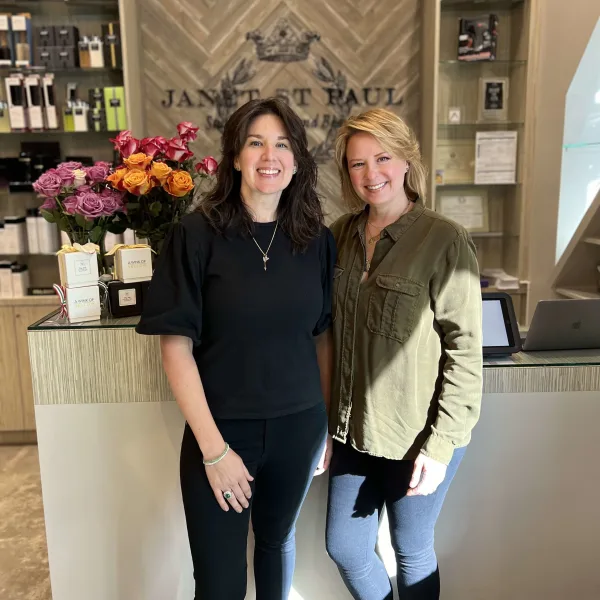
At Janet St. Paul Studio for Hair and Beauty, Director of Operations Natasha McMillen helps bring her wife Janet St. Paul's vision to life, elevating every system from education to operations.
The strongest salons, spas, and med spas know which numbers tell the real story of their business. In this practical guide, Phorest breaks down the five essential KPIs every business should track to improve retention, boost revenue, and make smarter decisions with confidence.
At Bella Style Salon in Slidell, Louisiana, Director of Operations Angela Meyer tackles inventory, team management, and guest relations. Read all about her in our latest Meet the Manager.
Starting at Impressions front desk in 2006 when he was 19 years old, General Manager Paul Petrowsky is a seasoned professional who owner Sarah Taylor says is responsible for much of her own success.
Planning is in full swing for the most anticipated events and promotions for the 2026 holidays. As owners share their favorite ways to celebrate, they prove that a carefully planned event can also build culture, increase client loyalty, boost sales, and set a business up for a successful 2027.
When things run amok at Mane Attraction Salon, Owners Chris and Jenny Knudsen say General Manager Sami Hernandez is their go-to resource and ultimate sounding board. Meet Sami in this installment of Meet the Manager.