










You Don't Own a Salon. You Own A Business.
In his latest blog, Leon Alexander Ph.D., challenges industry conventional thinking to help owners add more to their bottom lines.
 MENU
 SEARCH
Positions need to be filled in your salon ideally with good, solid candidates. Here's how you get them!
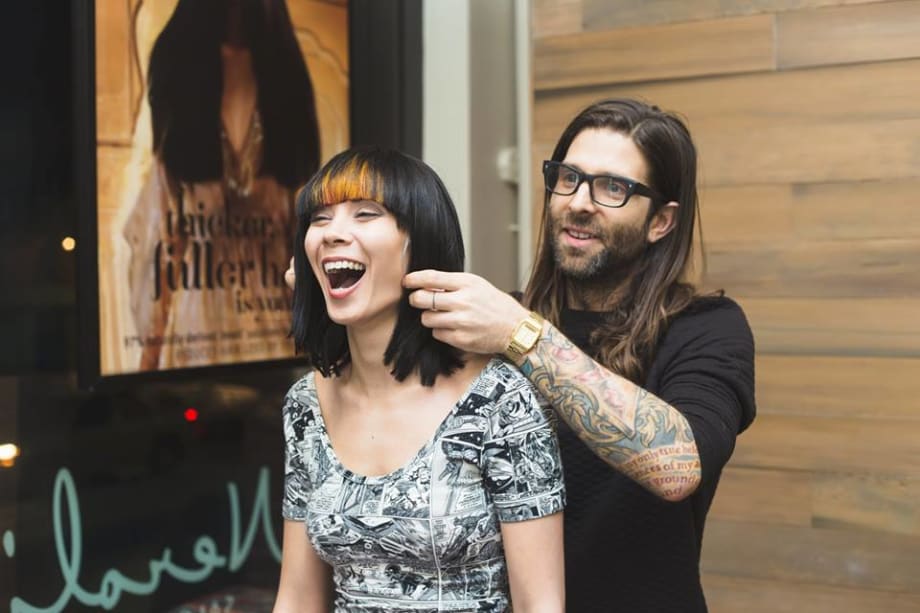

“Everyone has the same problem when it comes to recruiting,” Susan Haise, owner of the Institute of Beauty and Wellness and six Neroli salons in the Milwaukee, Wisconsin area, says.
“No matter what part of the country you’re in or what type of salon you run, it all starts with the population coming out of high school.”
In the past 10 years, Haise says the United States has been in a population dip, which means less new graduates coming out of high school. But in 2020, that’s all going to change.
“There will be the highest amount of grads ever in 2020, which correlates with the post-war population surge typically seen in history,” she says. “In this case, it’s post 9/11.”
But in the meantime, what’s a salon owner to do? Positions need to be filled, ideally with good, solid candidates.
Haise, Anne Skubis, director of marketing at the Aveda Institute Tucson and Gina Polce, director of human resources at Douglas J Companies offer their tips on how to attract stylists who are passionate about the business and will fit in with your salon’s culture.
1. GO FISHING ON SOCIAL MEDIA:
“Go into the schools with bagels and balloons, and do a five-minute spiel on why your salon is a great place to work. Bring your coolest stylists—not your HR staff. The students don’t care about your managerial staff, they want to see the hip stylist they can learn from,” Haise explains, “Most of us have competition within our city. These students need to meet you.”
“On days we visit the school, our salon professionals perform demos for the students in their classrooms, and host lunch-and-learns with students, and attend the career fairs at the Aveda Institutes. Connecting with the students throughout their program helps create wonderful relationships that can transition naturally into employment. ,” says Gina Polce.
2. HIRE ON THE SPOT
“If you send those team members to represent your salon and connect with new talent, you have to pay them well. They are invested, too. They want a new assistant who will be the best. Give them control to hire on the spot if you can do that. We’re not in a place now to say we’re so cool that we’re going to mull it over and think about it.”
3. ASK THE RIGHT QUESTIONS
“I think if you’ve done your homework in evaluating the individual, you know if they will fit,” Haise says. “Ask: ‘What does team work look like to you? What do you need from a team? What do you think about advanced education? How do you want to be remembered?’
“We also ask, ‘If you were to write a mission statement about who you are, what would you tell me in a nutshell? What do you think about attendance? Have you ever left a job? How did you leave that job?
“These questions let you know pretty fast what a candidate wants to do to contribute to your culture.”
4. BE TRANSPARENT
“Sometimes people give a lot of lip service, but don’t follow through,” Haise says. “Even with the best intentions, we’ve had new talent who just stop showing up to weekly trainings.
“So during the recruitment process, we have an HR binder we go through when we’re talking to a candidate,” Haise says. “It walks them through visual, guided pages—commission scale, health insurance providers, retail, etc. The employer needs to provide details of facts and take the time to close the deal.
“As for training programs, I don’t recommend training longer than six months with a focused, weekly program.”
5. HANG OUT IN SCHOOLS
“You need to walk in the schools and spend time with students,” Haise says. “And the thing I can’t recommend enough is to say thank you to the faculty in beauty school. Give them gift cards to your salon or send bagels with a service menu for them to choose from. The salon industry needs to share the love with the people who work in schools. They spend a year getting these new stylists employable—they’re the soldiers in the front line of the industry.”
6. MAXIMIZE YOUR WEBSITE
Anne Skubis, director of marketing at the Aveda Institute Tucson says, “There should be a ‘careers’ page on your website with an option to upload a resume and an open-ended question like, “why would you be a great addition to our team?”
Also provide a list of your job openings with description as well as the benefits of working for your company.
7. SOCIAL MEDIA MUSTS
“The number one thing you need to do is easy to understand,” Haise says. “Look at the schools in your area, find their hashtags and scope out talent you are hoping to hire.
“Then start soliciting (or ‘fishing’) the person (or people) you like by commenting on her and sharing her posts while she’s in school. There’s great talent coming out of schools—applaud them!
“Hashtagging with a school is a way to connect with grads, too. By fishing on social media sites, you get to know the students image, and work they’re putting out there. You may even get a feel for retailing skills if they post product picks.
“Our HR team is following 20 people at a time and offer five of them a job. We ask them to come see us, offer them a service and do an interview in the salon. But it’s important to bring them in at a fun, happening time—not a Tuesday morning when nobody is in the salon.
8. SALON VISITS AND SHADOW DAYS
“Each salon has its own unique environment and culture,” Polce says. “We invite students to visit our salon and coordinate shadows for them for as little as an hour or as long as a day.
“By spending time with the candidate prior to hire, we can ensure they are the right fit, and they can be sure they are going to be happy at our salon.
9. TECHNICAL INTERVIEW
“Before we hire a candidate, we like to test out their skills,” Polce says. “Since they are new to the industry, we don’t expect perfection, but we want to see their skills with guest interaction (the model), their technical skills and potential to learn and grow.”
10. HIRE STUDENTS BEFORE THEY GRADUATE
“We like to hire cosmetology students who are still in the program to work on our Guest Services team,” Polce says. “This allows them to become familiar with salon flow, product line and services. Once they are licensed, we are able to begin their advanced training to become a stylist.”
In his latest blog, Leon Alexander Ph.D., challenges industry conventional thinking to help owners add more to their bottom lines.

In her latest blog, Amy Pal helps you develop your own clear guidelines around complimentary free employee services.

From managing air traffic on busy days to handling frustrated guests' complaints, your front desk team often serves as the salon's emotional shock absorber. From a customer service lesson from the DMV to a list of strategies for caring for your front line, our experts offer ideas for alleviating stress, celebrating wins, and setting goals.

According to the KIM Report, top-line salon revenue appears steady or slightly up, but that growth is driven primarily by service price increases. Beneath the surface, retail performance and client visit frequency (appointment drift) are under real pressure. In his latest blog, Alain Audet offers strategies for keeping your salon's retail sales strong.

Putting your family to work in the salon offers some real tax benefits, but you have you have to play by the rules of the tax code to claim them. Azarvand Tax Law's Leticia Skrabut, Esq., shows you how.

Discover how to create a true “WOW experience” for every client by first building a culture where your team feels engaged, empowered, and inspired. Drawing on Calvin Stovall’s Iconic Framework, this blog explores how salon, spa, and clinic leaders can strengthen culture, elevate customer experience, and build a business that stands out for the long term.
Sponsored by Phorest Salon Software

The wellness industry is growing fast, and salons and barbershops already are an important part of it. In her first blog, Tracy Rado shares where the wellness dollars are heading, and how salons can grow with this movement.

While salon sales are increasing, owners often feel they're working harder for the same or less profit. Leverage Q2 data from The KIM Report, Alain Audet reveals some of the structural changes that are dampening your growth and why your region and your salon size matters.

Weaknesses in your business are amplified during the Holiday Season. Spark Pro Global's Lucy Randall shows you five things to do now to have the strongest holiday season yet.

In Kati Whitledge's latest blog, she shares how salons have moved away from dress codes and embraced appearance standards. But by removing strict dress codes, some businesses may have unintentionally lowered their appearance standards. Whitledge helps you explain to your team why an appearance standard is important and how to smoothly implement a new appearance policy.

The Small Business Health Care Tax Credit is a non-refundable tax credit for for-profit businesses that provides a financial incentive for eligible employers who offer health insurance coverage to their employees. Leticia Skrabut, Esq., walks you through how to claim that credit.

Developing strong work habits early in one's career supports long-term success in the salon industry. Jesse Linares offers new stylists his top five tips.

Most salon owners have no idea what these numbers are. You can hit record sales and still have a profit problem. The difference comes down to four numbers almost nobody was taught to track.
Sponsored by Strata Salon Systems™

A five-area audit every owner-dependent salon needs to run. You built something that looks successful. Now find out if it can survive without you.
Sponsored by Strata Salon Systems™

Every month you put off fixing the problem, it gets bigger, more expensive, and harder to solve.
Sponsored by Strata Salon Systems™

At Janet St. Paul Studio for Hair and Beauty, Director of Operations Natasha McMillen helps bring her wife Janet St. Paul's vision to life, elevating every system from education to operations.

Expand your color service menu with the Pinstripe technique. Brooks and Brooks' Marlon Hawkins walks you through the technique.