A third of salon energy costs can revolve around heating water, but that cost to you varies widely depending on where you live. Check the map and see how you net out.
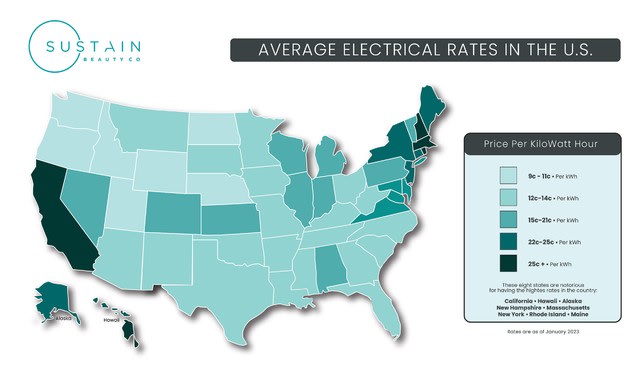
Salon profits are draining away – literally, with a third of all energy used to heat water. But a newly published audit into energy uses has revealed costs vary hugely depending on salon location. The audit, published by Sustain Beauty Co in the run-up to Earth Month in April, shows that energy rates for salons in California, Hawaii and Alaska are twice those in Oregon, Missouri or North Carolina. Hawaii has the highest, at around 32.52 cents per kWh, while Louisiana has the lowest average rate, at around 8.81 cents per kWh.
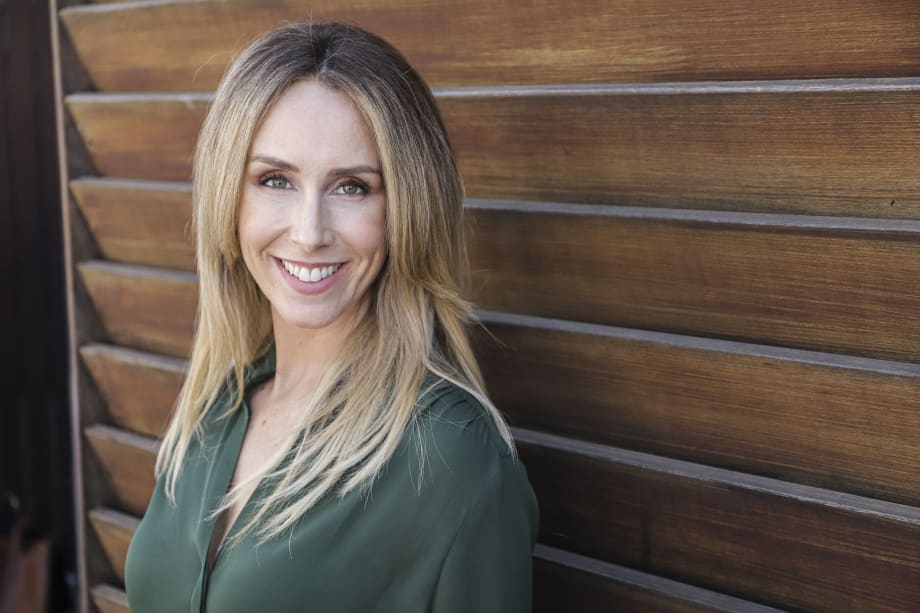
“When it comes to energy costs, the highly populated states where demand is greatest cost more and it can be crippling for salons,” said Valorie Tate, founder of pioneering Sustain Beauty Co. “Our audit showed that over 30% of a salon’s energy goes on heating water that simply drains away in seconds during shampooing. Lighting follows at 20%. Using energy to heat water and good lighting is a must for salons, so the only way to level the playing field, and at the same time edge towards greater sustainability, is to look for better ways to conserve energy.”
Ad Loading...
To shed light on energy costs as a comparison, SBCo has published its map of average electricity rates. It has also made available the SBCo Sustainability Checklist, a curated roadmap of ideas to help salons edge towards sustainability by introducing incremental changes. An entire section is dedicated to energy conservation.
“Energy use is a significant contributor to our carbon footprint, so small changes in the way we operate can have a substantial impact on energy consumption and salon costs,” added Valorie. “In high-cost areas, swapping over to biodegradable disposable towels rather than laundering traditional towels could help bring down expenses, while installing a low flow shower head can cut energy and water use by up to 65%.”
How do your energy costs compare to other states?
Valorie also recommended unplugging appliances when they are not in use.
“Many appliances consume energy even when they are turned off or in standby mode, a phenomenon known as ‘vampire power’ or ‘phantom load’. This can account for up to 10% of your electricity bill,” she explained. “It is often higher in salons where cabinets have plugs for hairdryers, straightening irons and curlers so stylists never unplug their tools, but merely switch them off.”
About SBCo:Sustain Beauty Co was born with the mission to help identify authentic, credible and environmentally responsible brands that put stylists at the forefront of their purpose. All Sustain Beauty Co products must: 1) Reduce the footprint of consumables in our industry. 2)Empower artists to create beauty responsibly. 3) Protect the stylist and the environment equally. 4) Come from ethical sources and responsible manufacturing facilities.
Putting your family to work in the salon offers some real tax benefits, but you have you have to play by the rules of the tax code to claim them. Azarvand Tax Law's Leticia Skrabut, Esq., shows you how.
Discover how to create a true “WOW experience” for every client by first building a culture where your team feels engaged, empowered, and inspired. Drawing on Calvin Stovall’s Iconic Framework, this blog explores how salon, spa, and clinic leaders can strengthen culture, elevate customer experience, and build a business that stands out for the long term.
The wellness industry is growing fast, and salons and barbershops already are an important part of it. In her first blog, Tracy Rado shares where the wellness dollars are heading, and how salon's can grow with this movement.
While salon sales are increasing, owners often feel they're working harder for the same or less profit. Leverage Q2 data from The KIM Report, Alain Audet reveals some of the structural changes that are dampening your growth and why your region and your salon size matters.
Weaknesses in your business are amplified during the Holiday Season. Spark Pro Global's Lucy Randall shows you five things to do now to have the strongest holiday season yet.
In Kati Whitledge's latest blog, she shares how salons have moved away from dress codes and embraced appearance standards. But by removing strict dress codes, some businesses may have unintentionally lowered their appearance standards. Whitledge helps you explain to your team why an appearance standard is important and how to smoothly implement a new appearance policy.
The Small Business Health Care Tax Credit is a non-refundable tax credit for for-profit businesses that provides a financial incentive for eligible employers who offer health insurance coverage to their employees. Leticia Skrabut, Esq., walks you through how to claim that credit.
Developing strong work habits early in one's career supports long-term success in the salon industry. Jesse Linares offers new stylists his top five tips.
Most salon owners have no idea what these numbers are.
You can hit record sales and still have a profit problem. The difference comes down to four numbers almost nobody was taught to track.
At Janet St. Paul Studio for Hair and Beauty, Director of Operations Natasha McMillen helps bring her wife Janet St. Paul's vision to life, elevating every system from education to operations.
The strongest salons, spas, and med spas know which numbers tell the real story of their business. In this practical guide, Phorest breaks down the five essential KPIs every business should track to improve retention, boost revenue, and make smarter decisions with confidence.
At Bella Style Salon in Slidell, Louisiana, Director of Operations Angela Meyer tackles inventory, team management, and guest relations. Read all about her in our latest Meet the Manager.
Starting at Impressions front desk in 2006 when he was 19 years old, General Manager Paul Petrowsky is a seasoned professional who owner Sarah Taylor says is responsible for much of her own success.
Planning is in full swing for the most anticipated events and promotions for the 2026 holidays. As owners share their favorite ways to celebrate, they prove that a carefully planned event can also build culture, increase client loyalty, boost sales, and set a business up for a successful 2027.