At this year's PBA Symposium held during Cosmoprof Beauty Week in Las Vegas, the keynote speaker wasn't an inspiring, motivational guru or an illuminating business author. This year's featured speaker was BOB, or rather the results of the study, Business of Beauty: Maximize Your Profitability.
Symposium's opening session revealed key data points of the study, and in day two, eight panelists provided examples of how to put the study's learning's into action. SALON TODAY's weekly e-newsletter provided video and featured coverage from both these sessions. Access the archive of coverage.
Ad Loading...
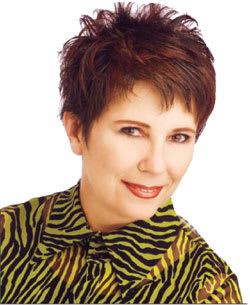
Pat Helmandollar
Both articles inspired emotions in readers and were reposted on Facebook and Twitter. Reader Pat Helmandollar took the time to pen her own thoughts on why retailing is such a challenge in the salon environment. We share her thoughts here, and asked PBA members and Symposium presenters Sara Jones, Edwin Neill III and Cary O'Brien to weigh in with a response.
Here's their dialog:
Pat Helmandollar, owner of Savvy Salon and Day Spa in Cornelius, North Carolina: "While every one of the myths covered in the e-newsletter has great validity, the whole situation struck a nerve just a little bit. I believe we do a fairly good job retailing in our salon. There are many ways to measure it, and I think the best measure is if you are making a profit at the end of the day. The reason I'm writing you is I would like to address the real reasons why retail sales are not as good in the salons as they could be.
Why should service providers strain themselves to ‘sell' retail, when their ‘real' money is coming from the service they provide? Depending on the situation, many salons pay bigger commissions, salaries, etc., for the services provided than the products sold. Consider the following scenarios:
Scenario A
Ad Loading...
Let's say I am a stylist and I am getting 40 percent commission. I bring in $2000 a week, which gives me $800 a week or approximately $40,000 a year. Now, my boss says, "I'll give you 10 percent of anything you sell over $200 per week in retail. First I've got to sell the $200, which means at $20/unit, I have to sell one item to 10 people. Now, the big money kicks in. If I am able to sell an average of one item to every single client at the average of $20/item, what does that give me? Now, I know I talked my butt off for that, and ooops, I forgot to book that next appointment because I was busy selling gel. Oh well, maybe she'll call back-back to the big bucks. If I had 30 clients, I sold $600 in retail. Wow, my boss ought to be proud, but let's see what I get. After the first $200, I get 10 percent on the $400, which equals $40. Taxes? Did you say you have to take taxes out of that? Just see if I do that again. I'd rather get an extra $5 tip from each of those clients for doing a free brow wax. 30 clients x $5 = $150 in tips, now we're talking. The moral of this exaggerated story is that stylists have to work too hard for thereturn on the retail, but the salon can't afford to pay a higher commission either-we are at a stalemate.
Scenario B:
Now a similar stylist decides to go to booth rental. She is bringing in the same $2,000 per week. She pays out $300 for rent, another $200 for supplies, $100 for all other expenses. That leaves her with $1400 tax-free dollars. Why on earth bother with retail? I shall go no further because we have beat this horse to death.
Scenario C:
A similar stylist decides to become a salon owner, vowing that she will treat and pay her service providers better. After working through her cash flow plan, she realizes that when a bottle of gel costs $10 and she sells it for $20, but a portion of the $10 profit goes to pay taxes on tips, rent plus CAM charges, regular rent, worker's compensation and all the other insurances and everything it costs to run a business, she can't afford to pay higher commissions on retail. She also knows that she is paying way too much for product, and a consumer would be crazy to pay $20-35 on an 8 oz. bottle of shampoo. Sham is the operative word here, because when that owner walks through the grocery store, she sees all the beautifully packaged products that represent the wonderful commericals that viewers watch every night. She thinks to herself, ‘Why should clients pay me $20 a bottle, when they can buy a nice bottle of XYZ shampoo in the grocery sore for $6? The salon owner cannot buy it low enough to sell it that low.
Ad Loading...
Every year our retail costs go up, and we pass it along to out clients. No wonder they are seeking alternatives. There is a commercial on TV right now where the woman says, ‘I take those little bottles of shampoo from hotels. I haven't bought that stuff in years.' It is not a hair commercial but one about saving money by investing in something else, but this is the way the general person on thestreet thinks. Now, step it up one step and they don't take it fromhotels, they buy it somewhere following a beauty commercial they have seen.
Until our vendors can offer us quality retail products at a very reasonable price so that we can both reward our staff AND offer it to out clients at a decent price, you will continue to see retail product sales plummet in the professional salon business. It neither makes sense nor cents for us!"
The Rebuttal
"Pat makes a good argument, only if the act of selling retail by a stylist truly takes incremental time away from adding more service revenue. I believe the best practice data tells us that selling retail is most successful when the stylist engages the client during the service by recommending the product being used. In this process, the stylist is using their time efficiently by both educating and selling their client retail without taking extra time out of their day. In this scenario, the stylist will make more money during the same time allotment. Albeit a smaller take, very little bit helps." -Sara Jones, senior vice president and general manager of Joico and Iso brands of Zotos International
"I have an enormous amount of respect for Pat. She is both a good friend and has been a customer of ours for many years. I must respectfully disagree with her comments however. First, her responses make an assumption that the survey specifically disproves. That is that stylists are motivated primarily by money to retail. The stylists surveyed said money is not what motivates them. Moreover owners and stylist both agreed strongly that they would like to recommend products, but they would like additional training on how to do so more effectively. It is also important to keep in mind that margins are high in the salon world relative to other retailiers. In Europe, salons get a much lower margin than in the U.S. Finally what motivates great stylists to recommend products is their desire to serve their clients. Just as a doctor recommends medicine to keep her patient healthy, the successful stylist recommends product so his or her client will look great all the time, and return to that stylist again and again." -Edwin Neill III, president of Neill Corporation
Ad Loading...
"Consumer home care at the salon level is in need of much attention and review, and Pat does make some very valid points. With most salons not being organized, it will remain hard to have a comprehensive program to increase retail product to the consumer with the clear message of "Why buy from the salon." Many salons are still under the belief that professional products are only to be purchased at the salon, and we know thisto not be true. The Professional Beauty Association (PBA) is just beginning to peel back the layers of this issue and working to find the knowledge needed to advance the salon industry. As a stylist and salon owner myself, we partner with our manufacturer and distributor friends to meet these challenges now and in the future." -Cary O'Brien, Cary O'Brien's Design and Color Spa, St.Charles, Missouri.
Putting your family to work in the salon offers some real tax benefits, but you have you have to play by the rules of the tax code to claim them. Azarvand Tax Law's Leticia Skrabut, Esq., shows you how.
Discover how to create a true “WOW experience” for every client by first building a culture where your team feels engaged, empowered, and inspired. Drawing on Calvin Stovall’s Iconic Framework, this blog explores how salon, spa, and clinic leaders can strengthen culture, elevate customer experience, and build a business that stands out for the long term.
The wellness industry is growing fast, and salons and barbershops already are an important part of it. In her first blog, Tracy Rado shares where the wellness dollars are heading, and how salon's can grow with this movement.
While salon sales are increasing, owners often feel they're working harder for the same or less profit. Leverage Q2 data from The KIM Report, Alain Audet reveals some of the structural changes that are dampening your growth and why your region and your salon size matters.
Weaknesses in your business are amplified during the Holiday Season. Spark Pro Global's Lucy Randall shows you five things to do now to have the strongest holiday season yet.
In Kati Whitledge's latest blog, she shares how salons have moved away from dress codes and embraced appearance standards. But by removing strict dress codes, some businesses may have unintentionally lowered their appearance standards. Whitledge helps you explain to your team why an appearance standard is important and how to smoothly implement a new appearance policy.
The Small Business Health Care Tax Credit is a non-refundable tax credit for for-profit businesses that provides a financial incentive for eligible employers who offer health insurance coverage to their employees. Leticia Skrabut, Esq., walks you through how to claim that credit.
Developing strong work habits early in one's career supports long-term success in the salon industry. Jesse Linares offers new stylists his top five tips.
Most salon owners have no idea what these numbers are.
You can hit record sales and still have a profit problem. The difference comes down to four numbers almost nobody was taught to track.
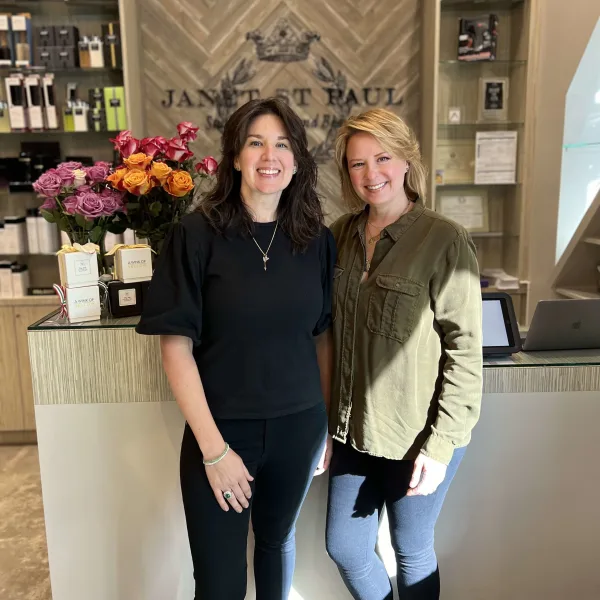
At Janet St. Paul Studio for Hair and Beauty, Director of Operations Natasha McMillen helps bring her wife Janet St. Paul's vision to life, elevating every system from education to operations.
The strongest salons, spas, and med spas know which numbers tell the real story of their business. In this practical guide, Phorest breaks down the five essential KPIs every business should track to improve retention, boost revenue, and make smarter decisions with confidence.
At Bella Style Salon in Slidell, Louisiana, Director of Operations Angela Meyer tackles inventory, team management, and guest relations. Read all about her in our latest Meet the Manager.
Starting at Impressions front desk in 2006 when he was 19 years old, General Manager Paul Petrowsky is a seasoned professional who owner Sarah Taylor says is responsible for much of her own success.
Planning is in full swing for the most anticipated events and promotions for the 2026 holidays. As owners share their favorite ways to celebrate, they prove that a carefully planned event can also build culture, increase client loyalty, boost sales, and set a business up for a successful 2027.