What Your Morning Coffee Order is Trying to Teach You About Cash Flow
Starbucks customer loyalty program teaches salons a powerful lesson on how to use gift cards and memberships to build loyalty while holding the money responsibly in a high-yield account that protects your business from a cash-flow crunch, while earning you interest on money you've already been paid. Bobbi Neilson shows you how.
by Bobbi Neilson
March 24, 2026
10 min to read
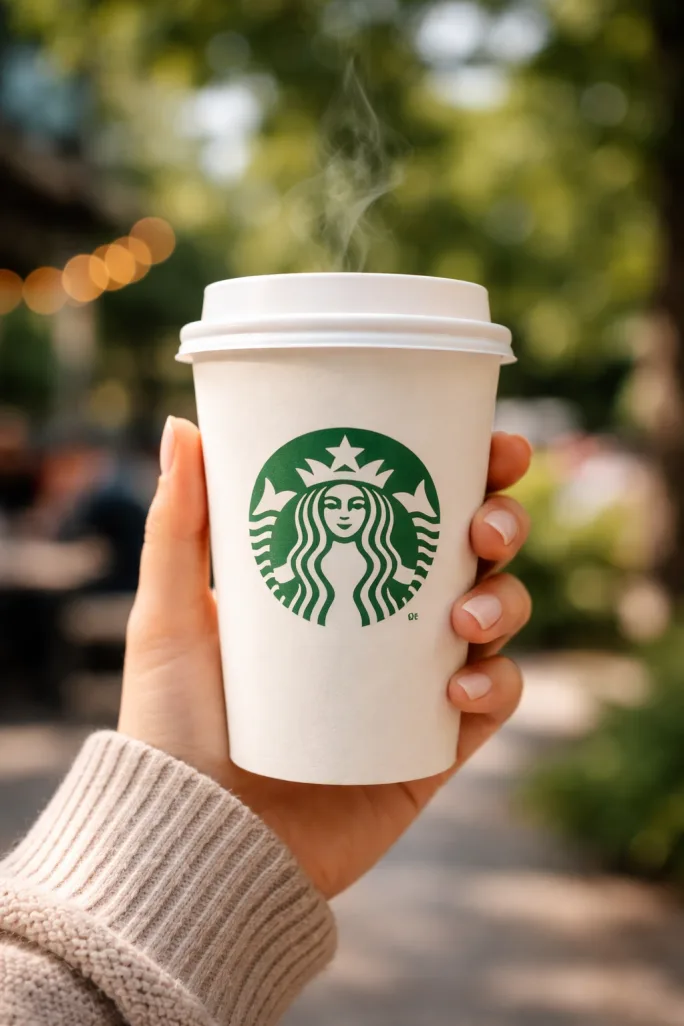
Starbucks is holding $1.8 billion in customer deposits for future coffee orders. In addition, they've earned $15 million in interest on their customers' money. Your salon can learn an important lesson from how they do this.
This is an AI-generated image. Refer to our Terms of Use.
Starbucks is holding $1.8 billion of its customers' money right now. Your salon could be running the same play. But first, you need to understand what that money actually is.
Picture it. Tuesday morning. Your first client of the day drops into your chair, unwraps her scarf, and sets her Venti Iced Brown Sugar Oat Milk Shaken Espresso on your station next to the color swatches. She ordered it on the app before she left her house, paid with her preloaded balance, earned her Stars, and didn't think twice about any of it.
Ad Loading...
You, meanwhile, are behind the chair with your own Starbies in hand, the one you grabbed from the drive-through on the way in, tapped to pay with your app, and are now sipping between sectioning her hair and tearing foils. Two people with a shared path. One loyal client and a stylist who lives and dies by her regulars. Both of you, without a second thought, handed a coffee company your money before you received anything in return.
Welcome to the Starbucks financial playbook, actually, the corporate financial playbook, and yes, your salon should absolutely be running a version of it. But before we get to the opportunity, we need to talk about the part most people skip entirely, because skipping it is exactly how small business owners can end up in a cash flow crisis they did not see coming.
The $1.8 Billion Secret in Your Cup Holder
Here is what most people do not realize is happening every time they tap that little green app. Starbucks is holding nearly $2 billion in customer deposits right now. Not from investors and not from loans. From regular people who loaded money onto their gift cards and app balances before ever ordering a drink.
That gap between receiving the money and delivering the service is called a float. And Starbucks has turned that float into a financial engine so powerful that analysts have compared the company's stored value balances to those of a mid-sized bank. In 2018 alone, Starbucks recognized $155 million from gift card balances that were simply never redeemed. Rewards members account for more than half of U.S. operating revenue and spend two to three times more than non-members.
It is a beautifully fascinating system. And one that is absolutely worth studying. But Starbucks is also a publicly traded global corporation with the infrastructure, legal teams, and financial reserves to manage billions in outstanding liabilities. Most salons are not. Which means the lesson is not just about building the float. It is about understanding what the float actually is before you spend a dollar of it.
Ad Loading...
Let's Be Honest About What That Money Is
When a client buys a $150 gift card to your salon, they have handed you $150 in exchange for a promise of future services. You have not performed that blowout, root smudge, or precision fade yet. That money feels like income but it is not. Not yet.
That $150 is a liability. It is money you owe in the form of a future service, and until it is redeemed, it sits on your books as a liability. The moment you spend it on product, rent, or payroll before someone ever books that appointment, you have spent money that was not yours to spend yet. And when the client calls three months later, ready to come in, you will be delivering a service you have already been paid for with cash you no longer have.
For small beauty businesses running tight margins, that gap cannot be a technicality. It shows up as Sunday night anxiety before payroll hits. It is the scramble when three clients redeem gift cards in the same week, and the register suddenly does not reflect what the work actually costs to perform. What looks like a gift card strategy can quietly become a cash flow management problem in disguise.
Many salons and independent stylists treat gift card revenue like a holiday bonus. Starbucks treats it like a bank deposit. The difference is not just philosophical. It is structural. And building the right structure is what separates a prepaid strategy that works from one that quietly creates more pressure than it relieves.
Gift card income is money you owe in the form of a future service. That $150 is a liability. Until it is redeemed, it sits on your books as a liability.
This is an AI-generated image. Refer to our Terms of Use.
The Liability Account You Should Already Have
Here is where our learning from the Starbucks model gets genuinely instructive for small business owners, not just as inspiration, but as a framework. When gift card or prepaid membership revenue comes in, it should not be credited to your operating account. It should go directly into a dedicated liability account, a separate account that you do not touch until the service is delivered. This is not just smart and clear accounting; it is the discipline that prevents you from building a loyalty program that eventually turns into a debt that cannot be serviced.
Ad Loading...
Now, here is the upgrade. That liability account does not have to sit idle. It should be a high-yield savings account. Most banks have them, and a quick Google search of high-yield savings accounts will certainly get you in the right direction.
Starbucks earned approximately $21 million in interest income in a single fiscal year simply by investing its float. That $21 million is not a liability but passive income to further invest. It did not spend that money on operations. It parked it, let it earn, and counted the interest as its own. That is the part of the story that most breakdowns of the Starbucks model gloss over, and it is the most actionable piece for an independent salon owner or booth renter.
You do not need $1.8 billion to apply this principle. You need a high-yield savings account and the discipline to treat prepaid revenue as protected until it is earned. If your salon sells $5,000 in gift cards over the holiday season and parks that money in a high-yield account earning four to five percent annually, you are doing two things at once. You are protecting yourself from a cash-flow crunch when those cards get redeemed, and you are earning money on money you have already been paid. That is the beginning of the Starbucks model at a scale that actually fits a small beauty business.
Membership Is the Model, But Discipline Is the Foundation
Gift cards create float. Memberships create float plus retention plus predictable revenue, and that combination is the closest thing to a financial safety net an independent beauty business can build independently. But only if the underlying structure is sound.
Think about what a membership actually does at its core. Someone pays upfront, monthly or quarterly, for a defined set of services. The salon collects recurring revenue before an appointment is ever booked. That client, having already paid, is behaviorally committed to coming back, not out of loyalty exactly, but because the financial decision has already been made. And when the value of the membership rewards consistency, retention tends to climb right alongside the cash reserves.
Ad Loading...
Starbucks proved this at scale when it shifted its loyalty program from rewarding visits to rewarding spend. The result was a huge measurable jump in average ticket size and a member base that felt financially invested in the brand. (Hello, salon KPIs!) When customers had skin in the game, they spent more and stayed longer. Isn't that what we all strive for? A raving fan base that feels emotionally tied to your brand, your team, and the community you have built?
A salon membership creates the same psychology. A client who has prepaid for monthly blowouts or a quarterly color package is not scrolling through Groupon looking for a deal. She is showing up because she already paid, and that payment made loyalty the path of least resistance. She is also not bringing a price complaint when she sits down. That conversation already happened. You already won it.
But the membership only works as a financial tool if the revenue is managed with the same discipline as the gift card revenue. Prepaid membership dollars are earned when the service is delivered, not when the payment clears. Build the habit of separating that income from your operating cash from day one, and the model becomes genuinely powerful. Skip that step, and a full calendar of prepaid clients can mask a cash position that is more fragile than it looks.
Bobbi Neilson is a credentialed educator and former salon owner, who received multiple SALON TODAY 200 honors.
Bobbi Neilson
What This Looks Like Behind the Chair
The membership model looks different depending on where you sit in this industry. A color-focused salon might build a quarterly package bundling a full color, toner, and gloss at a rate that rewards commitment over individual bookings. A blowout bar might go flat-rate monthly.
Extension specialists have a natural built-in structure here, maintenance memberships covering installs and move-ups on a defined schedule can turn a high-ticket service into a reliable recurring revenue line that clients actually appreciate because it removes the guesswork on their end, too.
Ad Loading...
Booth renters and suite owners, the same principle applies, just scaled down. No software infrastructure required, no large team needed. Even something as simple as five prepaid appointments collected upfront at a slight discount creates float, locks in return visits, and cuts down on the slow drift of clients who genuinely intend to rebook but never quite get around to it until they need you urgently.
The mechanics underneath all of it are the same regardless of structure. Prepaid revenue lands in a protected account and stays there until the service is delivered. As appointments get completed, that money moves into operating cash. While it waits, it is earning interest. Over time, that growing balance stops being just a liability buffer and starts becoming working capital you can use intentionally, on your own terms, with full visibility into what is actually available versus what is still owed.
That is the full Starbucks model. Not just the float, but the framework supporting it.
The Retention That Sneaks Up on You
Here is the part of this model that tends to surprise salon professionals who implement it with real structure behind it. The retention improvement does not feel like a strategy working. It feels like clients who have just gotten more reliable. And in our current industry state, that is a clear win.
Starbucks rewards members have a customer retention rate nearly double the industry average. Not because the coffee got better. Because the program was designed so that the most logical next action for a member is always to come back. Someone on a membership does not need a followup text to rebook. Someone carrying a gift card balance is already motivated to use it. The client who prepaid for a package is going to see it through. None of them had to be chased. The financial structure did that work quietly in the background. This is an automation of real human interaction.
Ad Loading...
That is ultimately what Starbucks understood that most loyalty programs miss. Rewarding clients after they show up is reactive. Making the decision to return before the moment of choice ever arrives, that is the real power play. By the time she is sitting in your chair, she was never really at risk of going anywhere else.
The Bottom Line
The client in your chair right now with the iced coffee on the station did not walk into Starbucks this morning and decide to become a loyal customer. She was already one before the barista called her name. She had loaded money onto her app, earned her Stars, and structured her morning around a brand that made prepaying feel like the obvious move.
Your salon can build the same thing. The relationship is already there, and so is the trust. Clients hand their stylists something far more personal than a coffee order. They hand them their confidence, their appearance, their sense of self. That is not a small thing. It is the strongest possible foundation for a prepaid loyalty model, if the business is structured to meet it.
But build it with the full picture in view. Sell the gift card. Launch the membership. Open the high-yield savings account. Park the prepaid revenue there, protect it until it is earned, and let the interest start working quietly in the background. Then, once the discipline is there and the balance is growing, begin using that capital intentionally to smooth out cash flow, fund growth, and stop white-knuckling the slow season. Let’s lower that cortisol.
Starbucks figured out that the most powerful moment in a customer relationship is not when the product is delivered. It is when the customer hands over their money before any of that happens. But what made it a business strategy instead of just a nice idea was the infrastructure built around holding that money responsibly.
Ad Loading...
Your clients are already doing this for a coffee company. Give them a reason to do it for you. Then make sure you are ready to handle it like the business power play it is.
About the Author:Bobbi Neilsen is a 20-year beauty industry veteran, nationally credentialed educator, and former member of the PBA Salon/Spa Advisory Council. A 5x Salon Today Top 200 honoree and NAHA nominee, she spent nearly nine years as the owner of Allure Beauty Bar before transitioning into industry consulting and education and partnering with beauty brands to create a lasting impact in the beauty industry. She writes and speaks on the intersection of salon ownership, financial strategy, and professional development.
Discover how to create a true “WOW experience” for every client by first building a culture where your team feels engaged, empowered, and inspired. Drawing on Calvin Stovall’s Iconic Framework, this blog explores how salon, spa, and clinic leaders can strengthen culture, elevate customer experience, and build a business that stands out for the long term.
The wellness industry is growing fast, and salons and barbershops already are an important part of it. In her first blog, Tracy Rado shares where the wellness dollars are heading, and how salon's can grow with this movement.
While salon sales are increasing, owners often feel they're working harder for the same or less profit. Leverage Q2 data from The KIM Report, Alain Audet reveals some of the structural changes that are dampening your growth and why your region and your salon size matters.
Weaknesses in your business are amplified during the Holiday Season. Spark Pro Global's Lucy Randall shows you five things to do now to have the strongest holiday season yet.
In Kati Whitledge's latest blog, she shares how salons have moved away from dress codes and embraced appearance standards. But by removing strict dress codes, some businesses may have unintentionally lowered their appearance standards. Whitledge helps you explain to your team why an appearance standard is important and how to smoothly implement a new appearance policy.
The Small Business Health Care Tax Credit is a non-refundable tax credit for for-profit businesses that provides a financial incentive for eligible employers who offer health insurance coverage to their employees. Leticia Skrabut, Esq., walks you through how to claim that credit.
Developing strong work habits early in one's career supports long-term success in the salon industry. Jesse Linares offers new stylists his top five tips.
Most salon owners have no idea what these numbers are.
You can hit record sales and still have a profit problem. The difference comes down to four numbers almost nobody was taught to track.
At Janet St. Paul Studio for Hair and Beauty, Director of Operations Natasha McMillen helps bring her wife Janet St. Paul's vision to life, elevating every system from education to operations.
The strongest salons, spas, and med spas know which numbers tell the real story of their business. In this practical guide, Phorest breaks down the five essential KPIs every business should track to improve retention, boost revenue, and make smarter decisions with confidence.
At Bella Style Salon in Slidell, Louisiana, Director of Operations Angela Meyer tackles inventory, team management, and guest relations. Read all about her in our latest Meet the Manager.
Starting at Impressions front desk in 2006 when he was 19 years old, General Manager Paul Petrowsky is a seasoned professional who owner Sarah Taylor says is responsible for much of her own success.
Planning is in full swing for the most anticipated events and promotions for the 2026 holidays. As owners share their favorite ways to celebrate, they prove that a carefully planned event can also build culture, increase client loyalty, boost sales, and set a business up for a successful 2027.
When things run amok at Mane Attraction Salon, Owners Chris and Jenny Knudsen say General Manager Sami Hernandez is their go-to resource and ultimate sounding board. Meet Sami in this installment of Meet the Manager.