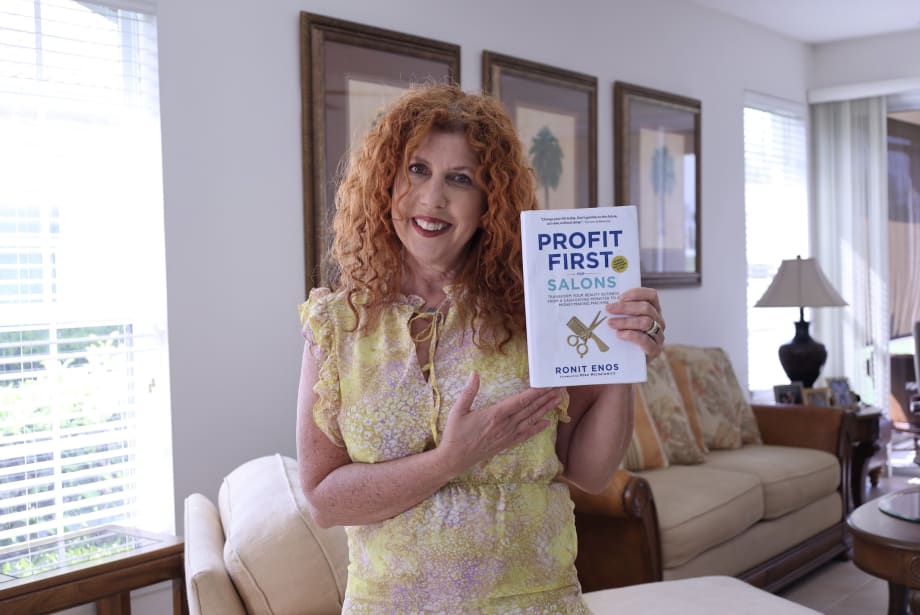
Profit First for Salons, a new book by Salon Cadence's Ronit Enos, teaches owners how to master their numbers, scale their profits and position their businesses to reach new heights. In this video interview, Enos discusses the concept behind the book's blueprint for sucesss and shares some of its illuminating business stories.
In Profit First for Salons, Author Ronit Enos shares a proven blueprint for mastering their numbers, scale their profits and position their businesses to reach new heights.
2 min to read
While many service-based business struggled to remain profitable during the pandemic, a select group of salons, spas and barbershops defied the odds with six-figure cash profits. That’s the kind of success that Ronit Enos and her Salon Cadence community has been able to achieve, with a collective increase of 592% profitability since January 2021.
What’s the secret to helping salons transform from cash-eating machines into freedom-generating engines? Her new book, Profit First for Salons.
Ad Loading...
Carefully written over 18 months, Profit First for Salons teaches business owners how to master their numbers, rapidly scale their profits and position their businesses to reach new heights. Unlike other financial model books that are often prescriptive, Profit First for Salons gives entrepreneurs not just the framework to grow a profitable business, but the permission to create freedom on their own terms.
Author and Salon Coach Ronit Enos recently joined SALON TODAY’s Stacey Soble about the development and the launch of her new book. Told through Eno’s unique conversational style and replete with poignant business success stories, this 180-page book promises to rewrite what’s possible for the owners of service-based businesses.
“As business owners, we’re often taught that we have to sacrifice for our success,” Enos says. “We can’t have a profitable business AND time for our family. We can’t have money in the bank, AND the peace of mind to take a vacation. We can’t scale our businesses AND live the life we want.”
The book offers owners a proven blueprint to achieve financial freedom, create a passion-driven business, and unlock not just their dreams, but the dreams of their staff.
In addition to leading Salon Cadence, Author Ronit Enos is a passionate entrepreneur, the host of Huddle Time with Ronit, a business strategist and the former owner of a salon that was a multiple SALON TODAY 200 honoree and Best of Boston winner. Having grown her Maxime salon brand into an award-winning seven-figure salon with six-figure net profits, Enos’ creative “profit for purpose” strategies have garnered her prominent recognition. Her work has been featured in AvedaMeansBusiness.com, by the Hult Entrepreneur MBA Program, in Thrive Global’s Big Ideas that Will Change the World, and in Authority magazine.
Are one of your traditional, handed-down salon management practices actually breaking the law. The pros from Paragon HR Consulting walk you through seven common Human Resources mistakes that could land you in hot water.
All beauty professionals should know how to identify when a client may need some health guidance. Tracy Rado discusses some common questions that clients ask in the chair, how to advise them, and when to refer them to a specialist.
From managing air traffic on busy days to handling frustrated guests' complaints, your front desk team often serves as the salon's emotional shock absorber. From a customer service lesson from the DMV to a list of strategies for caring for your front line, our experts offer ideas for alleviating stress, celebrating wins, and setting goals.
According to the KIM Report, top-line salon revenue appears steady or slightly up, but that growth is driven primarily by service price increases. Beneath the surface, retail performance and client visit frequency (appointment drift) are under real pressure. In his latest blog, Alain Audet offers strategies for keeping your salon's retail sales strong.
Putting your family to work in the salon offers some real tax benefits, but you have you have to play by the rules of the tax code to claim them. Azarvand Tax Law's Leticia Skrabut, Esq., shows you how.
Discover how to create a true “WOW experience” for every client by first building a culture where your team feels engaged, empowered, and inspired. Drawing on Calvin Stovall’s Iconic Framework, this blog explores how salon, spa, and clinic leaders can strengthen culture, elevate customer experience, and build a business that stands out for the long term.
The wellness industry is growing fast, and salons and barbershops already are an important part of it. In her first blog, Tracy Rado shares where the wellness dollars are heading, and how salons can grow with this movement.
While salon sales are increasing, owners often feel they're working harder for the same or less profit. Leverage Q2 data from The KIM Report, Alain Audet reveals some of the structural changes that are dampening your growth and why your region and your salon size matters.
Weaknesses in your business are amplified during the Holiday Season. Spark Pro Global's Lucy Randall shows you five things to do now to have the strongest holiday season yet.
In Kati Whitledge's latest blog, she shares how salons have moved away from dress codes and embraced appearance standards. But by removing strict dress codes, some businesses may have unintentionally lowered their appearance standards. Whitledge helps you explain to your team why an appearance standard is important and how to smoothly implement a new appearance policy.
The Small Business Health Care Tax Credit is a non-refundable tax credit for for-profit businesses that provides a financial incentive for eligible employers who offer health insurance coverage to their employees. Leticia Skrabut, Esq., walks you through how to claim that credit.
Developing strong work habits early in one's career supports long-term success in the salon industry. Jesse Linares offers new stylists his top five tips.
Most salon owners have no idea what these numbers are.
You can hit record sales and still have a profit problem. The difference comes down to four numbers almost nobody was taught to track.