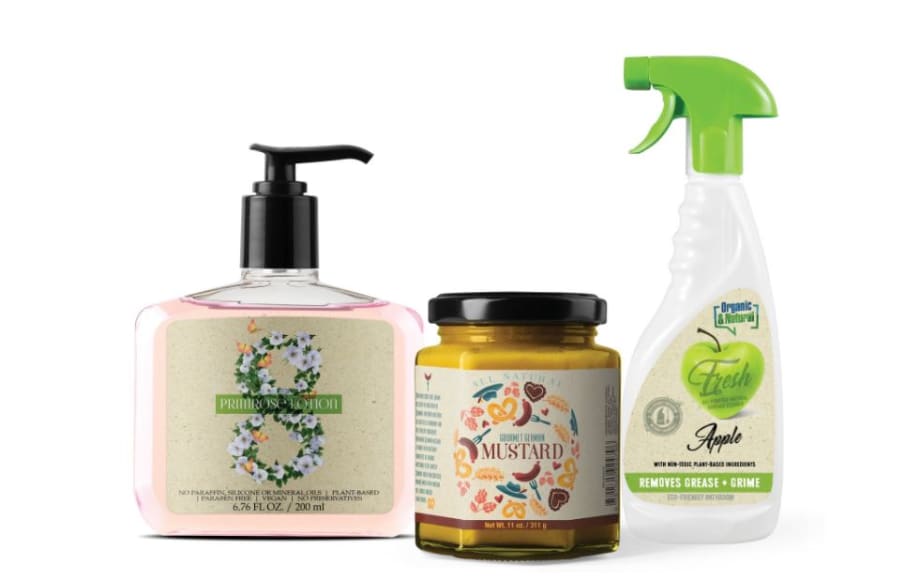
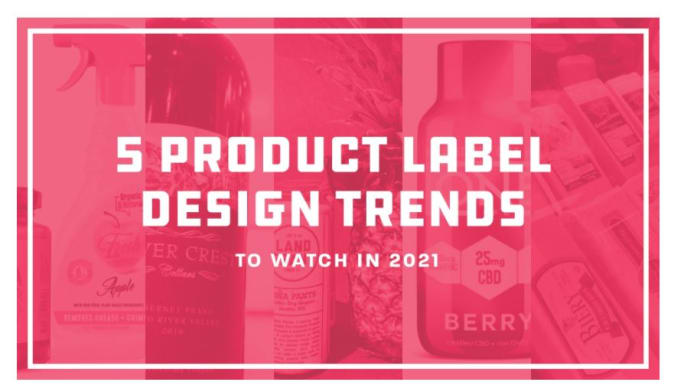
Whether you're creating your own private label brand or are in the process of deciding on which new lines to bring in this year, these top trends in product label design may sway some of your decisions.
by Staff
April 8, 2021
4 min to read
Consumers care about how their favorite products are labeled — more so than they probably realize. Although you supposedly can’t judge a book by its cover, your clients will often end up judging a product by its label. In many cases, they can be convinced to purchase a new product (or even make the switch from a brand they know well) due to impeccable label design.
Of course, the design of the product labels on your shelves needs to align with its brand messaging and make sense for the product’s use and packaging. But there are other elements you can count on to pique a customer’s interest and entice them to add your product to their shopping cart.
Ad Loading...
From prioritizing the tactile experience to appealing to a consumer’s sense of social responsibility, product labels can play an integral role in how well your retail moves once it’s on the shelves. Whether you have a role in creating the private label retail you feature in your salon or you are helping to select and bring on a new retail line this year, knowing the top trends in label design can help you make important decisions.
Take a look at the top five product label design trends identified by Mammoth Packaging, a product label and packaging company.
Eco-Friendly Materials
Being eco-friendly is more than just a passing fad. While sustainability may have once been a niche market, this is now a cause the masses care about. In fact, around 75% of U.S. adults say they’re concerned about helping the environment through their daily behaviors. What’s more, BBMG’s Conscious Consumer report revealed that 87% of U.S. consumers are more likely to buy from brands that have shown their commitment to eco-friendly practices. To make sure your commitment to sustainability is clear, consider using eco-friendly materials in your product packaging and labeling. Recycled and compostable labels are more commonplace than ever — and if consumers know that buying your product won’t create more unnecessary waste, that may tip the scales in your favor. Your product labels also make for the perfect place to highlight your organization’s other eco-friendly efforts.
Irresistible Texture
Your label design should address more than a consumer’s sense of sight. Touch also plays an important part in the purchasing experience. According to researchers from Bocconi University and Innsbruck University, overly crowded product displays can be visually overwhelming for customers. As a result, they’ll often rely on touch to make their buying decisions. You can use this knowledge to your advantage when designing a label. Making your labels provide a more tactile experience can set your product apart. If you’re hoping to target a higher-end market, for example, consider embossed labels. These embossed labels are viewed as being “premium.” Customers who touched products with these labels and liked the experience actually believed the products were worth more! Whatever kind of textured labels you choose, they can encourage customers to use more than their eyes when making a decision.
Bold Design
Product labels should rarely be boring. Although minimalism reigned supreme during the last decade, today’s consumers want something more exciting. Maximalism has (loudly) made itself known in the label design realm. These designs are characterized by ornate patterns, intricate details, and eye-catching colors. If you really want to make your product stand out in the store, you’ve got to go full-out. With so many products to compete with, your label design needs to stop customers in their tracks.
Ad Loading...
Retro-Futurism
Although product developers are always thinking about what’s next, you sometimes need to look to the past first. Retro-futurism is a design aesthetic that captures “the past’s vision of the future.” In other words, it’s what we thought the future would look like 50 years ago. It’s a concept rooted in 20th-century science fiction, but it’s just as relevant today. Customers enjoy the sense of nostalgia mixed with cutting-edge elements, as it’s familiar yet brand new. Neon colors are often mixed with mid-century retro elements with this type of label design. If this is an aesthetic that fits in with your brand or product, this design can be highly effective amongst consumers.
Transparent Labels
One thing is clear – customers really value transparency (both literal and figurative). In a Label Insight Food Revolution study, a staggering 94% of respondents said it was important to them that food brands are transparent about their ingredients and how their products are made. Customers want insight into what they’re putting into their bodies, and labels can provide you with the means to provide this valuable information. But it’s not only about being upfront; in some cases, you may want your labels to be transparent in other ways. See-through labels may be an appropriate choice for many products, as they allow the true color of the item to shine through. This can be an excellent option if you’ve chosen glass or non-colored plastic for your packaging. Rather than rely on graphic design, you can let the product speak for itself.
Discover how to create a true “WOW experience” for every client by first building a culture where your team feels engaged, empowered, and inspired. Drawing on Calvin Stovall’s Iconic Framework, this blog explores how salon, spa, and clinic leaders can strengthen culture, elevate customer experience, and build a business that stands out for the long term.
The wellness industry is growing fast, and salons and barbershops already are an important part of it. In her first blog, Tracy Rado shares where the wellness dollars are heading, and how salon's can grow with this movement.
While salon sales are increasing, owners often feel they're working harder for the same or less profit. Leverage Q2 data from The KIM Report, Alain Audet reveals some of the structural changes that are dampening your growth and why your region and your salon size matters.
Weaknesses in your business are amplified during the Holiday Season. Spark Pro Global's Lucy Randall shows you five things to do now to have the strongest holiday season yet.
In Kati Whitledge's latest blog, she shares how salons have moved away from dress codes and embraced appearance standards. But by removing strict dress codes, some businesses may have unintentionally lowered their appearance standards. Whitledge helps you explain to your team why an appearance standard is important and how to smoothly implement a new appearance policy.
The Small Business Health Care Tax Credit is a non-refundable tax credit for for-profit businesses that provides a financial incentive for eligible employers who offer health insurance coverage to their employees. Leticia Skrabut, Esq., walks you through how to claim that credit.
Developing strong work habits early in one's career supports long-term success in the salon industry. Jesse Linares offers new stylists his top five tips.
Most salon owners have no idea what these numbers are.
You can hit record sales and still have a profit problem. The difference comes down to four numbers almost nobody was taught to track.
At Janet St. Paul Studio for Hair and Beauty, Director of Operations Natasha McMillen helps bring her wife Janet St. Paul's vision to life, elevating every system from education to operations.
The strongest salons, spas, and med spas know which numbers tell the real story of their business. In this practical guide, Phorest breaks down the five essential KPIs every business should track to improve retention, boost revenue, and make smarter decisions with confidence.
At Bella Style Salon in Slidell, Louisiana, Director of Operations Angela Meyer tackles inventory, team management, and guest relations. Read all about her in our latest Meet the Manager.
Starting at Impressions front desk in 2006 when he was 19 years old, General Manager Paul Petrowsky is a seasoned professional who owner Sarah Taylor says is responsible for much of her own success.
Planning is in full swing for the most anticipated events and promotions for the 2026 holidays. As owners share their favorite ways to celebrate, they prove that a carefully planned event can also build culture, increase client loyalty, boost sales, and set a business up for a successful 2027.
When things run amok at Mane Attraction Salon, Owners Chris and Jenny Knudsen say General Manager Sami Hernandez is their go-to resource and ultimate sounding board. Meet Sami in this installment of Meet the Manager.