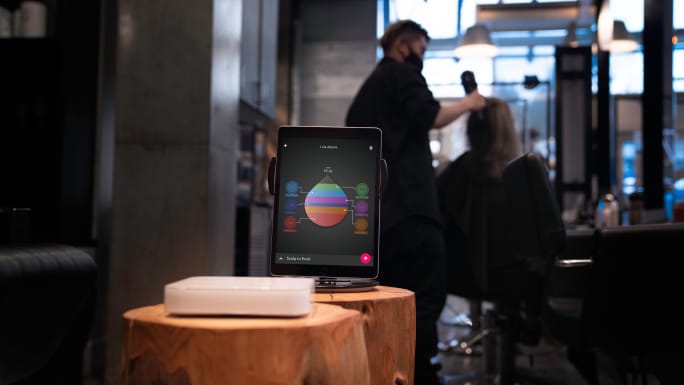
As prices climb, it becomes more and more important for owners to leverage data to understand their service costs and reflect it in their pricing. Four owners share how they use Vish to reduce waste and drive profit with their color services.
by Staff
January 26, 2023
When they understand they are paying based on the amount of product they use, clients appreciate price transparency.
3 min to read
Energy prices may be stabilizing but the relentless hike in costs continues forcing many salons to radically rethink how they price for services or face financial distress. But those with robust product controls or a flexible charging model are finding themselves more insulated from the crisis.
Laura Watkins, owner of Pure Salon and Spa in Louisville, KY, is using Vish technology to separate color and service costs, making it easier to pass on increased costs to the client in a fair and transparent manner.
Ad Loading...
“We are notified of changes to manufacturer costs approximately 60 days before they happen,” she explains. “So we have plenty of time to get that information incorporated into Vish and plan communication to our guests about a price increase.”
Luke Huffstutter, owner of the Annastasia Group in Portland, Oregon, has been able to avoid across-the-board increases for services since installing Vish.
“It has allowed a micro approach to pricing. Instead of doing general price increases, I have the data to zoom in on the services that are costing us the most money and drive them to be more profitable,” says Luke.
Luscious & Co in Shelton, Connecticut, reports a similar experience. From day one owners Jess and Liz Arindell used an unconventional pricing model for beauty, separating color from service, charging $8.50 for each bowl of color. But it wasn’t until they introduced Vish that they were able to balance costs and charges.
“Once we started using Vish, the charges were customized based on weight. This means some guests pay less than $8.50, and some pay more. It reflects our commitment to transparency, which guests appreciate,” says Jess. “This has significantly impacted profitability as the average cost of a bowl of color has increased to $14.”
Ad Loading...
And now when color supply costs increase they simply adjust the cost in their Vish database.
At Hedkandi in Calgary, Canada, introducing color management technology had an immediate impact on color usage. Realizing that clients were being charged for all colors and that their color use was monitored made the stylists more conscious when dispensing color. Waste has dropped massively, and the group is now consistently within its budget, spending 7-8% of revenue on inventory.
“We saw revenue go up by approximately $120K while our color spend significantly decreased. It happened so quickly that our color line got in touch because they were concerned our business had taken a sudden, catastrophic dip,” says owner Jereme Bokitch.
The balancing act of covering costs without alienating clients has become ever more precarious, but those salons using technology to manage what is often the second or third biggest bill for the business have found they are better shielded and their clients more satisfied.
To learn more about Vish, including information on its Color Bar app as well as Vish Front Desk, visit http://getvish.com
Ad Loading...
About Vish:Vish Ltd. is a leading color management software, which includes a suite of systems that effortlessly revolutionizes how salons and stylists run their color business. Based in Toronto, Canada, and available for use worldwide, Vish was created to help salon owners and colorists solve the universal problems facing the hair color industry - color waste, ambiguous pricing, and profit margins. Data-driven and intelligently automated, Vish is integrated with multiple point-of-sale systems, giving complete ease to the entire team.
Discover how to create a true “WOW experience” for every client by first building a culture where your team feels engaged, empowered, and inspired. Drawing on Calvin Stovall’s Iconic Framework, this blog explores how salon, spa, and clinic leaders can strengthen culture, elevate customer experience, and build a business that stands out for the long term.
The wellness industry is growing fast, and salons and barbershops already are an important part of it. In her first blog, Tracy Rado shares where the wellness dollars are heading, and how salon's can grow with this movement.
While salon sales are increasing, owners often feel they're working harder for the same or less profit. Leverage Q2 data from The KIM Report, Alain Audet reveals some of the structural changes that are dampening your growth and why your region and your salon size matters.
Weaknesses in your business are amplified during the Holiday Season. Spark Pro Global's Lucy Randall shows you five things to do now to have the strongest holiday season yet.
In Kati Whitledge's latest blog, she shares how salons have moved away from dress codes and embraced appearance standards. But by removing strict dress codes, some businesses may have unintentionally lowered their appearance standards. Whitledge helps you explain to your team why an appearance standard is important and how to smoothly implement a new appearance policy.
The Small Business Health Care Tax Credit is a non-refundable tax credit for for-profit businesses that provides a financial incentive for eligible employers who offer health insurance coverage to their employees. Leticia Skrabut, Esq., walks you through how to claim that credit.
Developing strong work habits early in one's career supports long-term success in the salon industry. Jesse Linares offers new stylists his top five tips.
Most salon owners have no idea what these numbers are.
You can hit record sales and still have a profit problem. The difference comes down to four numbers almost nobody was taught to track.
At Janet St. Paul Studio for Hair and Beauty, Director of Operations Natasha McMillen helps bring her wife Janet St. Paul's vision to life, elevating every system from education to operations.
The strongest salons, spas, and med spas know which numbers tell the real story of their business. In this practical guide, Phorest breaks down the five essential KPIs every business should track to improve retention, boost revenue, and make smarter decisions with confidence.
At Bella Style Salon in Slidell, Louisiana, Director of Operations Angela Meyer tackles inventory, team management, and guest relations. Read all about her in our latest Meet the Manager.
Starting at Impressions front desk in 2006 when he was 19 years old, General Manager Paul Petrowsky is a seasoned professional who owner Sarah Taylor says is responsible for much of her own success.
Planning is in full swing for the most anticipated events and promotions for the 2026 holidays. As owners share their favorite ways to celebrate, they prove that a carefully planned event can also build culture, increase client loyalty, boost sales, and set a business up for a successful 2027.
When things run amok at Mane Attraction Salon, Owners Chris and Jenny Knudsen say General Manager Sami Hernandez is their go-to resource and ultimate sounding board. Meet Sami in this installment of Meet the Manager.