







You Don't Own a Salon. You Own A Business.
In his latest blog, Leon Alexander Ph.D., challenges industry conventional thinking to help owners add more to their bottom lines.
 MENU
 SEARCH
Malibu C's Tom Porter is trying to reshape the way salons promote the back-to-school season. In this one-on-one interview with SALON TODAY, he explains how natural forces impact hair over the summer, and how salons can turn that damage around and create a great business-building strategy.
As parents around the country are preparing to ease their kids back onto that yellow bus, Malibu C’s Founder and President Tom Porter is trying to reshape the way salons promote the back-to-school season with its Malibu Makeover Month. SALON TODAY took this opportunity to sit down with Porter to talk about what natural forces are impacting hair over the summer, how salons can turn that damage around, and how this can be a business-building strategy for back-to-school season.
CLICK HERE to hear Stacey Soble's entire podcast interview with Tom Porter!
ST: We know that summer activities and exposure to chlorine and water can really damage hair, but how can stylists explain to clients what’s happening to their hair?
Porter: As salon professionals we limit our focus to the chlorine issue, but quite honestly there’s a much bigger issue. Clients who don’t even go into a pool during the summer are going to have compounding problems, so let me share a little bit about why summer is so unique.
I actually consider back-to-school time in September as the beginning of the New Year. It’s when we start over, and I look at summer as the end of the year. It is the worst hair of any time during the year, and all salon owners recognize that the challenges with color and with bleach service and the worst color correction issues occur in the fall. That’s 100 percent because of what’s going on in the hair all summer long.
ST: If it’s not just the pool, what’s causing this problem?
Porter: First of all, it’s the amount of minerals in the water itself. This wasn’t an issue 30 years ago, when women only shampooed once a week. But most clients today shampoo once a day. The first question to ask your client is, “How often are you shampooing?” Veteran salon owners recognize that hair color is technically better today than it was 30 years ago, but we have more color correction problems today—that’s because of how frequently clients are shampooing.
And, heat is the biggest culprit. Heat actually causes more oxidation of minerals that are attached to the hair. Keep in mind that 75 percent of clients in the U. S. are shampooing in water that has hard water minerals and that means calcium and magnesium. You know the film you see on the shower door or on the wine glasses in the dishwasher—that same exact film is attaching like a magnet onto every client’s hair, and it’s mostly in the summer because we’re outside more often and exposed to heat.
ST: How does chlorine in the water play a role?
Porter: As the result of problem in Milwaukee when people were dying from a bacteria in the water around 1999, every city in the United States began putting up to three times more chlorine in their water to kill bacteria. There should have been an alert to the entire salon industry: Beware your services are going to become more challenging.
Chlorine is an oxidizer just as peroxide is. You know what swimmers’ hair look and feels like. For example in Dallas there’s more than three parts per million of chlorine used I water during the summer. Only one part per million is required for swimming pools.
ST: What other issue are there?
Porter: Another thing happening is with reservoirs. This happened in Atlanta a few years back and we couldn’t understand why. Vidal Sassoon contacted me because they were having so many more problems in Atlanta than they were in Chicago. We did the research and found that the reservoirs actually were using copper to control the algae and all of a sudden clients were getting those ashy tones.
Here’s another tip you can educate your client about. When you see green hair, that is not a chlorine issue. Chlorine doesn’t cause green hair, it’s copper sulfate used in the pools to control algae.
So we’ve got five minerals that affect the hair mostly during the summer when it gets so oxidized. Calcium and magnesium create the dull film that causes blondes to go muddy. Copper that creates an greenish, ash tone. Iron, which is prevalent in ground water, will tint the hair a little rust and create brassiness. And, lead, which is mostly in old buildings and pipes.
ST: I know that the drought is also creating a unique situation this year, could you talk a bit about that?
Porter: In about 50 percent of the country, we’re going to find one of the most challenging color season right around the corner because of the drought. How does that affect your salon? Well, when there’s little rainfall passing through groundwater, the percentage of minerals in the water is higher. So we’re about to experience some of the biggest challenges to color, to bleach, to straighteners and to perms in August, September and October because those minerals are going to stay in the hair and continue to oxidize.
ST: How is all of this shaping the way you think about the end of summer in the salon?
Porter: Well, I’m on a bit of a soapbox about the end of summer and back-to-school time. So often I hear salons complain that appointments are slow in August and September because clients are caught up getting kids ready for school. Salon should start right now building a program that explains that part of the back-to-school regimen is to take that thrashed fiberglass hair and turn it into flowing beautiful restored hair—which you can do by removing the mineral oxidizers.
You know that every client coming in is going to need a Malibu Makeover, so build it in as part of your add-on service as the new back-to-school or end-of-summer promotion. I’m a firm believer we shouldn’t be sending our kids to school with thrashed hair. Moms spend money on shoes, school supplies, new clothes for back-to-school, why not a trip to the salon?
ST: How much time does the Malibu Makeover treatment take, how does it work?
Porter: It’s a two-part service. The first part is crystal gel treatment, which are vitamin complex crystals that you mix with water in an applicator bottle or mixing bowl and it turns to gel. You apply it to every single section of the hair, and the higher the buildup, the more sections you create, because it really needs to be worked into the hair. Application takes from 5-10 minutes depending on the length and texture of the hair. Bag the hair and expose it to some heat to open up the cuticle. You process the hair for 20 to 40 minutes depending on its condition.
If you’re not doing a chemical service, you can continue with the second step which is Miracle Repair, a 100 percent vegan product that restores the hair. Work it into the hair, go back under heat for about 10 minutes to open the cuticle so the product can fill the potholes in the hair that have been formed from the damage.
Many salons now use this service to create their signature color service, and they guarantee the color result. And most salons around the country charge from $8 to $25 extra premium for the signature service.
ST: August can be kind of sluggish time for sales in salons, so this idea with the Back-to-School service is a great way to boost sales, right?
Porter: It’s a huge opportunity and it’s a time when unfortunately many salons build their sales around liters. I think that’s a huge mistake because what you are really doing is giving away your future sales when you should be letting liters help you out with back bar costs. Focusing on a service instead is a huge opportunity. If you ask companies like Target and Walmart, this is one of their biggest sales season, because they’re focused on back-to-school and they have something to sell.
In his latest blog, Leon Alexander Ph.D., challenges industry conventional thinking to help owners add more to their bottom lines.
In her latest blog, Amy Pal helps you develop your own clear guidelines around complimentary free employee services.
From managing air traffic on busy days to handling frustrated guests' complaints, your front desk team often serves as the salon's emotional shock absorber. From a customer service lesson from the DMV to a list of strategies for caring for your front line, our experts offer ideas for alleviating stress, celebrating wins, and setting goals.
According to the KIM Report, top-line salon revenue appears steady or slightly up, but that growth is driven primarily by service price increases. Beneath the surface, retail performance and client visit frequency (appointment drift) are under real pressure. In his latest blog, Alain Audet offers strategies for keeping your salon's retail sales strong.

Putting your family to work in the salon offers some real tax benefits, but you have you have to play by the rules of the tax code to claim them. Azarvand Tax Law's Leticia Skrabut, Esq., shows you how.
Discover how to create a true “WOW experience” for every client by first building a culture where your team feels engaged, empowered, and inspired. Drawing on Calvin Stovall’s Iconic Framework, this blog explores how salon, spa, and clinic leaders can strengthen culture, elevate customer experience, and build a business that stands out for the long term.
Sponsored by Phorest Salon Software

The wellness industry is growing fast, and salons and barbershops already are an important part of it. In her first blog, Tracy Rado shares where the wellness dollars are heading, and how salons can grow with this movement.

While salon sales are increasing, owners often feel they're working harder for the same or less profit. Leverage Q2 data from The KIM Report, Alain Audet reveals some of the structural changes that are dampening your growth and why your region and your salon size matters.

Weaknesses in your business are amplified during the Holiday Season. Spark Pro Global's Lucy Randall shows you five things to do now to have the strongest holiday season yet.

In Kati Whitledge's latest blog, she shares how salons have moved away from dress codes and embraced appearance standards. But by removing strict dress codes, some businesses may have unintentionally lowered their appearance standards. Whitledge helps you explain to your team why an appearance standard is important and how to smoothly implement a new appearance policy.

The Small Business Health Care Tax Credit is a non-refundable tax credit for for-profit businesses that provides a financial incentive for eligible employers who offer health insurance coverage to their employees. Leticia Skrabut, Esq., walks you through how to claim that credit.

Developing strong work habits early in one's career supports long-term success in the salon industry. Jesse Linares offers new stylists his top five tips.

Most salon owners have no idea what these numbers are. You can hit record sales and still have a profit problem. The difference comes down to four numbers almost nobody was taught to track.
Sponsored by Strata Salon Systems™

A five-area audit every owner-dependent salon needs to run. You built something that looks successful. Now find out if it can survive without you.
Sponsored by Strata Salon Systems™

Every month you put off fixing the problem, it gets bigger, more expensive, and harder to solve.
Sponsored by Strata Salon Systems™
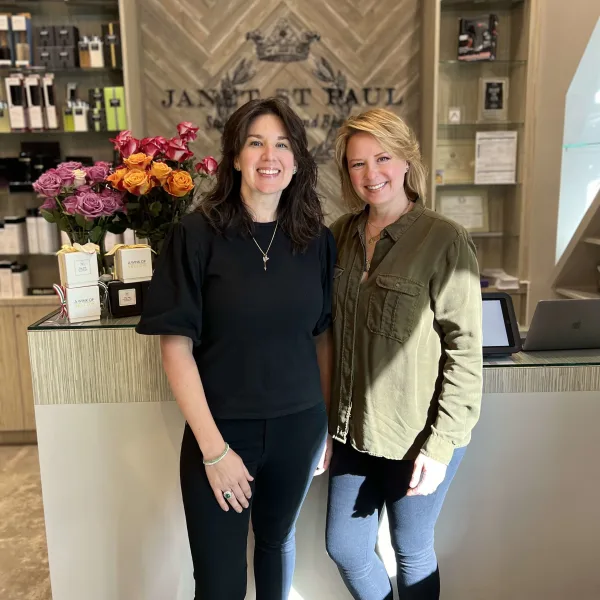
At Janet St. Paul Studio for Hair and Beauty, Director of Operations Natasha McMillen helps bring her wife Janet St. Paul's vision to life, elevating every system from education to operations.

Expand your color service menu with the Pinstripe technique. Brooks and Brooks' Marlon Hawkins walks you through the technique.