The 5 Building Blocks to Developing Leadership Teams in Your Salons
A practical and tactical approach to building a leadership infrastructure in a small business.
by Nikki Le
July 11, 2023
9 min to read
In the US beauty industry, the shocking statistic is that most salons, on average, have three or fewer employees. This is a key indicator that speaks to an urgency for strong leadership in our companies. There could be many reasons for this:
Perhaps, this is due to the fact that there’s a staggering number of self-employed pros in the beauty industry or...
Maybe there’s an absence of highly trained and fully-supported leadership teams or…
The overall skepticism that an employee career is not an unobstructed pathway to limitless possibilities or…
Conceivably, a lack of leadership training, leadership guidance and leadership tools doesn't help to provide clarity in how to guide employees about performance and lead with a more empowered approach.
Ad Loading...
Regardless of the reasons or the size of your business, there’s a growing number of salon owners that are becoming increasingly aware of the need to develop corporate brands which can leverage highly skilled individuals with training in organizational leadership and career management. This article is for the business owners who are realizing this... yet, may still be unsure as to “HOW” to implement, train, compensate and advance leadership roles.
In this current workforce, the value of strong and empathetic leadership no longer needs to be quantified as beneficial. This fact has been proven with many case studies that prove the presence of such leadership is necessary to sustain daily operations and is foundational in:
A company’s ability to magnify their brand.
A business owner’s ability to execute their systems.
An owner’s process to integrate their brand vision into their core values, policies & procedures.
A salon’s path to nourish their biggest asset, their people.
Adding value to their unique employee experience.
Delegation of the enormous amount of responsibilities that fall on the business owner’s shoulders.
So how do we create a leadership infrastructure that enables all of these things? Well, there’s a method to leading people and these 5 building blocks to a practical and tactical leadership infrastructure will give you a course of action to enrich your leadership teams. Taking the time to understand, develop, train and prepare this foundation will set your company and leadership style apart as an employer with meaningful and game-changing leadership qualities.
1. The 5 Qs: Start with YOUR leadership skills: SQ- Self Intelligence
This is the work of personal growth and awareness that involves the 10 steps in the Process of Personal Development. Click here to read more on the 9 steps.
Ad Loading...
IQ- Intellectual Intelligence
This is the data you’ve learned, information you’ve gathered and competencies that you've acquired as qualifications, skills, and unique knowledge.
EQ-Emotional intelligence
This is your mastery of emotional recognition, response assessment, and reaction regulation, a practiced sense of empathy, anticipation of events, solution scenarios and overall sensitivity.
RQ-Relational intelligence
Ad Loading...
This is your ability to adapt, connect and engage with others within ever changing relationship dynamics in order to influence and foster trust as well as increased participation.
OQ-Organizational intelligence
This is the ability to define knowledge bases, match resources such as time, people, written materials, information and change management to the organization's needs.
The simple truth is that all leadership dynamics start with the leader, who is the nucleus of their organization, doing their due diligence in ensuring that their leadership quality is at the highest level to serve their teams. You earn the right by first doing the job. How you think, others will reflect ... What you do, others will see as what’s acceptable… How you behave, others will copy… How you communicate, others will most likely follow. So to be the most positively impactful leader, do the self-work to become the professional that you wish for your team to emulate.
2. Your HR System
HR stands for human resource. It’s the framework for your employee experience which delivers a career journey that puts the human part in management. Most salons don't have HR systems nor understand the concept. Yet, while other industries spend a tremendous amount of time, energy and money into their HR systems, the beauty industry still falls behind on incorporating general HR concepts. This lack of HR architecture may lead to management systems that lack tools, resources and framework to fall back on, making it incredibly difficult to navigate through employee dynamics, change management and the RHOT process (recruitment, hiring, onboarding and training). Click here to read more on the RHOT process.
Ad Loading...
Consider reaching out to your payroll companies. Most have HR platforms that build a hub for the structural elements in proper HR management. It’s definitely worth the time to look into these systems. It will require a budget, but we feel that it’s a budget well spent.
For those with small budgets and internal payroll procedures, you can create an HR platform using simple digital tools like Google Docs. This employee data platform will allow leadership teams to communicate, track, document, assign and manage all of the pieces related to employees while providing them with transparency, clarity and a sense of career control.
3. Bespoke Leadership Organizational Structure and Training Units
Considering the unique needs of an organization is a primary step in developing leadership training systems to guide your leadership teams on responsibilities such as:
Roles, positions & titles
Job descriptions
Project management
People management
Decision making
Delegation
Communication
To design bespoke leadership organizational structure is to customize specific needs with a mind towards elevated goals. It means to assess what YOU need as a business owner, what support that your team needs most, what quality of guest experience is your standard and what your brand represents.
Ad Loading...
Organizational leadership structure means to create a map or hierarchy of:
Company departments
The amount of time dedicated to specific tasks
If these roles will be doubled or tripled up with other positions
The amount of time given to strategizing vs. actively leading
The chain of command
Assigned functions
Training units or skill blocking is an approach to leadership training that we find works best as it provides the logistics and simplicity needed to help your salon leaders grasp challenging management skills and intangible leadership concepts. Think of how universities structure their educational offerings:
A foundational framework from basic to complex concepts
Practical competencies for better learning and improved leadership interfacing
A layered delivery of knowledge for more in depth retention and recall
A departmentalized blueprint for leadership applications and resources
4. Continued Leadership Coaching
Most business owners would say that time is their biggest challenge and most leaders-in-training would say that they would want more ongoing guidance. Continued leadership coaching with an external leadership coach is the answer to closing this gap. Strong leadership coaches or consultants serve as the sounding board, guides and mentors for engaged leaders in ways that the business owner may not be able to provide. Management/employee conflicts can be unpredictable with scenarios that may not fit into a pre-designed leadership playbook. The business owner themselves may be unprepared or ill-equipped to provide solutions to these daily challenges.
Ad Loading...
Even if your company has the most polished core values, well-written policies, procedures and organizational structure, the fact remains that humanity will always come before rules and that means there will always be ongoing situations that will need customized solutions that only experienced leadership coaches. These in-the-moment solutions can provide the support to facilitate change as well as mitigate burn out. This is where individual or group coaching will play an indispensable role in how you develop your management teams.
5. Leadership Compensation and Scalability
In most businesses, compensation seems to be one of the biggest barriers behind barreling forward towards launching leadership positions. Now, compensation is a big project for most small business owners, but leadership compensation is a completely different level so it’s no wonder that so many owners feel paralyzed to pull the trigger, even if leadership is necessary. When setting in motion a leadership infrastructure within your company, it’s best to engage a well versed specialist to help provide what you’ll need to properly administer advanced leadership compensation. Click here to read more about the 8 methods to compensate your leadership teams. Be sure to master your compensation functions in your software systems so that you can begin formalizing any personalized leadership compensation plans. This will assist in putting the plan to process. We suggest that your leadership compensation models should incorporate:
Unique calculations for unique contributions - such as attributing skills that give your company an advantage.
Performance based drivers - Such as target projects or determined ROI
Levels of Scalability - Such as levels of compensation set for each level of achievement and level of responsibility.
Predetermined quotas - such as minimum goals that must be attained to receive the bonuses.
Concise & detailed contracts with durations for contract renewal: minimizes poor performance/ abuse of power ● Check points in performance review systems that involves their teams: such as team surveys
Now that you’re empowered with some great leadership development strategies, where do you start? Your action plan is to start iIdentifying your company’s needs. Then observe who on your team shows they have the heart to serve, the aptitude to walk the journey of leadership training and the resilience to withstand the responsibility of holding the career of others in their hands. Measure their natural strengths and skills that align to leadership tasks. Create job descriptions and titles with a formal task list of what duties are best suited. Then contact a coach that will build out your leadership infrastructure and training programs.
Remember that leadership is a long game and is cumulative by nature. It requires a thick skin and a big heart. Constant leadership editing with thought and purpose keeps leadership fluid rather than rigid. Accept that in order for your companies and brands to expand and sustain, a highly trained leadership team is a necessity, not an option. Seek to grow leadership teams that are trained to fulfill careers and help your teams flourish. Cheers to the continuous elevation of the beauty industry. Lead well my friends.
Ad Loading...
About the Author:
Nikki Le is a business coach/consultant specializing in business systems, compensation, pricing, career coaching, personal development and establishing leadership team infrastructure. She's the principal at Nikki Le Consultancy, a coaching and education firm centering around employer advocacy, organizational structure, recruitment marketing, modern hiring practices and digital onboarding systems. Nikki's passionate purpose is bridging relational work dynamics between managers and employees, creating future generations of wealth in salons and elevating business, career and personal development education. She's been an educator, trainer, mentor and advocate to thousands of salon professionals, at every level, for numerous beauty brands. Nikki is a lifelong student of all things psychology, communications, NLP, leadership, self-help and business since her early days at George Mason University. She's a devoted mom of two boys, Gavin and Niko and loving dog mom to her rescue doggies Bear and Steely. She lives in Virginia where she writes, teaches business and creates online courses for her online business academywww.statementsstrong.com
Discover how to create a true “WOW experience” for every client by first building a culture where your team feels engaged, empowered, and inspired. Drawing on Calvin Stovall’s Iconic Framework, this blog explores how salon, spa, and clinic leaders can strengthen culture, elevate customer experience, and build a business that stands out for the long term.
The wellness industry is growing fast, and salons and barbershops already are an important part of it. In her first blog, Tracy Rado shares where the wellness dollars are heading, and how salon's can grow with this movement.
While salon sales are increasing, owners often feel they're working harder for the same or less profit. Leverage Q2 data from The KIM Report, Alain Audet reveals some of the structural changes that are dampening your growth and why your region and your salon size matters.
Weaknesses in your business are amplified during the Holiday Season. Spark Pro Global's Lucy Randall shows you five things to do now to have the strongest holiday season yet.
In Kati Whitledge's latest blog, she shares how salons have moved away from dress codes and embraced appearance standards. But by removing strict dress codes, some businesses may have unintentionally lowered their appearance standards. Whitledge helps you explain to your team why an appearance standard is important and how to smoothly implement a new appearance policy.
The Small Business Health Care Tax Credit is a non-refundable tax credit for for-profit businesses that provides a financial incentive for eligible employers who offer health insurance coverage to their employees. Leticia Skrabut, Esq., walks you through how to claim that credit.
Developing strong work habits early in one's career supports long-term success in the salon industry. Jesse Linares offers new stylists his top five tips.
Most salon owners have no idea what these numbers are.
You can hit record sales and still have a profit problem. The difference comes down to four numbers almost nobody was taught to track.
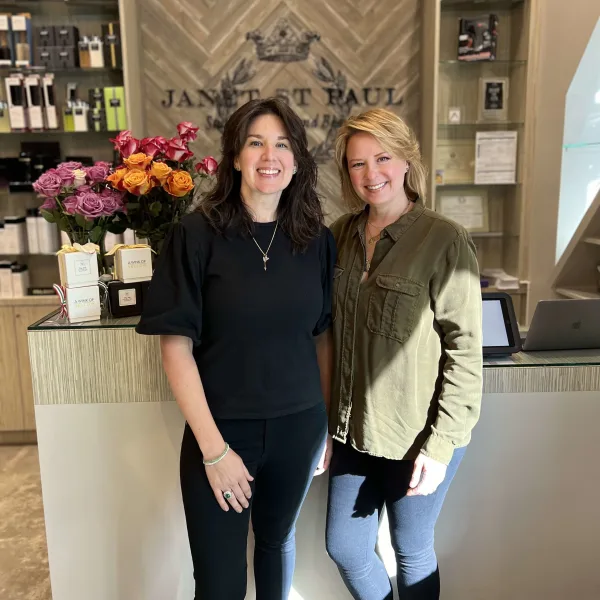
At Janet St. Paul Studio for Hair and Beauty, Director of Operations Natasha McMillen helps bring her wife Janet St. Paul's vision to life, elevating every system from education to operations.
The strongest salons, spas, and med spas know which numbers tell the real story of their business. In this practical guide, Phorest breaks down the five essential KPIs every business should track to improve retention, boost revenue, and make smarter decisions with confidence.
At Bella Style Salon in Slidell, Louisiana, Director of Operations Angela Meyer tackles inventory, team management, and guest relations. Read all about her in our latest Meet the Manager.
Starting at Impressions front desk in 2006 when he was 19 years old, General Manager Paul Petrowsky is a seasoned professional who owner Sarah Taylor says is responsible for much of her own success.
Planning is in full swing for the most anticipated events and promotions for the 2026 holidays. As owners share their favorite ways to celebrate, they prove that a carefully planned event can also build culture, increase client loyalty, boost sales, and set a business up for a successful 2027.
When things run amok at Mane Attraction Salon, Owners Chris and Jenny Knudsen say General Manager Sami Hernandez is their go-to resource and ultimate sounding board. Meet Sami in this installment of Meet the Manager.