What do you do to attract topnotch employees? With competition rising, particularly for hairdressers with a following, “talent poaching” may be reaching new heights.
What do you do to attract topnotch employees? With competition rising,
particularly for hairdressers with a following, "talent poaching" may
be reaching new heights.
Traditionally
discouraged by professional organizations like Intercoiffure, which
won't accept members who do it, "staff-stealing" is sometimes loosely
defined. One owner's "poaching" is another's fair recruitment practice;
employee contracts address the right-to-work portion of the equation.
Still, the offer of 100-percent commission for six months is bound to
change the state of the salon recruitment if it becomes the recruitment
norm.
The Facts:
• Stephen Alexander,
president of New York Hair Co. in Florida, bought the chain more than a
year ago. He says he sold one location and closed another because the
lease was up, leaving him with three locations.
• In a letter
dated October 2, 2008, of which Modern Salon has obtained a copy,
Alexander offers "100% commission paid for six months." His letter goes
on to detail the catch: "If you are an established stylist, billing
over $1,000 a week off season, and $2,000 a week in season, needing to
earn a lot more in the next year and think you could move to one of our
locations?" (sic)
• The letter was sent to licensed
hairdressers in the state of Florida, targeting no one specifically,
says Alexander, who adds that he has had a "huge response."
•
Sarasota salon owner Richard Weintraub says he and his partners met
with Alexander months ago about buying one of the New York Hair Co
locations, were asked to sign a confidentiality agreement, and did not,
walking away. Alexander vehemently denies any of his locations are for
sale and says Weintraub's partners approached him.
Taking at
face value that the salons are not for sale now, how can Alexander
afford to pay 100% commission? He's happy to make no money for while,
he says, and it makes no sense not to utilize empty chairs. Existing
stylists in the salon will get the walk-ins. Which means, new,
100-percent commission recruits will use the chairs and keep the cash,
until they renegotiate commissions after six months.
"My
intention is not to steal staff but to make the salons attractive, get
the best stylists in town and earn the maximum," says Alexander. "We do
this for money, at the end of the day."
In regards to ruffling
feathers, he says it does bother him if someone thinks he's poaching.
"I'm doing my job, not being malicious. This is a marketing technique.
You give away a free cut to get a new client; 100-percent commission
for six months is a way to get a new stylist."
Weintraub says
he read Alexander's letter to his employees, and told them they should
be wary. For one thing, if the salons were to be sold for unforeseen
reasons, any new owner would not be held to the 100-percent commission
agreement, he says.
"Today, the average product cost is
8-percent; so why would you pay 100-percent commission?" asks
Weintraub. "When stylists are recruited with a promise like this, they
should realize if it sounds too good to be true, it probably is. Most
stylists don't know that every time they move with a book, they lose 20
to 25-percent of their clients-especially if the salon they left is
proactive in maintaining clients."
Not to mention, he adds,
taking one or two top producers from a salon that invested in building
those employees could push it out of business, which he personally
considers unethical.
Alexander, who previously did acquisition
work in the UK, says that as of this writing, no one has started at
100-percent commission, but he is "in discussion" with a few stylists.
Of his recruitment techniques, he says maybe they will make other salon
owners think of their staffs more.
Discover how to create a true “WOW experience” for every client by first building a culture where your team feels engaged, empowered, and inspired. Drawing on Calvin Stovall’s Iconic Framework, this blog explores how salon, spa, and clinic leaders can strengthen culture, elevate customer experience, and build a business that stands out for the long term.
The wellness industry is growing fast, and salons and barbershops already are an important part of it. In her first blog, Tracy Rado shares where the wellness dollars are heading, and how salon's can grow with this movement.
While salon sales are increasing, owners often feel they're working harder for the same or less profit. Leverage Q2 data from The KIM Report, Alain Audet reveals some of the structural changes that are dampening your growth and why your region and your salon size matters.
Weaknesses in your business are amplified during the Holiday Season. Spark Pro Global's Lucy Randall shows you five things to do now to have the strongest holiday season yet.
In Kati Whitledge's latest blog, she shares how salons have moved away from dress codes and embraced appearance standards. But by removing strict dress codes, some businesses may have unintentionally lowered their appearance standards. Whitledge helps you explain to your team why an appearance standard is important and how to smoothly implement a new appearance policy.
The Small Business Health Care Tax Credit is a non-refundable tax credit for for-profit businesses that provides a financial incentive for eligible employers who offer health insurance coverage to their employees. Leticia Skrabut, Esq., walks you through how to claim that credit.
Developing strong work habits early in one's career supports long-term success in the salon industry. Jesse Linares offers new stylists his top five tips.
Most salon owners have no idea what these numbers are.
You can hit record sales and still have a profit problem. The difference comes down to four numbers almost nobody was taught to track.
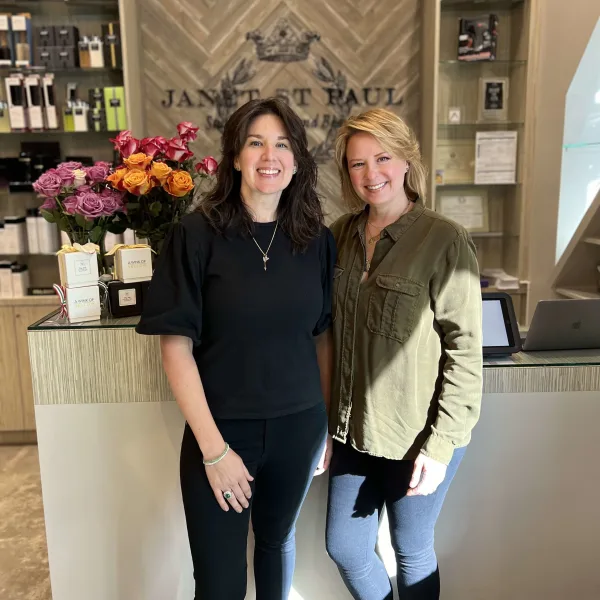
At Janet St. Paul Studio for Hair and Beauty, Director of Operations Natasha McMillen helps bring her wife Janet St. Paul's vision to life, elevating every system from education to operations.
The strongest salons, spas, and med spas know which numbers tell the real story of their business. In this practical guide, Phorest breaks down the five essential KPIs every business should track to improve retention, boost revenue, and make smarter decisions with confidence.
At Bella Style Salon in Slidell, Louisiana, Director of Operations Angela Meyer tackles inventory, team management, and guest relations. Read all about her in our latest Meet the Manager.
Starting at Impressions front desk in 2006 when he was 19 years old, General Manager Paul Petrowsky is a seasoned professional who owner Sarah Taylor says is responsible for much of her own success.
Planning is in full swing for the most anticipated events and promotions for the 2026 holidays. As owners share their favorite ways to celebrate, they prove that a carefully planned event can also build culture, increase client loyalty, boost sales, and set a business up for a successful 2027.
When things run amok at Mane Attraction Salon, Owners Chris and Jenny Knudsen say General Manager Sami Hernandez is their go-to resource and ultimate sounding board. Meet Sami in this installment of Meet the Manager.